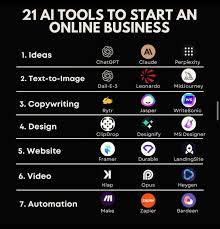
Content writing used to mean staring at a blank page for an hour before typing your first sentence. That’s changed a lot. In 2026, there are free tools that help you research faster, write cleaner drafts, fix grammar, generate outlines, and even match your brand’s tone — without spending anything.

But with so many options floating around, it’s hard to know which ones are actually useful and which ones are just hype. This guide cuts through the noise and gives you a real, practical look at the best free tools for writing content in 2026 — what they do well, where they fall short, and who they’re best suited for.
Creating high-quality content has never been easier, thanks to the latest free AI writing tools available in 2026. Whether you’re a blogger, student, freelancer, marketer, or business owner, AI-powered writing assistants can help you generate articles, social media posts, emails, product descriptions, and more in just a few minutes. These tools save time, improve writing quality, and help overcome writer’s block without requiring advanced writing skills.
The best free AI writing tools now offer features such as grammar correction, content generation, SEO optimization, paraphrasing, and multilingual support. While many platforms include premium plans, their free versions are powerful enough for most everyday writing tasks.
In this guide, we’ll explore the best free AI tools for writing content in 2026, comparing their features, strengths, limitations, and ideal use cases. Whether you need help writing blog posts, website copy, marketing content, or academic papers, you’ll find a free AI tool that matches your needs and budget.
Why Content Writers Are Using These Tools in 2026
The internet is more crowded than ever. Brands, bloggers, freelancers, and businesses are all competing for the same readers. Producing content that’s well-researched, clearly written, and optimized for search is no longer optional — it’s the baseline.
The problem? Most content creators don’t have unlimited time or a full editorial team behind them. That’s where writing tools come in. They help you work faster, catch errors you’d miss, and structure your ideas better — without replacing your voice or judgment.
The best part: you don’t need a premium subscription to get started. Most of the tools below have free plans that are genuinely useful, not just teaser demos.
Best Free AI Tools for Writing Content 2026:-
1. ChatGPT (Free Tier)
Let’s start with the most well-known one. ChatGPT’s free version gives you access to a powerful language model that can help with almost any writing task — brainstorming, drafting, rewriting, summarizing, or creating outlines.
ChatGPT (Free Tier) remains one of the best free AI writing tools in 2026 for creating high-quality content quickly and easily. It can help you write blog posts, articles, social media captions, emails, product descriptions, website copy, and much more. Its simple interface makes it suitable for beginners as well as professional writers.
The free version is excellent for brainstorming ideas, creating outlines, rewriting paragraphs, improving grammar, and generating content in different tones and styles. You can also ask it to simplify complex topics, summarize long text, or create SEO-friendly content with the right prompts. While some advanced features and higher usage limits are available only with paid plans, the free tier is powerful enough for most everyday writing tasks.
What it’s good for:
- Generating first drafts from a brief or bullet points
- Coming up with blog post ideas and angles
- Rewriting sections that feel flat or unclear
- Creating FAQs, meta descriptions, and social captions
Practical example: Say you’re writing an article about budgeting for beginners. You give ChatGPT a simple prompt: “Write an introduction for a blog post about budgeting for college students in India.” Within seconds, you have a starting point. It’s not always perfect — you’ll edit it — but it gets you past the blank page problem faster than anything else.
Free plan limitations:
- You don’t get access to the latest model on the free tier
- There are usage limits during peak hours
- Web browsing and image generation are restricted on the free tier
Best for: Writers who need a flexible, all-purpose drafting and brainstorming assistant.
2. Google Gemini (Free Version)
Google’s writing assistant integrates natively with Google Docs and Gmail, which makes it incredibly convenient if you already live in Google’s ecosystem. The free version of Gemini lets you use it directly inside Docs — rewriting paragraphs, changing tone, summarizing long text, and generating content from prompts.
What it’s good for:
- Rewriting or improving existing paragraphs
- Changing the tone from formal to casual (or vice versa)
- Summarizing long research documents
- Drafting inside Google Docs without switching tabs
Practical example: You paste a 1,000-word rough draft into Google Docs and highlight a section that feels too stiff. You click “Help me write” and ask Gemini to make it sound more conversational. In one click, you get a rewritten version you can accept or tweak. No copy-pasting to another tool.
Free plan limitations:
- The free version is less capable than the paid Gemini Advanced
- Responses can sometimes be generic for niche topics
- Not ideal for long-form structured articles from scratch
Best for: Writers who work primarily in Google Docs and want an assistant baked into their workflow.
3. Grammarly Free
Grammarly is the most widely used writing assistant in the world, and the free version covers the basics extremely well. It checks your spelling, grammar, punctuation, and sentence structure in real time — whether you’re writing in a browser, Google Docs, or a Word document.
What it’s good for:
- Catching grammar and spelling mistakes instantly
- Improving sentence clarity
- Avoiding passive voice overuse
- Checking tone in emails and professional content
Practical example: You finish writing a 1,500-word product review. Before you hit publish, you run it through Grammarly and catch three comma errors, one unclear sentence, and a phrase that sounds overly aggressive in tone. Five minutes of editing saves you from publishing something that looks careless.
Free plan limitations:
- No plagiarism checker on the free plan
- Tone, engagement, and delivery suggestions are locked to Premium
- Style suggestions are limited compared to the paid version
Best for: Every writer, at every level. There’s no reason not to use Grammarly’s free tier — it catches mistakes most people miss even after multiple read-throughs.
4. Hemingway Editor (Free Web Version)
Hemingway Editor is a no-frills tool that does one thing extremely well: it tells you when your writing is too complicated. It highlights long sentences, passive voice, adverb overuse, and phrases that could be simplified. The web version at hemingwayapp.com is completely free.
What it’s good for:
- Making dense writing easier to read
- Cutting unnecessary words
- Improving readability scores for SEO
- Writing content for general audiences who don’t want to work hard to understand it
Practical example: You write a technical guide about VPN setup and paste it into Hemingway. The tool highlights five sentences in red (too long and hard to read) and three in yellow (complex, but manageable). You break up the long ones, swap a few complicated words for simpler ones, and your readability grade drops from Grade 14 to Grade 8 — meaning many more people can comfortably read it.
Free plan limitations:
- No saving or exporting in the web version (you need the paid desktop app for that)
- Doesn’t help with content ideas or SEO
- No integrations with Google Docs or WordPress
Best for: Writers whose content tends to run long and complex — especially those writing for broad audiences.
5. Notion (Free Plan with Writing Features)
Notion isn’t purely a writing tool, but its free plan includes a built-in writing assistant that can draft, summarize, translate, and reformat content. If you already use Notion to organize your work, the writing features are right there without any additional setup.
What it’s good for:
- Drafting and organizing content in one place
- Creating content calendars and briefs alongside your writing
- Summarizing research notes into usable points
- Rewriting and reformatting blocks of text
Practical example: You’re managing a content calendar for a website. In Notion, you keep your keyword list, article briefs, and drafted content all in the same workspace. When you need to turn a rough set of bullet points into a structured introduction, you ask the built-in assistant to do it — without leaving the tool you’re already working in.
Free plan limitations:
- The writing assistant has a limited number of free uses per month
- Not a replacement for dedicated grammar or SEO tools
- Less powerful than a standalone writing assistant for long-form content
Best for: Content managers and writers who want their drafting tool and project management in one place.
6. QuillBot (Free Plan)
QuillBot is a paraphrasing and summarizing tool that helps you rewrite content without changing the meaning. It’s popular among students and content writers who need to rework existing text — either to avoid repetition, adjust tone, or create variations of the same content.
What it’s good for:
- Paraphrasing paragraphs in different tones (Standard, Formal, Simple, Creative)
- Summarizing long articles or research papers into key points
- Improving sentence variety in content that sounds repetitive
- Grammar checking alongside rephrasing
Practical example: You’ve written three paragraphs about the benefits of email marketing, but they all start to sound the same. You paste each one into QuillBot in “Creative” mode and get a rewritten version with different phrasing and structure. You pick the best parts from the suggestions and combine them with your original — saving time and improving variety.
Free plan limitations:
- The free plan limits you to a certain number of words per paraphrase
- Only two paraphrasing modes available (Standard and Fluency) on free
- The summarizer has a character limit on free
Best for: Writers who struggle with repetitive phrasing or need to rework content quickly.
7. Rytr (Free Plan)
Rytr is a content generation tool with a free plan that gives you a set number of characters per month. It’s template-driven — you pick a use case (blog intro, product description, email, social post), fill in a few details, and get a draft.
What it’s good for:
- Quickly generating short-form content like product descriptions or ad copy
- Getting started with blog introductions when you’re stuck
- Writing emails, captions, and taglines fast
- Supporting multiple languages
Practical example: You run a small online store and need product descriptions for 20 items. Writing each one from scratch would take hours. You use Rytr’s product description template, enter the product name and key features, and get a clean draft in seconds. You edit each one slightly to match your brand voice, and you’re done in a fraction of the time.
Free plan limitations:
- 10,000 characters per month on the free plan (not a lot for heavy users)
- Outputs can sometimes feel templated and need editing
- Limited tone and creativity options compared to paid plans
Best for: Small business owners, e-commerce sellers, or anyone who needs short-form content produced quickly.
Pros and Cons of Using Free Writing Tools
Pros
No financial commitment. You can test multiple tools before deciding if any of them are worth paying for.
Genuine time savings. Even the most basic tool — like Grammarly catching grammar mistakes — saves you time you’d spend re-reading your own work.
Better output quality. Tools like Hemingway push you toward cleaner, more readable writing even if you’re already a good writer.
Accessible to everyone. Whether you’re a freelancer, student, blogger, or business owner, these tools level the playing field.
Flexible workflow. You can mix and match tools based on your needs — use one for drafting, another for editing, another for SEO.
Cons
Usage limits. Almost every free plan has a data, character, or usage cap. Heavy users will hit the ceiling quickly.
Output quality varies. Generated drafts almost always need editing. Treating any tool as a finished-content machine leads to generic, flat writing.
Over-reliance risk. If you lean too heavily on paraphrasing tools, your writing voice can start to disappear. These should support your writing, not replace it.
Feature gaps. The most useful features — plagiarism checking, tone analysis, advanced SEO suggestions — are almost always behind a paywall.
Privacy concerns. Always read the terms. Some tools store your content or use it to train their systems. If you’re writing for clients under NDA, check before you paste anything sensitive.
Tips for Getting the Most Out of Free Writing Tools
Use them as a starting point, not a final product. A generated draft is a skeleton — your editing is what puts the muscle on it.
Combine tools. Use ChatGPT or Gemini to draft, Hemingway to simplify, and Grammarly to clean up. The combination is more powerful than any single tool.
Keep your voice. Read everything out loud before publishing. If it sounds like something you’d never actually say, rewrite it.
Set a character budget. If you’re on a limited free plan, save it for the content that matters most and draft other pieces manually.
Don’t paste confidential content. If you’re writing for a client or handling sensitive information, be careful about what you put into online tools.
FAQs
Are these tools actually free, or do they push you to upgrade constantly?
It depends on the tool. Grammarly and Hemingway’s web version are genuinely free to use without much pressure. ChatGPT’s free tier is functional, but you’ll notice prompts to upgrade. Most tools are honest about their limits — you just need to check the free plan details before signing up.
Can I use these tools for client work?
Yes, but check the terms of service for each tool, especially around data privacy. Some tools may use your content for training purposes. If your client has an NDA or confidentiality requirement, stick to tools with clear data policies.
Will using these tools hurt my writing skills over time?
Only if you use them as a substitute for thinking. If you use them to speed up the mechanics — grammar checking, rephrasing — while still doing your own research, structuring, and voice work, they’ll make you a faster and more consistent writer without weakening your skills.
Do these tools help with SEO?
Some do, indirectly. Hemingway improves readability, which is an indirect SEO signal. ChatGPT and Gemini can help you structure content around keywords. But for dedicated SEO features like keyword analysis and on-page optimization, you’d want a separate tool like Surfer SEO or NeuronWriter (both of which have limited free versions).
Which tool is best for beginners?
Start with Grammarly — it’s free, works everywhere, and immediately improves your writing without any learning curve. Once you’re comfortable, add Hemingway for readability and ChatGPT for drafting support.
Can I use multiple tools at once?
Absolutely. Most professional content writers use a stack of tools rather than relying on just one. Draft in ChatGPT, edit in Hemingway, and polish in Grammarly — that’s a workflow that costs nothing and works well.
Content
The best free writing tools in 2026 are genuinely useful — not just stripped-down demos designed to frustrate you into paying. Whether you need help getting past a blank page, cleaning up your grammar, simplifying your sentences, or generating short-form copy fast, there’s a free tool that fits the job.
The key is to use them as support, not a shortcut. Your research, your ideas, and your editorial judgment still matter more than any tool. But used right, these free options can make your content noticeably better — and your workflow noticeably faster — without costing you anything.