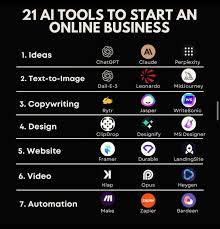
Content creation has changed a lot in the last couple of years. What used to take a full team — writing, designing, editing, scheduling — can now be handled by a single person with the right tools. That’s not an exaggeration. The tools available in 2026 are genuinely good, and a lot of them are either free or surprisingly affordable.
But there’s a catch: there are too many of them. New tools launch every week, and it’s hard to figure out which ones are actually worth your time versus which ones just look good in a demo video.
This guide cuts through that. Whether you’re a blogger, a social media manager, a freelancer, or someone building a content business from scratch, here are the best tools for content creation in 2026 — with real examples of what each one is good for, and honest takes on where they fall short.

Content creation has become more competitive than ever in 2026. Whether you’re a blogger, YouTuber, social media creator, marketer, or business owner, producing high-quality content consistently is essential for growing your audience and staying ahead of the competition. Fortunately, artificial intelligence has transformed the way content is created, making it faster, easier, and more efficient.
Today’s AI tools can help with almost every stage of the content creation process. From generating blog posts and social media captions to creating videos, images, presentations, voiceovers, and marketing campaigns, AI can significantly reduce the time and effort required. Many creators now use AI to brainstorm ideas, improve writing quality, edit videos, design graphics, and optimize content for search engines.
The best AI tools for content creation in 2026 combine powerful automation with user-friendly interfaces, allowing both beginners and professionals to create engaging content without advanced technical skills. These tools can help increase productivity, improve creativity, and streamline workflows across multiple platforms.
In this guide, we’ll explore the best AI tools for content creation in 2026, comparing their features, strengths, pricing, and ideal use cases. Whether you’re creating content for YouTube, TikTok, Instagram, blogs, podcasts, or online businesses, you’ll find the right AI tools to boost your content strategy and save valuable time.
What to Look for in a Content Creation Tool
Before jumping into the list, it’s worth setting some ground rules for what makes a tool genuinely useful.
It should save you real time. Not just theoretically — it should cut a task that took you two hours down to 30 minutes or less.
It should produce usable output. Some tools generate content that needs so much editing it barely saves time. The best tools give you a strong first draft or a finished asset you can use with minor tweaks.
It should fit your workflow. A tool that works great for a YouTube creator might be useless for a blog writer. This list covers different use cases, so you can pick what actually fits your situation.
It should be reasonably priced. Tools that charge $100+/month for basic features aren’t covered here unless they offer serious value for that price.
Best AI Tools for Content Creation in 2026
1. ChatGPT (OpenAI) — Best for Writing & Ideation
ChatGPT is the starting point for most content creators. It’s versatile, fast, and good at a wide range of writing tasks — blog posts, email newsletters, product descriptions, social media captions, video scripts, and more.
The GPT-4o model (available on the free plan) handles most everyday writing tasks well. The paid plan (around $20/month) unlocks faster responses, image generation via DALL·E, and access to newer models.

Practical example: Say you run a tech blog and need to write a roundup of the best budget laptops. You can give ChatGPT a rough outline, a few product names, and a word count, and it’ll give you a solid draft in under two minutes. You’ll still need to fact-check prices and add your own experience, but the structural work is done.
Pros:
- Handles almost any writing task
- Free tier is genuinely useful
- Good at brainstorming titles, outlines, and angles
- Constantly updated with new features
Cons:
- Can produce generic-sounding content if you don’t give specific prompts
- Needs fact-checking — especially for numbers and recent events
- Not built specifically for SEO
Best for: Writers, bloggers, and anyone who needs a reliable first draft fast.
2. Jasper — Best for Marketing Teams and Long-Form SEO Content
Jasper is purpose-built for marketing content. It’s more structured than ChatGPT — it has templates for blog posts, landing pages, ad copy, email sequences, and more. If you’re producing content at volume and need consistency, Jasper is worth the investment.
It also integrates with Surfer SEO, which means you can optimize your content for search rankings as you write. That’s a meaningful feature if SEO is part of your strategy.
The starting plan is around $39/month, which isn’t cheap for individual creators, but makes sense for small marketing teams.
Practical example: A digital marketing agency using Jasper can build a content template for client blog posts — tone, structure, target word count — and have writers use it as a base. Output is more consistent across the team compared to everyone writing from scratch.
Pros:
- Great for high-volume marketing content
- Built-in templates save setup time
- Surfer SEO integration is a genuine advantage
- Team collaboration features
Cons:
- Expensive for solo creators
- Can feel rigid if you want more creative freedom
- Requires good prompt input to avoid repetitive output
Best for: Marketing teams, agencies, and content managers running large content operations.
3. Canva — Best for Visual Content
Canva has grown from a simple graphic design tool into a full content creation platform. In 2026, it handles social media graphics, presentations, video editing, website mockups, and short-form video content — all from the same dashboard.
The Magic Studio features (available on the free and Pro plans) let you generate images, remove backgrounds, resize designs for different platforms, and write short-form copy — all without switching tools.
Canva Pro costs around $13/month and is worth it if you’re creating visual content regularly. The free plan is surprisingly capable for basic use.
Practical example: A food blogger who needs Instagram posts, Pinterest graphics, and a weekly newsletter header doesn’t need three separate tools. Canva handles all of it, and the brand kit feature keeps fonts, colors, and logos consistent across every piece.
Pros:
- All-in-one visual platform
- Huge library of templates
- Easy to use, even without design experience
- Great for social media content at scale
Cons:
- Video editing features are basic compared to dedicated tools
- Some premium templates and assets require Pro
- Not ideal for complex print design work
Best for: Social media managers, bloggers, and solo creators who need to produce visual content consistently without hiring a designer.
4. Descript — Best for Video and Podcast Editing
Descript is one of the most genuinely clever tools on this list. It transcribes your audio or video, and then lets you edit the content by editing the transcript — like a text document. Delete a word from the transcript, and it disappears from the video. Cut a paragraph, and that section of audio is gone.
For podcasters and video creators who spend hours cutting out filler words and awkward pauses, this is a massive time-saver.
It also has an Overdub feature that lets you fix mispronounced words or add new lines without re-recording — using a voice clone of your own voice.
Plans start free (with watermarks on exports), and the Creator plan is around $15/month.
Practical example: A YouTube creator who records 20-minute tutorials can drop the raw recording into Descript, and it’ll automatically remove filler words like “um” and “uh.” What used to take two hours of manual editing now takes 20 minutes.
Pros:
- Text-based video editing is genuinely revolutionary for creators
- Automatic filler word removal
- Great for podcasts, interviews, and tutorial videos
- Screen recording built in
Cons:
- Learning curve for users used to traditional video editors
- Overdub voice quality can sound slightly off in long passages
- Not suitable for cinematic video editing
Best for: Podcasters, YouTubers, and video creators who want to edit faster without learning complex software.
5. Surfer SEO — Best for SEO Content Optimization
If your content needs to rank on Google, Surfer SEO is one of the most practical tools available. It analyzes the top-ranking pages for your target keyword and tells you exactly what your article needs — word count, headings, keyword frequency, missing topics, and more.
The Content Editor feature scores your article in real time as you write, showing you what’s missing and what’s overdone. It’s not about stuffing keywords — it’s about making sure your content covers a topic comprehensively.
Plans start around $89/month, which is on the higher end. But for content creators or businesses where ranking on page one directly affects revenue, it pays for itself quickly.
Practical example: You’re writing a 2,500-word article on “best budget running shoes.” Surfer shows you that the top-ranking articles also cover topics like “heel drop explained,” “wide toe box options,” and “how to measure arch type.” You add those sections, and your article becomes more competitive.
Pros:
- Data-driven SEO optimization that actually works
- Real-time content scoring
- Keyword research is built in
- Integrates with Google Docs and Jasper
Cons:
- Expensive for individuals
- Can make you over-focus on scores rather than writing naturally
- Takes time to learn all the features
Best for: SEO writers, content marketers, and bloggers who rely on organic search traffic.
6. ElevenLabs — Best for Text-to-Speech and Voiceovers
ElevenLabs produces the most realistic synthetic voices currently available. For content creators who make YouTube videos, explainer content, or online courses — but don’t want to record their own voice — ElevenLabs is the go-to option.
You type your script, choose a voice (or clone your own), and download a natural-sounding audio file in minutes. The emotional range of the voices is noticeably better than that of older text-to-speech tools.
The free plan gives you a limited number of characters per month. The Starter plan is around $5/month, which covers most individual creator needs.
Practical example: A faceless YouTube channel about finance topics can use ElevenLabs to generate professional voiceovers for every video without ever recording. Combine it with stock footage and Canva graphics, and you have a full content pipeline.
Pros:
- Extremely realistic voices
- Voice cloning available
- Multiple languages supported
- Fast output
Cons:
- The free plan has strict character limits
- Voice cloning requires a clean audio sample
- Some voices sound slightly robotic in fast-paced delivery
Best for: Faceless YouTube channels, online course creators, and anyone who needs professional voiceovers without recording equipment.
7. Notion + Notion AI — Best for Content Planning and Organization
Notion has become the content calendar, editorial planner, and knowledge base of choice for a huge number of creators. In 2026, Notion AI is built directly into the workspace — so you can draft, summarize, translate, and repurpose content without leaving the tool.
It’s not the strongest writing tool on its own, but as a hub for your entire content operation — storing briefs, tracking publishing schedules, brainstorming ideas, and managing client work — it’s hard to beat.
The free plan is solid for individuals. Notion AI requires the paid plan at around $10/month per user.
Practical example: A content team of three people can manage their entire editorial calendar in Notion. Each article has its own page with a brief, draft, SEO notes, status tracker, and publishing checklist. Notion AI can summarize briefs, generate outline suggestions, and draft meta descriptions directly in the same document.
Pros:
- Excellent for content organization and planning
- Flexible — works for individuals and teams
- Notion AI is useful for quick content tasks
- Integrates with many other tools
Cons:
- Can be overwhelming to set up from scratch
- Notion AI’s writing quality isn’t as strong as dedicated writing tools
- Not ideal for heavy-volume drafting
Best for: Freelancers, content teams, and creators who need a central hub to organize everything.
8. Pictory — Best for Turning Articles into Videos
Pictory converts long-form written content — blog posts, scripts, articles — into short videos automatically. You paste your text, and it finds relevant stock footage, adds captions, and assembles a video you can post directly to YouTube, Instagram, or LinkedIn.
For content repurposing specifically, this is one of the most useful tools in 2026. You write one piece of content and multiply it into multiple formats without extra effort.
Plans start around $19/month.
Practical example: A marketing blogger who publishes a 2,000-word article every week can run each article through Pictory and get a 60–90 second video summary ready for LinkedIn and YouTube Shorts within 10 minutes. That’s two content formats from one piece of work.
Pros:
- Fast content repurposing
- Good stock footage library included
- Auto-captions are accurate
- Easy to use for non-video editors
Cons:
- Video style is templated — not very customizable
- Stock footage can feel generic
- Not suitable for high-production YouTube content
Best for: Bloggers and writers who want to repurpose written content into short videos without learning video editing.
Quick Tool Comparison by Use Case
| Use Case | Best Tool |
|---|---|
| Writing & drafting | ChatGPT |
| SEO blog content | Jasper + Surfer SEO |
| Social media graphics | Canva |
| Video/podcast editing | Descript |
| Voiceovers | ElevenLabs |
| Content planning | Notion |
| Article-to-video repurposing | Pictory |
How to Build a Simple Content Workflow Using These Tools
You don’t need all eight tools. Here’s a lean workflow that works well for a solo content creator:
Step 1 — Plan in Notion. Set up a simple content calendar with your article ideas, target keywords, and publishing dates.
Step 2 — Research and optimize with Surfer SEO. Before writing, check what the top-ranking content looks like for your keyword. Note the topics and structure they use.
Step 3 — Draft with ChatGPT. Use your outline to generate a working draft. Edit it, add your own examples, and fact-check key claims.
Step 4 — Design graphics in Canva. Create a featured image, social media post, and any in-article visuals.
Step 5 — Repurpose with Pictory. Turn your finished article into a short video for YouTube Shorts or Instagram.
This workflow covers written content, visuals, and video — without needing a team.
FAQs
Which content creation tool is best for beginners in 2026?
Canva and ChatGPT are the two easiest starting points. Canva handles visual content with almost no learning curve, and ChatGPT helps with writing tasks through simple text prompts. Both have usable free tiers, so you can try them without spending anything.
Can I use these tools for free?
Most of them have free plans, though with limitations. ChatGPT, Canva, Notion, and ElevenLabs all offer free tiers that are genuinely useful for light use. Surfer SEO and Jasper are primarily paid tools with trial options.
Do these tools replace human writers and designers?
Not really — at least not completely. They handle the mechanical, time-consuming parts of content creation. The judgment, personal experience, fact-checking, and brand voice still come from a person. Most successful content creators use these tools to work faster, not to replace their own thinking entirely.
Which tool is best for YouTube content specifically?
Descript for editing, ElevenLabs for voiceovers if you don’t want to record yourself, and Canva for thumbnails. If you want to repurpose videos into short clips, Pictory works well for that, too.
Is Jasper worth the price for a solo blogger?
If you’re writing SEO content at high volume (5+ articles per week), probably yes. For one or two articles a week, ChatGPT combined with Surfer SEO is a more cost-effective setup.
Which tool is best for social media content specifically?
Canva is the clear winner for visual social content. For caption writing and hashtag ideas, ChatGPT does the job. If you’re managing multiple social accounts, Buffer or Later pair well with Canva for scheduling.
What’s the best tool for repurposing content into multiple formats?
Pictory is purpose-built for repurposing articles into videos. For repurposing in other directions — turning a long article into a Twitter thread or newsletter — ChatGPT handles that quickly with a good prompt.
Conclsion
There’s no single “best” tool for content creation — it depends on what kind of content you make and where you’re spending the most time.
If writing takes up most of your day, start with ChatGPT and Surfer SEO. If you’re a visual creator, Canva is non-negotiable. If you’re building a video or podcast presence, Descript will change how you work.
The smart move is to pick two or three tools that solve your actual bottlenecks, get good at using them, and build your workflow around them. Adding more tools doesn’t automatically mean better content — it often just means more subscriptions and more switching between apps.
Start small, see what actually saves you time, and go from there.