Writing a blog post that ranks on Google is not the same as writing a blog post that reads well. You need both. And doing both consistently — across dozens or hundreds of articles — is where most content creators hit a wall.
That’s where writing and SEO tools come in. The right tools help you plan better topics, structure articles properly, use the right keywords, and actually publish content that search engines want to push to the top.

This guide covers the best tools available right now for writing SEO-rich blog content. Whether you’re running a personal blog, managing a content site, or working as a freelance writer, there’s something here that will make your workflow faster and your articles more competitive.
Best AI Tools for Writing SEO Rich Blog Content in 2026. Creating high-quality blog content that ranks on search engines is more competitive than ever in 2026. Fortunately, modern AI writing tools have evolved far beyond simple text generators. Today’s platforms can help with keyword research, content planning, SEO optimization, readability, grammar, internal linking, and even search intent analysis, allowing bloggers and businesses to publish faster without sacrificing quality.
Whether you’re a beginner starting your first blog, an affiliate marketer targeting competitive keywords, or an experienced content creator managing multiple websites, the right AI writing tool can significantly improve your productivity and search rankings. Many of these tools also integrate with popular SEO platforms, making it easier to create articles that are both reader-friendly and optimized for Google.
In this guide, we’ll explore the best AI tools for writing SEO-rich blog content in 2026, comparing their features, pricing, ease of use, and ideal use cases. From generating long-form articles and optimizing on-page SEO to creating compelling headlines and meta descriptions, these AI tools can help you produce content that attracts more traffic and delivers better results.
Why SEO and Writing Need to Work Together
A lot of writers treat SEO as something you bolt on after writing. Stuff some keywords in, add a meta description, done. That approach worked maybe ten years ago. It doesn’t work now.
Modern SEO is about topical relevance, content depth, and search intent. Google wants to know: Does this article actually answer what the user was searching for? Is the information useful and organized clearly? Does the site cover this topic well overall?
That means your writing process and your SEO strategy need to be connected from the start — from keyword research and content structure to internal linking and readability.
The tools below cover different parts of that process. Some focus on research and planning. Some help you write better. Some do both. We’ll be clear about what each one actually does so you can pick what fits your workflow.
What to Look for in an SEO Writing Tool
Before going through the list, here’s what separates a genuinely useful tool from one that just looks impressive in demos:
Keyword research built in — The tool should help you find keywords people are actually searching for, not just suggest random variations.
SERP analysis — Understanding what’s already ranking for your target keyword tells you what Google expects to see in a top result. Good tools surface this automatically.
Content scoring — Some tools analyze your draft and score it based on keyword usage, word count, readability, and how it compares to competing articles.
Readability feedback — Long paragraphs, passive voice, and dense jargon kill engagement. A good tool flags these things while you write.
Integration with your workflow — Does it work in your browser? Does it connect to WordPress? The best tool is one you’ll actually use every day.
Best Tools for Writing SEO Rich Blog Content
1. Surfer SEO — Best for Content Optimization
Surfer SEO is one of the most widely used tools among professional content teams. It analyzes the top-ranking pages for any keyword and gives you a real-time content score as you write.
Here’s how it works in practice: you enter a target keyword like “best budget smartphones under 20000.” Surfer pulls the top 20 results on Google, analyzes their word count, keyword usage, heading structure, and semantic terms, and builds a content brief for you. As you write (inside Surfer’s editor or via a Google Docs integration), a live score on the right side updates as you hit the right terms and structure.
It’s not about stuffing keywords. Surfer actually catches when you’ve overused a term. The goal is balance — covering the topic the way the top results do, while keeping the writing natural.
Best for: Bloggers and content teams who write regularly and want a data-driven way to optimize each article before publishing.
Pros:
- Real-time content scoring as you write
- Excellent SERP analysis
- Google Docs and WordPress integration
- Includes a keyword research tool
- Topical map feature for building content clusters
Cons:
- Pricing can feel steep for solo bloggers (starts around $89/month)
- Can get overwhelming for new users
- Over-relying on the score can make writing feel mechanical
- No free plan (only a 7-day trial)
2. Semrush Writing Assistant — Best for All-in-One SEO Teams
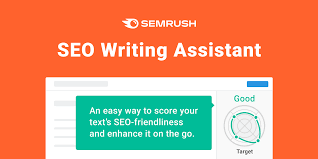
If your team already uses Semrush for keyword research and site audits, the SEO Writing Assistant is a natural extension. It plugs directly into Google Docs or WordPress and gives you live recommendations as you write.
The assistant checks four things in real time: SEO score (based on keyword usage and readability), readability (Flesch reading ease), originality (basic plagiarism check), and tone of voice consistency. That last one is surprisingly useful for teams where multiple writers contribute to the same blog — it flags when a guest post sounds completely different from your usual style.
A practical example: you’re writing a product roundup for “best noise-cancelling headphones under ₹5000.” You paste in your draft, set the target keyword, and Semrush immediately tells you which related terms you’re missing, whether your paragraphs are too dense, and what score the top competitor is hitting.
Best for: Content teams already on Semrush who want writing optimization built into the same platform.
Pros:
- Works directly inside Google Docs
- Covers SEO, readability, tone, and plagiarism in one panel
- Good for maintaining a consistent brand voice across writers
- Backed by Semrush’s extensive keyword database
Cons:
- Requires a Semrush subscription (paid plans start at $139/month)
- Writing Assistant alone isn’t worth paying for if you don’t need the full Semrush suite
- Recommendations can sometimes feel generic
- Not as deep on content scoring as Surfer SEO
3. Frase — Best for Content Briefs and Research
Frase is built around one core idea: help you understand what a top-ranking article actually covers, so you can cover it better.
When you enter a keyword, Frase pulls the top search results and extracts the key topics, headings, and questions each article covers. It then helps you build a content brief — a structured outline that maps out every section your article should include to be competitive.
This is incredibly useful when you’re writing about something unfamiliar. Let’s say you’re covering “how to set up a mesh Wi-Fi network.” Frase shows you that the top articles all cover: what mesh Wi-Fi is, how it differs from range extenders, setup steps by brand, and common troubleshooting issues. You can build your outline in minutes instead of spending an hour reading through competitor articles manually.
Frase also has a built-in document editor where you can write and optimize in the same place, with your research visible on one side.
Best for: Writers who need strong research support and structured content briefs before they start writing.
Pros:
- Excellent for content brief creation
- Shows exactly what topics competitors are covering
- Built-in “People Also Ask” and question research
- Affordable compared to Surfer (starts around $45/month)
- Good for solo bloggers and small teams
Cons:
- Content optimization scoring is less advanced than Surfer
- The editor is functional, but not as polished
- Limited keyword research capabilities on its own
- Some SERP data can feel dated
4. Clearscope — Best for Enterprise Content Teams
Clearscope is what large content teams use when they need consistent, high-quality output at scale. It focuses specifically on content grading — taking a keyword and telling you exactly which terms and concepts your article needs to cover to compete.
The interface is clean and simple. You put in a keyword, Clearscope gives you a grade (A++, A+, A, B, C, etc.) and a list of terms organized by relevance. As you write in the editor (or in Google Docs via integration), your grade updates live.
What makes Clearscope stand out is the quality of its term recommendations. It’s not just pulling synonyms — it’s identifying semantically related concepts that Google associates with a topic. For “content marketing strategy,” Clearscope might surface terms like “buyer persona,” “content calendar,” “distribution channel,” and “conversion funnel” — not because they’re keywords you need to stuff in, but because comprehensive articles on this topic naturally cover them.
Best for: Established content operations and enterprise teams where content quality directly affects revenue.
Pros:
- Very clean, focused interface
- High-quality semantic term recommendations
- Google Docs integration
- Easy to use — low learning curve despite being powerful
- Great for training junior writers on content quality
Cons:
- Expensive — starts at $199/month
- Not practical for individual bloggers or small budgets
- No built-in keyword research
- Less useful for content brief creation (it’s an optimizer, not a planner)
5. NeuronWriter — Best Budget Option for SEO Content
NeuronWriter does a lot of what Surfer and Clearscope do, but at a fraction of the price. It’s a strong choice for bloggers who want serious content optimization without a serious monthly bill.
The tool pulls SERP data for your target keyword, shows you competitor analysis, and gives you NLP-based term recommendations as you write. It also includes an internal linking suggestion feature, which is genuinely helpful for sites with a large archive of content.
One standout feature: NeuronWriter has a content planner that helps you organize topic clusters. If you’re building out a niche site and want to dominate a specific topic area (like “VPN for Android” as a cluster), it helps you map out all the articles you need to write and how they should link together.
Best for: Budget-conscious bloggers and niche site owners who want professional-grade SEO writing support.
Pros:
- Very affordable (plans start around $23/month)
- Strong NLP-based content grading
- Internal linking suggestions
- Content planner and topic cluster tool
- Lifetime deal options available occasionally
Cons:
- Interface is less polished than Surfer or Clearscope
- Smaller user community and fewer tutorials
- SERP analysis is solid, but not as deep as premium tools
- Some features feel like works in progress
6. Hemingway Editor — Best for Readability
Hemingway Editor doesn’t care about keywords or SERP rankings. It cares about one thing: making your writing easy to read.
It highlights sentences that are too long, flags passive voice, marks adverbs that weaken your writing, and tells you the reading grade level of your content. For SEO blog writing, readability matters more than most people realize — Google’s quality raters look at clarity, and real readers bounce off dense, hard-to-follow content.
Use Hemingway after you’ve written your draft. Paste in your content, look for the red and orange highlights (those are the biggest problems), and simplify. A good target for most blog content is a Grade 6–8 reading level. That’s not dumbing down your writing — it’s respecting your reader’s time.
Best for: Writers whose drafts tend to run long and complex. Also great for editing guest posts or outsourced content before publishing.
Pros:
- Free to use in the browser
- Instantly shows readability issues
- Simple, distraction-free interface
- Desktop app available for offline use
- Helps develop cleaner writing habits over time
Cons:
- No SEO features at all
- Desktop app costs a one-time fee ($19.99)
- Doesn’t understand context — some “complex” sentences are fine as-is
- Not integrated with any CMS or SEO tool
7. Google Search Console + Google Keyword Planner — Best Free Combo
No paid tool beats the combination of these two free tools from Google for understanding what’s actually working on your site and what people are searching for.
Google Search Console shows you which keywords your articles are already ranking for, how many clicks and impressions they’re getting, and what position they’re in. If an article is ranking on page 2 for a good keyword, that’s a signal to go back, expand it, and push it to page 1.
Google Keyword Planner helps you find keywords before you write — showing you monthly search volume and competition level. It’s more basic than Semrush or Ahrefs, but it’s free and pulls data straight from Google.
Together, these tools can power a solid content strategy at zero cost. Most new bloggers skip them entirely and then wonder why their traffic isn’t growing.
Best for: Bloggers just starting, anyone on a tight budget, and experienced writers who want to cross-check data.
Pros:
- Completely free
- Data comes directly from Google
- Search Console is essential for any site, regardless of what other tools you use
- Keyword Planner is useful for early-stage research
Cons:
- Keyword Planner shows ranges, not exact numbers (unless you’re running ads)
- No content optimization features
- Search Console data has a 48-hour delay
- Not designed specifically for content writing workflows
How to Build a Simple SEO Writing Workflow
You don’t need every tool on this list. Here’s a practical workflow depending on your budget:
If you have a tight budget: Use Google Keyword Planner to find your target keyword, write your article, paste it into Hemingway to clean it up, then track performance in Search Console. Add NeuronWriter if you can stretch to $23/month.
If you’re growing a content site: Frase for research and briefs + NeuronWriter or Surfer for optimization. This covers planning, writing, and scoring without breaking the bank.
If you’re running an established site or agency: Semrush or Surfer as your primary platform, Clearscope for high-priority articles, and Hemingway for readability checks.
Frequently Asked Questions
Do I need a paid tool to rank on Google?
No — plenty of sites rank well using only free tools and good writing. Paid tools speed up the process and give you an edge in competitive niches, but they’re not magic. Quality, relevance, and consistency matter more than any tool.
Which tool is best for a beginner blogger?
Start with the free Google tools — Search Console and Keyword Planner. Once you’re publishing regularly and want to optimize more seriously, NeuronWriter or Frase are affordable entry points.
What is content scoring, and should I care?
Content scoring is when a tool compares your draft to top-ranking competitors and gives you a score based on keyword usage, topic coverage, and structure. It’s useful as a guide, but don’t let a low score override your judgment as a writer. A naturally written, genuinely helpful article will almost always outperform a perfectly scored but robotic one.
Can these tools guarantee a #1 ranking?
No tool can guarantee rankings. SEO depends on many factors — your domain authority, backlinks, site speed, content quality, and how competitive the keyword is. These tools improve your odds; they don’t eliminate the work.
Is Surfer SEO worth the price?
For content teams producing 10+ articles per month in competitive niches, yes. For someone publishing once or twice a week on a personal blog, it’s probably too expensive relative to the benefit. Consider NeuronWriter or Frase instead.
How do I know if my blog content is SEO-friendly?
Run it through Hemingway to check readability, check that your target keyword appears naturally in the title, first paragraph, and a few subheadings, and make sure you’re answering the actual question behind the search. Then publish and track it in Search Console for 60–90 days.
Do I need all these tools at once?
Absolutely not. Pick one or two that match your current stage and budget. Overloading yourself with tools is a great way to spend money without improving output. Start simple, add tools as your content operation grows.
Conclsion
There’s no single tool that writes great SEO content for you. What these tools do is remove the guesswork — they tell you what to cover, what terms to include, and whether your writing is actually readable. The actual craft of writing something useful and engaging still comes down to you.
If you’re just starting, don’t overthink it. Write genuinely helpful articles about things you understand, use Google’s free tools to stay grounded in real search data, and improve from there.
If you’re scaling up, Surfer SEO and Frase are the two tools most content professionals reach for first. They’re not cheap, but they pay for themselves quickly when you’re competing for valuable keywords.
The best SEO writing tool is the one that fits your workflow, matches your budget, and actually makes you publish more — not the one with the most features on a pricing page.