Artificial intelligence has profoundly transformed aerospace engineering in 2026 —from AI-powered computational fluid dynamics (CFD) simulations that run 100x faster than traditional methods to generative design tools that discover optimal aircraft structures no human engineer would conceive. AI is accelerating spacecraft design cycles, improving propulsion-system optimization, enabling real-time flight-control algorithms, and making sophisticated aerospace simulation accessible to smaller research teams and startups.
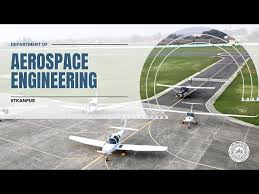
For Indian aerospace engineers — at ISRO, HAL, NAL, DRDO, IIT aerospace departments, and growing private space startups like Agnikul, Skyroot, and Pixxel — AI tools address core engineering challenges: expensive simulation computation, complex multiphysics optimization, and the need to iterate faster on designs with fewer physical prototypes.
This guide covers the best AI tools for aerospace engineering in 2026 — from AI-enhanced simulation platforms to generative design tools and autonomous systems.
Aerospace engineering is a branch of engineering focused on the design, development, testing, and maintenance of machines that operate in the air and space. It combines principles from physics, mathematics, materials science, electronics, and mechanical engineering to create safe and efficient aircraft, spacecraft, rockets, satellites, and related systems.
The field is generally divided into two major areas:
- Aeronautical engineering — focuses on aircraft that operate within Earth’s atmosphere, such as airplanes, helicopters, and drones.
- Astronautical engineering — focuses on vehicles and systems that operate in space, including rockets, satellites, and spacecraft.
How AI Has Changed Aerospace Engineering in 2026
CFD acceleration: AI surrogate models replace expensive CFD runs — predict aerodynamic performance 1000x faster than full simulation.
Generative design: AI explores millions of structural configurations — discovers lightweight, strong structures beyond human intuition.
Predictive maintenance: AI analyzes sensor data from aircraft and spacecraft — predicts failures before they occur.
Flight control: AI-powered flight control systems — adaptive algorithms handling complex aerodynamic conditions.
Materials discovery: AI identifies new aerospace materials — better strength-to-weight ratios, thermal resistance.
Mission planning: AI optimizes orbital trajectories, fuel consumption, and mission parameters — more efficient space operations.
Best AI Tools for Aerospace Engineering in 2026
AI Simulation and CFD Tools
1. ANSYS AI — Best AI for Aerospace Simulation
ANSYS remains the aerospace industry standard for simulation — AI features in 2026 make it the most powerful AI-enhanced aerospace simulation platform.
Ansys is one of the strongest choices for aerospace simulation because it combines established physics-based engineering simulation with AI-powered prediction, automation, and design exploration. Its AI portfolio includes Ansys SimAI, Engineering Copilot, GeomAI, and TwinAI, giving aerospace engineers tools for faster analysis and broader design exploration.
Ansys SimAI is particularly useful for aerospace applications. It learns from previous simulation data and can predict how new designs are likely to perform without requiring every design variation to go through a full traditional simulation. Ansys says SimAI can reduce prediction time dramatically and support design exploration across different physics areas.
Aerospace AI capabilities:
ANSYS SimAI:
Train an AI surrogate model on CFD results → predict aerodynamic performance without running a full simulation:
- 1000x faster than traditional CFD
- 95%+ accuracy vs. full simulation
- Enables rapid design space exploration
AI-powered meshing:
ANSYS Fluent → AI automatically generates optimal mesh → complex aerospace geometries → reduced manual meshing time from days to hours.
Generative design:
Describe structural requirements → ANSYS AI explores design space → generates optimized structures → weight reduction while meeting strength requirements.
Topology optimization:
AI identifies material that can be removed → lighter aerospace components → maintains structural integrity.
ANSYS Discovery:
Real-time physics simulation with AI → instant feedback on design changes → early-stage aerospace concept exploration.
Reduced Order Models (ROM):
AI creates simplified models of complex aerospace systems → faster system-level simulation → used in flight control development.
Indian aerospace:
ISRO uses ANSYS for launch vehicle simulation → NAL for aircraft aerodynamics → IIT aerospace departments for research.
Pricing: Enterprise licensing — contact ANSYS India.
Best for: Professional Indian aerospace engineers requiring industry-standard simulation with AI acceleration — ANSYS’s aerospace heritage and AI features make it the most trusted platform.
2. MATLAB with Deep Learning Toolbox — Best for Aerospace Algorithm Development
MATLAB remains the most widely used aerospace engineering tool — AI/ML toolboxes in 2026 extend capabilities significantly.
MATLAB with Deep Learning Toolbox is a strong choice for aerospace engineers, researchers, and students who need to develop, test, and optimize advanced algorithms. It combines MATLAB’s mathematical computing environment with tools for machine learning, neural networks, signal processing, control systems, computer vision, and simulation.
For aerospace applications, it can be particularly useful when the goal is not only to simulate an aircraft or spacecraft but also to develop the algorithms that control, analyze, or optimize the system.
Aerospace AI capabilities:
Deep Learning Toolbox:
Develop neural networks for:
- Flight control systems
- Sensor fusion algorithms
- Fault detection
- Trajectory prediction
Aerospace Toolbox + AI:
matlab
% AI-enhanced trajectory optimization
% Define mission constraints
mission = AerospaceMission();
mission.target = [lat, lon, alt];

% AI optimizer finds optimal trajectory
optimizer = TrajectoryOptimizer('AI', true);
trajectory = optimizer.optimize(mission);

% 10x faster than traditional numerical optimization
Simulink with AI:
Model-based design → AI blocks in Simulink → flight control law development → hardware-in-the-loop testing.
Reinforcement Learning:
Train autonomous flight control algorithms:
matlab
% Train RL agent for attitude control
env = AircraftAttitudeEnv();
agent = rlSACAgent(obsInfo, actInfo);
trainOpts = rlTrainingOptions('MaxEpisodes', 1000);
trainingStats = train(agent, env, trainOpts);
Curve fitting with AI:
Experimental wind tunnel data → AI fits aerodynamic model → accurate performance prediction.
Pricing: Academic licenses available for Indian IITs and research institutions. Commercial from $2,150/year.
Best for: Indian aerospace researchers and algorithm developers — MATLAB’s aerospace heritage and AI integration cover most aerospace algorithm development needs.
3. OpenFOAM with AI Acceleration — Best Free CFD for Aerospace
OpenFOAM is the leading open-source CFD platform — AI acceleration tools make it viable for aerospace simulation without commercial license costs.
Aerospace AI capabilities:
Physics-Informed Neural Networks (PINNs):
Train neural networks on OpenFOAM results → surrogate model → rapid aerodynamic evaluation:
python
# PINN for airfoil aerodynamics
import torch
import numpy as np

class AerodynamicPINN(torch.nn.Module):
    def __init__(self):
        super().__init__()
        # Network architecture
        self.layers = torch.nn.Sequential(
            torch.nn.Linear(3, 64),  # [x, y, AoA]
            torch.nn.Tanh(),
            torch.nn.Linear(64, 64),
            torch.nn.Tanh(),
            torch.nn.Linear(64, 2)   # [Cl, Cd]
        )

    def forward(self, x):
        return self.layers(x)

# Train on OpenFOAM simulation data
model = AerodynamicPINN()
# Predicts Cl, Cd 1000x faster than CFD
Deep learning turbulence:
AI turbulence models trained on DNS data → more accurate than RANS → faster than LES.
Free: OpenFOAM is completely free → AI acceleration via Python/PyTorch → zero software cost.
Best for: Indian aerospace students and researchers at IITs/IISc → OpenFOAM + AI provides professional CFD capability at zero cost.
AI Generative Design Tools
4. Autodesk Fusion 360 with Generative Design — Best AI Structural Design
Fusion 360’s generative design uses AI to discover optimal aerospace structural configurations.
Aerospace generative design:
Generative design workflow:
- Define design space (maximum envelope)
- Set structural loads (flight loads, thermal)
- Specify material constraints
- Define manufacturing methods
- AI explores millions of configurations
- Returns optimized designs ranked by performance
Aerospace applications:
Bracket design:
Traditional bracket: 2.3kg → Generative design: 0.8kg → 65% weight reduction → same structural performance.
Satellite structure:
Generative AI designs primary structure → minimum mass → maximum stiffness → launch load survival.
UAV airframe:
AI optimizes airframe structure → weight vs stiffness tradeoff → improved endurance.
Manufacturing constraint awareness:
AI considers: CNC machining, 3D printing, casting → manufacturable designs → not just theoretically optimal.
Pricing: Fusion 360 from $545/year. Educational free.
Best for: Indian aerospace startups and research teams designing new aerospace structures — generative design delivers weight savings impossible through traditional design.
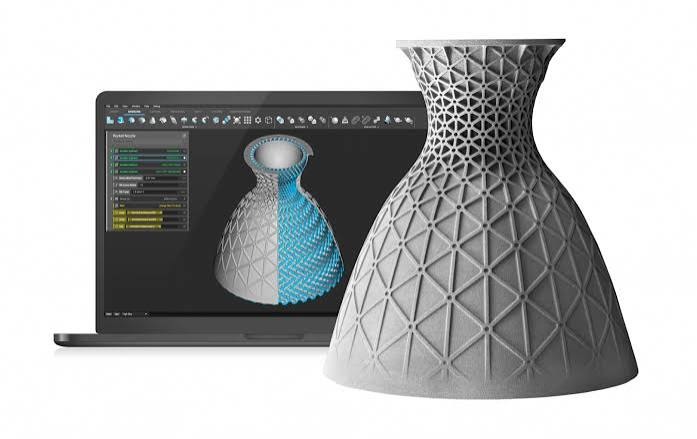
5. nTopology — Best for Aerospace Lattice Structure Design
nTopology provides AI-powered lattice structure design — the most advanced aerospace lightweighting tool.
Aerospace design capabilities:
Lattice structures:
AI designs internal lattice structures → 3D-printed aerospace components → 40–70% weight reduction.
Topology optimization:
Field-driven design → properties vary continuously through the structure → optimized local material properties.
Thermal management:
AI designs integrated heat exchangers → aerospace thermal management → optimal cooling with minimum mass.
Composites design:
AI optimizes fiber orientation in composite structures → maximum strength in load directions → minimum material.
Simulation integration:
nTopology → ANSYS → feedback loop → AI-driven design-simulate-optimize cycle.
Pricing: Enterprise — contact nTopology.
Best for: Aerospace additive manufacturing teams — nTopology’s lattice design capabilities are most relevant for 3D-printed aerospace components.
AI for Flight Dynamics and Control
6. Python/TensorFlow Aerospace AI — Best Open Source Approach
Python with aerospace-specific libraries provides the most flexible AI development environment for flight dynamics and control.
Aerospace Python AI stack:
JSBSim + Reinforcement Learning:
python
import jsbsim
import gymnasium as gym
import stable_baselines3 as sb3

# Create flight simulation environment
class AircraftEnv(gym.Env):
    def __init__(self):
        self.sim = jsbsim.FGFDMExec()
        self.sim.load_model('c172p')

    def step(self, action):
        # Apply control inputs
        self.sim['fcs/aileron-cmd-norm'] = action[0]
        self.sim['fcs/elevator-cmd-norm'] = action[1]
        self.sim.run()

        # Get state
        obs = self._get_obs()
        reward = self._compute_reward()
        return obs, reward, False, {}

# Train RL flight controller
env = AircraftEnv()
model = sb3.SAC("MlpPolicy", env)
model.learn(total_timesteps=100000)
# AI-trained flight controller
Trajectory optimization:
python
from scipy.optimize import minimize
import numpy as np

# AI-enhanced trajectory optimization
# Physics-constrained neural network
# Predicts optimal launch trajectory
Sensor fusion:
python
# Extended Kalman Filter with AI
# GPS + IMU + barometer fusion
# AI adapts noise model in real-time
Free: Python + open-source libraries → completely free aerospace AI development.
Best for: ISRO researchers, IIT students, Indian space startups → Python aerospace AI covers most algorithm development needs at zero cost.
7. Siemens Simcenter with AI — Best Digital Twin for Aerospace
Siemens Simcenter provides AI-enhanced digital twin capabilities for aerospace systems.
Aerospace digital twin:
Model-based systems engineering:
Complete aircraft/spacecraft digital twin → AI updates the model from sensor data → real-time performance monitoring.
Predictive maintenance AI:
Sensor data from aircraft → AI detects anomalies → predicts component failures → schedule maintenance before failure.
Fleet optimization:
AI analyzes entire fleet data → identifies patterns → optimizes maintenance schedules → reduces downtime.
Performance monitoring:
AI compares actual vs. predicted performance → identifies degradation → maintenance trigger.
Indian aerospace:
HAL (Hindustan Aeronautics Limited) → digital twin for aircraft fleet management.
Pricing: Enterprise — contact Siemens.
Best for: Indian aerospace OEMs and MRO operations → Simcenter digital twin most relevant for aircraft fleet management.

AI for Space Systems
8. GMAT with AI — Best for Orbital Mechanics
NASA’s General Mission Analysis Tool (GMAT) with AI extensions for spacecraft trajectory optimization.
Space systems AI:
AI trajectory optimization:
Multi-objective optimization → fuel v..s time tradeoff → AI finds Pareto-optimal trajectories → beyond human-derived solutions.
Constellation design:
AI optimizes satellite constellation → coverage vs cost → optimal orbital parameters.
Collision avoidance:
AI predicts conjunction events → generates avoidance maneuvers → minimizes fuel consumption.
Indian space:
ISRO uses trajectory analysis tools → Chandrayaan, Mangalyaan mission planning → AI extensions improving efficiency.
Free: GMAT is free (NASA open source) → Python AI extensions → zero cost.
Best for: Indian space researchers and ISRO engineers → GMAT + Python AI covers most orbital mechanics needs.
9. Claude/ChatGPT — Best AI for Aerospace Engineering Knowledge
AI assistants provide aerospace engineering knowledge support — calculations, literature, debugging.
Aerospace engineering prompts:
Aerodynamics calculation:
Calculate lift coefficient for NACA 2412 airfoil
at 5 degrees angle of attack using thin airfoil
theory. Show derivation and compare to
experimental data trends.
Structural analysis:
An aerospace bracket experiences:
- Axial load: 5000N
- Shear load: 2000N
- Bending moment: 500 N⋅m
Material: Titanium Ti-6Al-4V

Calculate von Mises stress and safety factor.
Propulsion:
Calculate specific impulse and thrust for
liquid rocket engine with:
- Oxidizer: LOX
- Fuel: LH2
- Chamber pressure: 200 bar
- Expansion ratio: 40:1
Code debugging:
This OpenFOAM case is diverging after 50
iterations. Here is my fvSolution and
fvSchemes setup: [paste config]

What's causing divergence and how to fix?
Free plan: Claude free handles most aerospace engineering knowledge queries.
Best for: Every aerospace engineer — AI assistants provide instant aerospace knowledge support, calculation verification, and debugging assistance.
AI for Aerospace Materials
10. Citrine Informatics — Best AI for Aerospace Materials Discovery
Citrine provides AI-powered materials discovery — identifying new aerospace materials with optimal properties.
Materials AI capabilities:
Composition optimization:
AI explores alloy composition space → predicts mechanical properties → identifies compositions with target properties.
Process optimization:
Manufacturing parameters → AI predicts material properties → optimizes heat treatment and processing.
Failure prediction:
Material properties + loading → AI predicts fatigue life → design margin calculation.
Indian aerospace materials:
Aluminum alloys, titanium alloys, composites → AI optimization → lighter, stronger aerospace structures.
Pricing: Enterprise — contact Citrine.
Best for: Aerospace materials researchers → Citrine’s AI accelerates new material discovery beyond traditional experimental approach.
Free Aerospace AI Stack for Indian Engineers
| Tool | Function | Cost |
|---|---|---|
| OpenFOAM + Python | CFD + AI surrogate | Free |
| MATLAB Student | Algorithm development | Discounted/Free |
| GMAT + Python | Orbital mechanics | Free |
| Fusion 360 Education | CAD + Generative design | Free (education) |
| Claude/ChatGPT free | Knowledge + calculations | Free |
| JSBSim + Python | Flight simulation | Free |
Complete free aerospace AI stack for Indian IIT/ISRO researchers.
Indian Aerospace AI Context
ISRO Applications
Launch vehicle design:
AI-enhanced CFD for GSLV, PSLV aerodynamics → faster design cycles → reduced wind tunnel testing.
Spacecraft thermal:
AI thermal analysis → satellite thermal control design → Chandrayaan series.
Mission planning:
AI trajectory optimization → fuel-efficient planetary missions → Mangalyaan, Aditya-L1.
Indian Private Space
Agnikul, Skyroot, Pixxel:
AI-powered design tools → compete with global players → faster development cycles → lower costs.
Startup AI stack:
OpenFOAM + Python + Fusion 360 Education + Claude → professional aerospace capability → minimal software cost.
Frequently Asked Questions
Which AI tool is best for aerospace engineering in 2026?
ANSYS AI (SimAI) is best for professional aerospace simulation — industry-standard with AI surrogate models delivering 1000x speedup. MATLAB Deep Learning Toolbox is best for flight control and algorithm development. OpenFOAM + Python is the best free alternative — professional CFD capability at zero cost. Claude/ChatGPT free handles aerospace knowledge support, calculations, and code debugging for every engineer.
Can AI replace aerospace engineers?
No — AI handles computation-intensive simulation, design space exploration, and pattern recognition while aerospace engineers provide: physical intuition, safety judgment, requirements definition, systems integration, and innovation direction. AI makes aerospace engineers more productive — handling weeks of simulation in hours — enabling more ambitious designs and faster iteration.
Which free AI tools are best for Indian aerospace students?
OpenFOAM (CFD), GMAT (orbital mechanics), JSBSim (flight simulation), Python with PyTorch (AI development), Fusion 360 Education (CAD + generative design), and Claude free (knowledge + calculations) together provide comprehensive free aerospace AI capability. Most IIT aerospace departments have MATLAB licenses — combining MATLAB with Python AI covers virtually all Indian aerospace students’ needs.
How does AI help with CFD in aerospace?
AI surrogate models (trained on CFD data) predict aerodynamic performance 100–1000x faster than full CFD runs → enables rapid design space exploration → test thousands of configurations → identify optimal designs → verify promising candidates with full CFD. Physics-Informed Neural Networks (PINNs) embed governing equations → more accurate extrapolation → reduced training data requirements.
Which AI tools does ISRO use?
ISRO uses commercial simulation tools including ANSYS for launch vehicle and spacecraft simulation, MATLAB for algorithm development and mission analysis, and proprietary in-house tools. Open-source tools including OpenFOAM and Python-based AI are increasingly used in research divisions. ISRO’s SAC (Space Applications Centre) and VSSC have active AI/ML programs for various aerospace applications.
Conclusion
AI has transformed aerospace engineering from months-long simulation cycles to hours-long AI-accelerated design exploration — enabling Indian aerospace engineers to compete globally with faster iteration and more ambitious designs.
Highest-impact AI tools for aerospace engineering:
For simulation: ANSYS SimAI — industry-standard with AI surrogate models, 1000x faster aerodynamic evaluation.
For algorithms: MATLAB Deep Learning Toolbox — flight control, sensor fusion, trajectory optimization.
For free CFD: OpenFOAM + Python AI — professional CFD + AI surrogate models at zero cost.
For structural design: Fusion 360 Generative Design — AI discovers optimal lightweight structures.
For space systems: GMAT + Python — free AI-enhanced orbital mechanics and trajectory optimization.
For knowledge support: Claude free — aerospace calculations, code debugging, literature synthesis.
Indian aerospace AI recommendation: Start with the free stack (OpenFOAM + Python + GMAT + Fusion 360 Education + Claude free) → covers most research and startup needs at zero cost. Add an ANSYS commercial license when simulation fidelity requirements justify the investment — typically when transitioning from research to production aerospace development.