Let’s be honest — most “free VPN” lists are just thinly veiled ads for paid upgrades. This one isn’t. If you’re looking for a free VPN that actually works on your iPhone without draining your battery, selling your data, or nagging you every five minutes to subscribe, you’re in the right place.
This guide covers the best free VPNs for iPhone in 2025 — what they’re good at, where they fall short, and which one makes sense for your specific situation.
A free VPN for iPhone is a mobile app that helps protect your online privacy, secure your internet connection, and hide your IP address without any cost. These VPNs are especially useful when using public Wi-Fi, accessing restricted content, or maintaining anonymity while browsing.
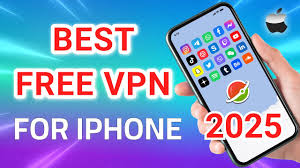
Some of the most trusted free options include Proton VPN, Windscribe, and PrivadoVPN, which are widely recommended for iOS users due to their balance of security and usability.
Best free VPN for iPhone 2025 One of the biggest advantages of using a free iPhone VPN is data encryption, which protects your personal information from hackers and trackers. VPNs also allow you to bypass geo-restrictions, helping you access websites or content that may be blocked in your region. For example, Proton VPN offers unlimited data, making it ideal for daily browsing, while Windscribe provides around 10GB of free data per month with strong privacy tools.
However, free VPNs come with limitations. Most services restrict data usage, server locations, or speed. For instance, PrivadoVPN offers fast speeds but limits users to 10GB of monthly data, after which performance may drop. Additionally, some free VPNs may include ads or fewer features compared to premium plans.
It’s also important to avoid unknown or unverified VPN apps, as some may collect user data instead of protecting it. Experts recommend choosing well-known providers with clear privacy policies and no-log practices.
In conclusion, a free VPN for iPhone is a great starting point for basic security and privacy. While it may not match premium services, trusted options like Proton VPN and Windscribe can still provide reliable protection for everyday use.
Why Use a VPN on Your iPhone at All?
Before getting into the list, it’s worth being clear about what a VPN actually does — and what it doesn’t.
A VPN (Virtual Private Network) encrypts your internet traffic and routes it through a server in another location. This means:
- Your internet provider can’t see what sites you’re visiting
- Public Wi-Fi networks (airports, cafés, hotels) can’t intercept your data
- Websites see the VPN server’s location instead of yours
- You can access content that’s restricted in your region
What a VPN doesn’t do: make you completely anonymous, protect you from malware, or guarantee total privacy if the VPN provider itself logs your activity. That last point matters a lot when choosing a free option — more on that below.
For iPhone users specifically, a VPN is useful if you:
- Travel frequently and connect to the hotel or airport Wi-Fi
- Want to access streaming content from other countries
- Use public hotspots regularly and want your banking or email protected
- Want to avoid being tracked by your internet provider
What to Watch Out for With Free VPNs
Not all free VPNs are created equal. Some are genuinely useful with reasonable limitations. Others are traps.
Here’s what to check before you download anything:
Data logging. Some free VPNs collect and sell your browsing data to advertisers. That defeats the entire purpose. Always check the privacy policy — look for a clear “no-logs” statement that’s been independently audited.
Data caps. Most free plans limit how much data you can use per month. For casual browsing, 10GB might be fine. For streaming or downloading, you’ll hit the ceiling fast.
Speed throttling. Free users often get slower servers. If pages are loading like it’s 2008, the VPN is throttling your connection.
Intrusive ads. Some free VPNs plaster ads throughout the app experience. Annoying, but usually harmless. Others inject ads into your browsing — that’s a red flag.
Limited server locations. Free plans often lock you to a handful of countries. If you need a specific region, the free plan may not cover it.
With that in mind, here are the best options worth your time in 2025.
Best Free VPN for iPhone 2025
1. Proton VPN Free — Best Overall Free VPN for iPhone
If you only read one entry on this list, make it this one. Proton VPN’s free plan is genuinely exceptional by free VPN standards — and it’s not close.
Proton VPN Free is one of the most trusted free VPN services available, especially for users who want strong privacy without paying anything. Developed by the team behind ProtonMail, this VPN focuses heavily on security, transparency, and user data protection.
One of the biggest advantages of Proton VPN Free is its unlimited data. Unlike many free VPNs that restrict usage to a few gigabytes per month, Proton VPN allows you to browse as much as you want without worrying about data limits. This makes it ideal for daily activities like browsing, streaming (basic level), and using social media.
In terms of security, Proton VPN uses strong encryption protocols and follows a strict no-logs policy, meaning it does not track or store your online activity. It also includes important features like a kill switch, which protects your data if the VPN connection drops unexpectedly.
The free version gives access to a limited number of servers in countries like the United States, the Netherlands, and Japan. While the speeds are generally reliable, they may be slower compared to the paid version due to high user demand on free servers.
Proton VPN Free is available on multiple platforms, including iPhone, Android, Windows, and macOS, making it a flexible option for users across devices.
However, there are a few limitations. You won’t get access to advanced features like high-speed streaming servers, torrent support, or a wide range of locations unless you upgrade to the premium plan.
Overall, Proton VPN Free is a solid choice for beginners who want a safe, reliable, and truly free VPN without compromising their privacy.
What makes it stand out: There is no data cap. You get unlimited data on the free plan, which is almost unheard of. The trade-off is that you’re limited to servers in three countries (the US, the Netherlands, and Japan), and speeds are slower than paid tiers. But for everyday browsing, checking emails on public Wi-Fi, or securing your connection while traveling, it works well.
Privacy: Proton VPN is based in Switzerland, which has strong privacy laws. It has a verified no-logs policy that’s been independently audited. The company also opens its apps, meaning security researchers can verify what the software actually does.
Practical example: You’re at an airport waiting for a flight and connect to the free airport Wi-Fi to check your bank account. With Proton VPN running, your session is encrypted and protected from anyone snooping on that network.
What’s missing: No access to streaming-optimised servers. Netflix and other platforms will likely detect the VPN and block it. You also only get one device on the free plan.
Verdict: Best choice for anyone who wants a genuinely trustworthy free VPN without worrying about running out of data.
2. Windscribe — Best for Flexibility and Features
Windscribe offers one of the most generous free plans in terms of server variety. You get access to servers in 11 countries on the free plan — far more than most competitors — and 10GB of data per month (which increases to 15GB if you confirm your email address).
What makes it stand out: The feature set on the free plan punches above its weight. You get a built-in ad blocker (called ROBERT), which helps reduce tracking and speeds up page loads. The iOS app is clean, easy to navigate, and doesn’t feel stripped down.

Privacy: Windscribe is based in Canada and has a no-logs policy. It’s been transparent about security incidents in the past, which, oddly, builds trust — they communicate openly rather than hiding problems.
Practical example: You’re a student living in a university dorm. You use Windscribe’s free plan to access study resources that are region-blocked, and the built-in ad blocker cleans up research pages cluttered with ads. The 10GB per month easily covers regular browsing and light use.
What’s missing: 10GB goes fast if you’re streaming video. There’s no kill switch on the free plan, which means if the VPN drops, your traffic briefly goes unprotected.
Verdict: Great pick for users who want more server variety and useful extras without paying anything.
3. Tunnelbear — Best for Beginners
If you’ve never used a VPN before and just want something that works without any setup headaches, Tunnelbear is the friendliest option on this list.
What makes it stand out: The app is visually fun and genuinely simple to use. You tap a country, the bear “tunnels” to it, and you’re connected. No confusing settings, no technical jargon. It’s built for people who just want the thing to work.
Privacy: TunnelBear publishes an annual independent security audit, which puts it ahead of most free VPN providers on transparency. It has a strict no-logs policy and is regularly audited by a third party.

Practical example: A first-time VPN user downloading Tunnelbear for the first time on their iPhone. Within 60 seconds of installing, they’re connected to a UK server without reading a single instruction.
What’s missing: The data limit is tight — only 500MB per month on the free plan. That’s barely enough for a few hours of light browsing. If you go over, you’re cut off until the next month (unless you tweet about them for a 1GB bonus, which is a quirky workaround they still offer).
Verdict: Great for the occasional use case — checking something quickly on public Wi-Fi — but the data cap makes it impractical for regular use.
4. Hide.me — Best for Speed on a Free Plan
Hide.me is a lesser-known name, but it holds up well in speed tests on its free tier — often better than better-known competitors.
What makes it stand out: You get 10GB per month and access to five server locations. The iOS app is straightforward. What sets it apart is that the speed throttling is minimal compared to other free plans — pages load at a reasonable pace, which isn’t always guaranteed with free VPNs.
Privacy: Hide.me is based in Malaysia, outside major surveillance alliance jurisdictions. It has a no-logs policy and supports multiple VPN protocols, including IKEv2, which is the preferred protocol for iPhones as it reconnects quickly when you switch between Wi-Fi and mobile data.
Practical example: You’re working remotely from a coffee shop and need to video call a client. Most free VPNs would make this painful. Hide.me’s relatively fast free servers make it workable for a 20–30 minute call without constant buffering.
What’s missing: Five server locations are limited if you need access to a specific country. No P2P/torrenting on the free plan, but that’s standard.
Verdict: Solid choice if speed is your priority and Proton VPN’s three-country limitation doesn’t work for you.
5. Atlas VPN Free — Best for Streaming Attempts
Atlas VPN’s free plan offers unlimited data — matching Proton VPN on that front — but with a different set of trade-offs.
What makes it stand out: The unlimited data makes it appealing for heavier users. It also has servers in the US and the Netherlands on the free plan and occasionally manages to get through streaming platform checks where other free VPNs get blocked.
Privacy: Atlas VPN has a no-logs policy and uses WireGuard, which is a modern, fast, and well-audited protocol. It was acquired by NordVPN’s parent company, which adds some credibility.
What’s missing: Speeds can be inconsistent during peak hours. Server choice is limited, and the app occasionally shows upgrade prompts more frequently than you’d want.
Verdict: Worth trying if Proton VPN is too slow for you and you want another unlimited-data option.
Pros and Cons of Using a Free VPN on iPhone
Pros
Zero cost. The obvious one. For casual users, a free plan covers everything they actually need.
Easy to set up. Every VPN on this list has a dedicated iOS app in the App Store. Installation takes about two minutes.
Improved security on public networks. Even with limitations, a free VPN adds meaningful protection when you’re on shared Wi-Fi.
No long-term commitment. You can try multiple options, switch freely, and stop anytime.
Privacy from your ISP. Even on a free plan, your browsing traffic is encrypted and hidden from your internet provider.
Cons
Data caps. Except for Proton VPN and Atlas VPN, most free plans limit how much you can use each month.
Slower speeds. Free users are typically deprioritised on servers. Streaming or downloading will feel sluggish.
Limited server locations. You may not be able to access content from the specific country you need.
Fewer features. Kill switches, split tunneling, and multi-device support are usually locked to paid plans.
Not ideal for streaming. Most free VPNs get detected and blocked by Netflix, Hulu, and similar platforms.
Trust concerns. The free VPN market has had bad actors. Stick to established names with audited no-logs policies.
Which Free VPN Should You Actually Choose?
Here’s a simple breakdown:
- For everyday security and browsing: Proton VPN Free — unlimited data, trusted privacy, no catches
- For more server options and extras: Windscribe — 10GB monthly, ad blocker, 11 countries
- For first-time users: Tunnelbear — beginner-friendly, just mind the 500MB cap
- For speed: Hide.me — fast free servers, 10GB monthly
- For a second, unlimited option: Atlas VPN — unlimited data, WireGuard protocol
Frequently Asked Questions
Is it safe to use a free VPN on an iPhone?
It depends entirely on which one you use. The options listed in this guide all have verified no-logs policies and are considered safe. Avoid random free VPNs from unknown developers on the App Store — many of those do collect and sell your data.
Will a free VPN slow down my iPhone?
Some slowdown is normal, but it varies. Proton VPN and Hide.me tend to perform best on their free tiers. If your connection is noticeably sluggish, try switching to a different server location within the app.
Can I use a free VPN to watch Netflix on my iPhone?
Most free VPNs get blocked by Netflix’s detection system. Atlas VPN occasionally works, but it’s inconsistent. For reliable streaming access, a paid plan is more dependable.
Do I need to create an account to use these VPNs?
Most require a free account signup. Proton VPN, Windscribe, and Tunnelbear all ask for an email address to register. This is standard and doesn’t compromise your privacy if the provider has a no-logs policy.
How do I install a VPN on my iPhone?
Search for the VPN app by name in the Apple App Store, download it, create a free account, and open the app. When you first connect, iOS will ask you to allow the app to add a VPN configuration — tap Allow. That’s it.
Will a free VPN protect me on public Wi-Fi?
Yes — this is actually one of the strongest use cases for a free VPN. Even with data limits, turning on your VPN whenever you connect to a public network protects your traffic from interception.
Can I use a free VPN indefinitely?
Yes, for the options listed here. None of these requires you to upgrade after a trial period. Proton VPN’s free plan, in particular, is designed as a permanent free tier — not a time-limited trial.
Is using a VPN legal in my country?
In most countries, yes. VPNs are legal in the US, UK, most of Europe, Australia, and India. Some countries restrict or ban VPN use — if you’re in Russia, China, or the UAE, check local regulations before using one.
Conclsion
You don’t need to spend money to get a decent VPN on your iPhone. The free options have improved a lot, and for most everyday use cases — protecting yourself on public Wi-Fi, keeping your browsing private, or accessing region-locked content occasionally — a free plan does the job.
Start with Proton VPN. It’s the most trustworthy, the most generous with data, and the most consistently recommended by security researchers. If you need more server variety, add Windscribe as a secondary option.