The best Academic writing in 2026 has been transformed by artificial intelligence — but in a uniquely complex way compared to other writing domains. Universities, journals, and academic institutions have developed nuanced policies around AI use: some prohibit AI-generated content entirely, others allow AI as a research and editing tool, and many require disclosure of AI assistance. Navigating these policies while leveraging AI’s genuine productivity benefits requires understanding both which tools help and how to use them responsibly.
For students, researchers, and academics in India and globally, AI tools address the most challenging aspects of academic writing: organizing complex research, maintaining a consistent academic tone, formatting citations correctly, checking for inadvertent plagiarism, and improving clarity without sacrificing scholarly rigor.
This guide covers the best AI tools for academic writing in 2026 — with honest guidance on appropriate use within academic integrity policies.
Academic Writing — History
Academic writing has a long history that developed alongside universities, scholarly institutions, and formal systems of education. Its roots can be traced to ancient civilizations where scholars recorded philosophical ideas, scientific observations, laws, literature, and historical events. In ancient Greece, writers such as Aristotle and Plato used structured arguments and evidence to explain ideas, while scholars in ancient India, China, and the Islamic world also developed traditions of systematic scholarship.
During the medieval period, European universities helped establish more formal academic practices. Scholars increasingly relied on citations, debates, written arguments, and authoritative sources. The invention of the printing press in the 15th century made scholarly texts easier to reproduce and distribute, contributing to the wider development of academic communication.
The Scientific Revolution and Enlightenment further changed academic writing. Writers began placing greater emphasis on observation, evidence, logical reasoning, and reproducible methods. Academic journals later became important platforms for researchers to share discoveries and debate existing ideas.
During the 19th and 20th centuries, universities and research institutions expanded rapidly. Different academic disciplines developed their own writing conventions, including research papers, literature reviews, dissertations, case studies, and scholarly books. Citation systems such as APA, MLA, and Chicago became widely used to identify sources and distinguish original ideas from previous research.
Today, academic writing is largely digital. Researchers use online journals, databases, reference-management software, and collaborative writing platforms. Modern academic writing continues to emphasize clear arguments, credible evidence, proper citations, critical analysis, and ethical research practices.
Academic Writing AI — Important Distinction
What AI Should and Shouldn’t Do in Academic Writing
Appropriate AI use (most institutions allow):
- Grammar and style editing
- Citation formatting assistance
- Research organization and summarization
- Paraphrasing assistance for better clarity
- Plagiarism checking
- Literature search assistance
- Structural feedback on argument flow
Inappropriate AI use (most institutions prohibit):
- Generating essay or paper content submitted as own work
- AI-written sections without disclosure
- Using AI to bypass research requirements
- Submitting AI-generated analysis as original insight
Always check your institution’s specific AI policy before using any tool for academic work — policies vary significantly across universities and journals.
Best AI Tools for Academic Writing in 2026
AI Research Tools
1. Perplexity AI — Best for Academic Research
Perplexity AI is the most valuable research tool for academic writers — providing cited, current information with source links for verification.
Academic research capabilities:
Literature discovery:
“What are the most important recent studies on [research topic]? Include author names, publication years, and key findings.”
Perplexity returns current academic sources with citations — a starting point for a literature review.
Concept explanation:
“Explain [complex academic concept] in depth — include theoretical framework, key contributors, and current debates in the field.”
Research gap identification:
“What are the current gaps in research on [topic]? What questions remain unanswered in the literature?”
Counter-argument research:
“What are the strongest arguments against [thesis position]? Include academic sources.”
Citation verification:
Every Perplexity response includes clickable sources — verify information and locate original papers.
Academic databases accessed:
Perplexity searches across academic sources including Google Scholar, arXiv, PubMed, and the general web.
Free plan: Sufficient for most academic research queries.
Pro ($20/month): More daily searches, academic search mode, file upload for document analysis.
Best for: Every academic writer — Perplexity replaces hours of manual database searching with minutes of AI-assisted literature discovery.
2. Semantic Scholar — Best Free Academic Search AI
Semantic Scholar is a free, AI-powered academic search engine designed specifically for academic literature discovery and analysis.
Academic research capabilities:
AI-powered search:
Natural language academic queries → Semantic Scholar searches 200+ million academic papers → the most relevant results surface.
TLDR summaries:
Every paper in Semantic Scholar has an AI-generated one-sentence summary — quickly evaluate relevance without reading the full abstract.
Citation network:
AI maps citation relationships — see which papers cite this work, which papers this work cites → map the entire literature landscape for any topic.
Research topics:
AI identifies trending research topics in any field — discover emerging areas relevant to your thesis.
Author profiles:
Follow key researchers in your field → get notified of new publications.
Paper recommendations:
AI recommends related papers based on what you’re reading — serendipitous literature discovery.
Completely free: No subscription required — open-access platform.
Best for: Academic researchers wanting free AI-powered literature search — Semantic Scholar’s citation network analysis is particularly valuable for systematic literature reviews.
3. Elicit — Best AI for Literature Reviews
Elicit is purpose-built for academic literature review — an AI assistant that searches academic databases and synthesizes research findings.
Academic literature capabilities:
Research question to literature:
Enter research question → Elicit searches academic databases → returns relevant papers with AI-extracted key information:
- Methods used
- Sample size
- Key findings
- Limitations
Concept extraction:
AI extracts key concepts from multiple papers simultaneously — identify patterns across literature without reading every paper in full.
Evidence synthesis:
“What does the research say about [topic]?” → Elicit summarizes findings across multiple studies.
CSV export:
Export literature review data to a spreadsheet for systematic review organization.
Pricing: Free (limited queries). Plus from $10/month.
Best for: Students writing systematic literature reviews — Elicit dramatically reduces time to survey existing research on any academic topic.
AI Writing and Editing Tools

4. Grammarly — Best Academic Writing Editor
Grammarly remains the most essential AI editing tool for academic writing — with specific academic writing features.
Academic writing capabilities:
Academic tone:
Grammarly detects casual language inappropriate for academic writing → suggests formal alternatives:
- “shows” → “demonstrates”
- “a lot of” → “numerous” or “substantial”
- “think” → “hypothesize” or “contend”
Clarity for complex ideas:
Academic writing often becomes unnecessarily complex — Grammarly identifies overly long sentences → suggests clear rewrites without losing scholarly precision.
Passive voice management:
Academic writing uses appropriate passive voice — Grammarly identifies passive constructions → you decide which to convert and which to keep.
Vocabulary enhancement:
Suggests discipline-appropriate synonyms — improves academic register without changing meaning.
Plagiarism checker:
Scans against 16 billion web pages and academic databases → identifies any inadvertent similarity → fix before submission.
Consistency:
Maintains consistent terminology across long papers — important for technical academic writing.
Citations check:
Grammarly does not format citations but flags missing attribution indicators — reminds you to cite where needed.
Institution integration:
Grammarly for Education is available to many universities — check if your institution provides free premium access.
Pricing: Free (basic). Premium from $12/month annual.
Best for: Every academic writer — Grammarly’s academic tone suggestions and plagiarism checker are non-negotiable for serious academic writing.
5. Claude — Best AI for Academic Argument Development
Claude is the most capable AI assistant for academic writing support — helping develop arguments, structure papers, and improve clarity within academic integrity guidelines.
Appropriate academic writing uses:
Argument structure feedback:
“Review my thesis argument and identify logical gaps, unsupported claims, and areas needing stronger evidence: [paste thesis section].”
Outline development:
“Help me develop a research paper outline for [topic]. My thesis is [thesis statement]. Required sections: Introduction, Literature Review, Methodology, Results, Discussion, Conclusion.”
Paragraph improvement:
“This paragraph is unclear. Improve clarity while maintaining academic tone and my original argument: [paste paragraph].”
Literature synthesis:
“I’ve gathered these sources [paste summaries]. Help me identify the main themes and organize them for a coherent literature review.”
Counter-argument identification:
“What are the strongest objections to this argument? [paste argument] How should I address them?”
Abstract writing:
“Based on this completed research paper, help me write a structured abstract: [paste paper sections].”
Transition improvement:
“My paper’s sections don’t flow well together. Suggest transitional phrases and connecting ideas between these sections: [paste sections]…”
Important: Use Claude to improve YOUR writing, not to generate content submitted as your own. Paste your work, ask for feedback and improvement suggestions.
Free plan: Claude free handles most academic support tasks effectively.
Best for: Academic writers wanting intelligent feedback on their own writing — Claude’s reasoning depth makes it particularly strong for identifying logical weaknesses in academic arguments.
6. QuillBot — Best AI Paraphrasing Tool for Academic Writers
QuillBot is the most widely used AI paraphrasing tool among students — with academic-specific modes and citation tools.
Academic writing capabilities:
Paraphrasing modes:
- Standard: Basic paraphrase
- Fluency: Improves flow
- Formal: Academic register
- Academic: Specifically for academic writing — most appropriate for student use
Why paraphrasing matters academically:
- Integrate source material into own writing
- Avoid over-quoting
- Demonstrate understanding of sources
- Reduce plagiarism risk from poor paraphrasing
QuillBot Citation Generator:
Paste URL or book details → QuillBot generates citation in:
- APA 7th edition
- MLA 9th edition
- Chicago
- Harvard
- Vancouver
- IEEE
And more
Grammar checker:
Integrated grammar correction alongside paraphrasing.
Summarizer:
Paste long academic text → QuillBot generates a summary → useful for processing large volumes of literature.
Co-Writer:
Writing interface combining paraphraser, grammar checker, and citation tool in one workspace.
Academic integrity note:
Use QuillBot to improve YOUR paraphrasing of sources — not to disguise AI-generated content. Most universities check for AI detection alongside plagiarism.
Pricing: Free (limited). Premium from $8.33/month annual.
Best for: Students integrating source material into academic writing — QuillBot’s academic paraphrase mode and citation generator address the most common academic writing challenges.
AI Citation and Reference Tools
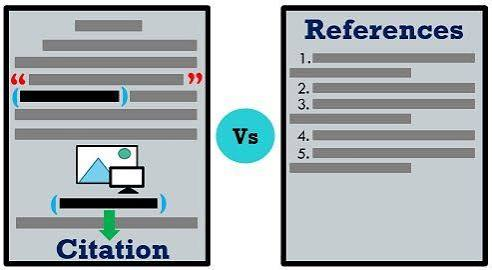
7. Zotero with AI — Best Reference Manager
Zotero is the most powerful free reference management tool — AI features help organize, annotate, and cite research sources.
Academic citation capabilities:
Automatic citation capture:
Browser extension → on any academic paper → click → Zotero captures complete citation data automatically — no manual entry.
PDF annotation:
Highlight and annotate PDFs within Zotero — notes linked to specific passages → easier literature review.
Citation insertion:
Word processor plugin → insert citations as you write → bibliography generated automatically.
Citation styles:
9,000+ citation styles available — APA, MLA, Chicago, Harvard, Vancouver, discipline-specific journals.
AI features (Zotero 7):
- Related papers suggestion
- Tag suggestions for organization
- Duplicate detection
Collaboration:
Share research libraries with supervisors or co-authors — cloud sync across devices.
Completely free: Zotero base software is free. Cloud storage starts at $20/year for more than 300MB.
Best for: Every academic writer producing citations — Zotero eliminates manual citation formatting, the most time-consuming non-writing task in academic writing.
8. Mendeley — Best for Medical and Science Academic Writing
Mendeley by Elsevier provides reference management with strong integration with scientific databases.
Academic citation capabilities:
PubMed integration:
Direct import of medical and scientific literature from PubMed → citation data captured automatically.
PDF reader:
Read, annotate, and highlight papers within Mendeley → notes synchronized across devices.
Citation plugin:
Word and LibreOffice plugin → citations inserted during writing → bibliography generated automatically.
Mendeley AI suggestions:
Recommends related papers based on your library — serendipitous literature discovery.
Dataset citation:
Handles dataset citations — important for empirical research papers.
Pricing: Free (2GB storage). Premium plans for more storage.
Best for: Medical, science, and engineering students — Mendeley’s PubMed integration and Elsevier database access make it most efficient for scientific literature management.
AI Plagiarism and AI Detection Tools
9. Turnitin — Best Academic Plagiarism Checker
Turnitin is the gold standard academic plagiarism checker — most widely used by universities worldwide.
Academic integrity capabilities:
Similarity checking:
Compares submission against:
- 70+ billion web pages
- 800+ million student papers
- Millions of academic publications
AI writing detection:
Turnitin now includes AI writing detection — identifies likely AI-generated content in submissions.
Feedback Studio:
Instructors provide inline feedback on papers — students see exactly where improvements are needed.
iThenticate:
Researcher-focused plagiarism check — for journal submissions and theses.
Pricing: Institutional — universities pay for student access. Check if your institution provides access.
Individual: WriterCheck by Turnitin from $3/submission.
Best for: Final check before submission — Turnitin identifies what your university will see before you submit.
10. Copyleaks — Best Plagiarism + AI Detection
Copyleaks combines plagiarism detection with AI content detection — important given growing university AI policies.
Academic integrity capabilities:
Plagiarism detection:
Scans against the web, academic databases, and previously submitted papers.
AI content detection:
Detects content generated by GPT-4, Claude, Gemini, and other AI tools — with a percentage breakdown.
Source code check:
Useful for computer science academic submissions — checks code for plagiarism.
Multiple language support:
Important for Indian academic institutions — checks in Hindi and other Indian languages alongside English.
Pricing: Free (10 credits). Plans from $9.99/month.
Best for: Students wanting to check both plagiarism AND AI detection score before submission — understand exactly how your paper will be evaluated.
AI for Thesis and Dissertation Writing
11. Notion AI — Best for Thesis Organization
Notion with AI provides the most comprehensive thesis project management — organizing research, drafts, supervisor feedback, and timeline in one workspace.
Thesis writing capabilities:
Research database:
Create a structured database of all sources — AI summarizes each source → synthesizes across the entire literature without re-reading.
Chapter planning:
AI helps structure thesis chapters — suggests logical flow based on research question and methodology.
Meeting notes:
Paste supervisor meeting notes → Notion AI extracts action items → thesis to-do list updated automatically.
Writing progress tracking:
Track word count per chapter → deadline countdown → visualize thesis completion progress.
AI writing within Notion:
Draft thesis sections in Notion → AI improves clarity, transitions, and academic tone.
Pricing: Free (limited). Plus $10/month. Student discount available.
Best for: PhD and master’s students managing long-term thesis projects — Notion AI’s organization features are most valuable for year-long thesis writing processes.
AI for Specific Academic Disciplines
Science and Engineering
Overleaf with AI:
LaTeX editor with AI writing assistance — standard for mathematics, physics, and engineering academic papers.
- AI suggests LaTeX commands
- Grammar checking within LaTeX
- Journal template library
Pricing: Free (basic). Premium from $12/month.
Social Sciences and Humanities
Claude for qualitative analysis:
Paste interview transcripts or qualitative data → Claude identifies themes → starting point for thematic analysis (researcher verifies and develops themes).
ATLAS.ti with AI:
Qualitative data analysis software — AI suggests codes from qualitative data → saves hours of manual coding.
Medical and Clinical Research
PubMed with AI search:
PubMed’s enhanced search — AI improves query formulation → more relevant medical literature results.
PICO framework assistance:
Claude: “Help me formulate a PICO research question for: [clinical scenario]” → structured PICO format for evidence-based medicine papers.
Complete Academic Writing AI Workflow
Research Phase
- Semantic Scholar → identify key papers (free)
- Elicit → systematic literature search (free)
- Perplexity → understand concepts and gaps
- Zotero → capture all citations automatically
Writing Phase
- Notion AI → organize research and outline
- Claude → argument structure feedback
- QuillBot Academic → paraphrase source material properly
- Grammarly Premium → academic tone and grammar
Citation Phase
- Zotero plugin → insert citations while writing
- QuillBot Citation Generator → generate any missing citations
- Mendeley → verify scientific citations
Review Phase
- Grammarly plagiarism → initial plagiarism check
- Copyleaks → plagiarism + AI detection score
- Claude → final argument and clarity review
- Turnitin → final check matching institutional system
Academic AI Tools by Student Level
Undergraduate Students
Essential free stack:
- Grammarly free (grammar)
- Zotero free (citations)
- Semantic Scholar (research)
- QuillBot free (paraphrasing, limited)
- Claude free (feedback)
Paid upgrade worth it:
Grammarly Premium ($12/month annual) — plagiarism checker alone justifies cost.
Postgraduate Students
Add to undergraduate stack:
- Elicit (literature review)
- Notion AI (thesis organization)
- QuillBot Premium (full paraphrasing)
- Perplexity Pro (deeper research)
PhD Researchers
Full professional stack:
- Zotero + Mendeley (comprehensive reference management)
- Elicit (systematic reviews)
- Overleaf Premium (LaTeX)
- Notion AI (project management)
- Copyleaks (pre-submission check)
- iThenticate by Turnitin (journal submission check)
Indian Academic Context
Indian University AI Policies in 2026
Indian universities have varying AI policies:
- IITs: Developing specific policies — disclosure often required
- University of Delhi: General academic integrity applies — check specific department guidance
- Private universities: Most developing explicit AI policies in 2026
General guidance: When uncertain → disclose AI tool use → demonstrate original thinking → use AI as a tool, not a replacement.
Indian Language Academic Writing
Grammarly: English only — limited for Hindi academic writing
Claude: Handles Hindi academic writing assistance reasonably well
QuillBot: Limited non-English support
For Hindi medium academic writing — Claude is the most useful AI tool currently available.
UGC NET and Competitive Exam Academic Writing
AI tools for practice:
- Claude → feedback on academic essay structure
- Grammarly → improve answer clarity
- QuillBot → paraphrase practice for comprehension sections
Academic Integrity — Using AI Responsibly
AI Disclosure Best Practices
When AI tools are permitted and used:
In methodology section:
“Grammar and style editing was performed using Grammarly Premium. Literature search was assisted by Semantic Scholar and Elicit. All analysis and arguments represent the author’s original work.”
In acknowledgments:
“The author used [tool] for [specific purpose] in preparing this manuscript.”
What Professors and Journals Check in 2026
Plagiarism: Turnitin, iThenticate
AI detection: Turnitin AI, GPTZero, Copyleaks
Academic quality: Still evaluated by humans
Best practice: Write in your own voice, use AI as an editor, not an author, verify all AI-suggested content, maintain original analytical contribution.
Frequently Asked Questions
Which AI tool is best for academic writing in 2026?
Grammarly Premium for editing and plagiarism checking — most essential academic writing AI tool. Zotero for citation management — eliminates manual citation formatting. Perplexity for research — cited, current literature discovery. Claude for argument feedback — most capable AI for improving your own academic arguments. These four together cover the complete academic writing process.
Is it academic misconduct to use AI for academic writing?
Depends entirely on institution policy and how AI is used. Using AI to edit your writing, check plagiarism, manage citations, and search literature is generally acceptable and often encouraged. Submitting AI-generated text as your own original work violates academic integrity at virtually all institutions. Always check your specific institution’s policy and disclose AI tool use when required.
Which free AI tools are best for academic writing?
Zotero (citation management), Semantic Scholar (literature search), Elicit free tier (literature review), Grammarly free (basic grammar), Claude free (argument feedback), Copyleaks free (plagiarism + AI detection check). This free stack covers research, citations, editing, and integrity checking at zero cost.
How do I avoid plagiarism in academic writing with AI tools?
Use Zotero to capture all sources correctly. Use QuillBot Academic mode to properly paraphrase sources rather than copying. Check with Grammarly plagiarism before submission. Final check with Copyleaks or Turnitin (if available). Never paste source text directly into paper without quotation marks and citation.
Can AI help with PhD thesis writing in India?
Yes — appropriately used. Semantic Scholar and Elicit for literature review acceleration. Zotero for managing hundreds of references. Notion AI for organizing chapter structure and supervisor feedback. Claude for feedback on your written arguments. Grammarly for language polishing. All of these support your research and writing without replacing original contribution — which is what PhD thesis evaluation requires.
Conclusion
AI tools have made academic writing support accessible to every student and researcher — from first-year undergraduates to senior researchers — while creating important ethical questions about appropriate use.
Highest-impact AI tools for academic writing:
For research: Semantic Scholar (free, 200M+ papers) + Elicit (free, systematic literature review) + Perplexity (cited, current information) — together, these three eliminate most of the time spent manually searching databases.
For citations: Zotero (completely free, 9,000+ citation styles, browser capture) — the single most time-saving academic writing tool available.
For editing: Grammarly Premium — academic tone, clarity, plagiarism checking all in one tool.
For argument development: Claude free — most capable AI for providing feedback on your own academic arguments.
For integrity checking: Copyleaks (plagiarism + AI detection) — understand how your paper will be evaluated before submission.
Start with the free stack — Zotero + Semantic Scholar + Elicit + Claude free + Grammarly free covers most academic writing needs at zero cost. Add Grammarly Premium for plagiarism checking and QuillBot Premium for full paraphrasing support as academic writing demands increase. Use AI as your research assistant and editor — never as your author.