Whether you’re a blogger, a small business owner, a student, or a full-time content creator, finding the right writing tool can save you hours every week. The market has exploded over the past few years, and 2026 is packed with powerful options — some great, some overhyped.
This guide breaks down the best writing tools available right now, what each one is actually good for, and which ones are worth your money. No fluff. Just honest, practical advice.
Best Writing Tools in 2026 Writing tools are essential for anyone creating content online, whether you are a blogger, student, marketer, or business owner. These tools help improve writing quality, save time, and make content more engaging. In 2026, writing tools have become smarter and more user-friendly, making them a must-have for productivity.

One of the biggest advantages of writing tools is grammar and spelling correction. Tools like Grammarly automatically detect errors and suggest better sentence structures. This helps writers produce clean, professional content without requiring advanced language skills.
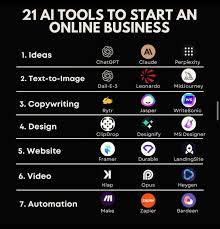
Another important feature is content generation and idea creation. Platforms such as Jasper and Copy.ai can help generate blog posts, ads, and social media captions in seconds. This is especially useful for people who run websites or YouTube channels and need consistent content.
Writing tools also improve readability. For example, Hemingway Editor highlights complex sentences and suggests simpler alternatives. This ensures your content is easy to understand, which is important for SEO and user engagement.
Additionally, tools like Google Docs allow real-time collaboration. Multiple users can edit the same document, making teamwork faster and more efficient.
Overall, writing tools are powerful helpers that enhance creativity, accuracy, and productivity. If you want to grow online or build a content-based business, using the right writing tools can give you a strong advantage.
Why the Right Writing Tool Matters More Than Ever
Let’s be real: writing is hard. Coming up with ideas, structuring your thoughts, getting past a blank page, fixing grammar — it all takes time and energy. A good writing tool handles the repetitive parts so you can focus on what only you can bring: your ideas, your voice, your judgment.
The tools in 2026 are smarter, faster, and more integrated into everyday workflows than ever before. But more options also mean more confusion. So let’s cut through it.
Best Writing Tools in 2026:The Top Writing Tools in 2026
1. Jasper — Best for Marketing Teams
Jasper has been around long enough to have a real track record, and in 2026, it remains one of the strongest choices for marketing-focused writing. It’s built specifically for teams producing content at scale — think product descriptions, ad copy, email campaigns, and landing pages.
What it’s actually like to use: Imagine you’re launching a new product. You feed Jasper your brand voice, a short brief, and your target audience. Within minutes, you’ve got five different versions of a product description to work with. You pick the bones of one, tweak the wording to match your tone, and you’re done — a task that might have taken two hours now takes twenty minutes.
Pros:
- Excellent for marketing copy (ads, emails, landing pages)
- The brand voice feature keeps output consistent across a team
- Good integrations with tools like Surfer SEO
- Solid template library for different use cases
Cons:
- Expensive — not ideal for solo creators on a budget
- Can feel formulaic if you don’t guide it well
- Requires a learning curve to get the best results
Best for: Marketing managers, content agencies, and e-commerce brands
Pricing: Starts around $49/month
2. Writesonic — Best for Budget-Conscious Creators
Writesonic punches above its price point. It covers a wide range of writing tasks — blog posts, social media captions, product descriptions, ad copy — and it’s one of the more affordable options that doesn’t feel cheap.
What it’s actually like to use: You’re a freelance copywriter with five clients. You use Writesonic to generate a first draft of a 1,000-word blog post on “how to save money on groceries.” The draft is decent — maybe 70% of the way there. You spend 30 minutes reshaping it, adding your own examples, and polishing the intro. The client gets a solid article. You charged three hours but spent one and a half. That’s the real value here.
Pros:
- One of the best value-for-money tools available
- Covers a huge range of content types
- Chatsonic’s feature allows for real-time research-based writing
- Easy to use, minimal setup
Cons:
- Output quality can be inconsistent on longer pieces
- Needs heavy editing for anything nuanced or technical
- Less refined than Jasper for brand consistency
Best for: Freelancers, bloggers, small business owners
Pricing: Free plan available; paid plans from around $16/month
3. Copy.ai — Best for Short-Form Content
Copy.ai made its name on short, punchy content — and it’s still excellent at that. Product descriptions, social media posts, taglines, email subject lines, headlines. If you need fast, creative short-form copy, this is one of the best tools for the job.
What it’s actually like to use: You run an online clothing boutique. You’ve got 40 new products to list this week. Copy.ai lets you generate fresh, varied descriptions for each one in a fraction of the time it would take to write them manually. Some outputs nail it immediately. Others need a line or two changed. Either way, you finish in two hours instead of two days.
Pros:
- Extremely fast for short-form copy
- Great for brainstorming and overcoming creative blocks
- User-friendly interface
- Free plan is genuinely useful (not just a teaser)
Cons:
- Struggles with long-form content
- Can be repetitive across multiple outputs if prompts are similar
- Not ideal for technical or in-depth articles
Best for: Social media managers, ecommerce sellers, anyone needing quick copy
Pricing: Free plan available; Pro from around $36/month
4. Surfer SEO + Writing Tools — Best for SEO-Focused Writers
Surfer SEO is not a writing tool in the traditional sense, but its built-in editor has become one of the most useful writing environments for anyone trying to rank on Google. It analyzes the top-ranking pages for your target keyword and gives you a real-time content score as you write — telling you which terms to include, how long your piece should be, and how your headings compare to competitors.

What it’s actually like to use: You’re writing an article on “best running shoes for flat feet.” Surfer pulls data from the top 20 Google results and builds you a content brief. As you write, a sidebar shows your score climbing from 32 to 78. You know you need to mention “arch support” three more times and add a section on “motion control.” It turns SEO from a guessing game into something concrete.
Pros:
- Excellent for data-driven SEO content
- Real-time guidance while you write
- Integrates with Google Docs and other tools
- Great for building content clusters and internal linking strategies
Cons:
- Pricey for what it offers if SEO isn’t your primary focus
- The writing itself still requires skill — it just guides you
- Can make writing feel mechanical if you follow it too rigidly
Best for: SEO specialists, content marketers, bloggers targeting organic traffic
Pricing: From around $89/month
5. Hemingway Editor — Best for Clarity and Readability
Hemingway Editor doesn’t generate content — it makes your existing writing sharper. Named after the novelist famous for clear, punchy prose, this tool highlights sentences that are too long, passive voice, weak adverbs, and hard-to-read sections. It gives you a grade level for your writing.

What it’s actually like to use: You’ve written a 500-word blog post introduction. You paste it into Hemingway. It shows three sentences highlighted in red (too complex), five in yellow (a bit long), and flags two instances of passive voice. You simplify, cut, rewrite. What felt like decent writing suddenly reads much cleaner. Your audience doesn’t have to work as hard.
Pros:
- Free to use in browser (paid desktop app available)
- Immediately improves clarity and flow
- Great for non-native English writers
- Teaches good writing habits over time
Cons:
- Doesn’t generate content — only edits
- Can oversimplify — not all “complex” sentences need changing
- No SEO features
- Desktop app costs a one-time fee
Best for: Anyone who wants to write more clearly — bloggers, students, professionals
Pricing: Free in browser; desktop app is a one-time $19.99
6. Grammarly — Best All-Around Grammar and Style Tool
Grammarly is probably the most widely used writing tool in the world, and for good reason. It catches grammar mistakes, spelling errors, punctuation issues, and stylistic problems. The premium version goes further — checking tone, clarity, engagement, and delivery.
What it’s actually like to use: You’ve just written a client proposal. Grammarly sits in your browser (or Word, or Gmail) and quietly flags a comma splice here, a missing article there, and a sentence that reads as “overly formal” for the tone you’ve set. You fix the issues in under two minutes. Your proposal looks polished and professional.
Pros:
- Works across almost every platform (Chrome, Word, Gmail, etc.)
- Extremely reliable for grammar and spelling
- Tone detection helps you match your writing to your audience
- Great for non-native English speakers
Cons:
- Suggestions can sometimes be wrong or unnecessary
- Premium pricing is high for what some users actually need
- Doesn’t generate content
- Can become a crutch if you stop thinking critically about your writing
Best for: Everyone — students, professionals, writers, anyone writing in English
Pricing: Free version is solid; Premium from around $12/month (billed annually)
7. Notion + Notion Writer — Best for Organized, Long-Form Writing Projects
Notion has evolved from a note-taking app into a full writing environment, especially for long-form projects. If you’re writing a book, a research report, a content series, or any project with lots of moving parts, Notion’s structure-first approach keeps everything organized while its built-in writing features handle the content itself.
What it’s actually like to use: You’re writing a 10-part email course. In Notion, you’ve got a database with each email as a separate page, linked to your content calendar, topic outline, and subscriber notes. The writing assistant helps you draft sections when you’re stuck. Everything lives in one place. You never lose a draft or forget what you wrote last week.
Pros:
- Outstanding for managing complex, multi-part writing projects
- Flexible — works as a writing tool, content calendar, research hub, and more
- Team collaboration features are excellent
- Writing assistant integrated directly into docs
Cons:
- Overkill for simple, one-off writing tasks
- Learning curve for new users
- Writing assistant isn’t as powerful as dedicated tools
- Can become messy if you don’t stay organized
Best for: Content teams, writers working on long-form projects, and anyone managing multiple writing workstreams
Pricing: Free plan available; paid plans from $10/month
Quick Comparison Table
| Tool | Best For | Starting Price | Long-Form | Short-Form | SEO |
|---|---|---|---|---|---|
| Jasper | Marketing teams | $49/mo | ✅ | ✅ | Partial |
| Writesonic | Budget creators | $16/mo | ✅ | ✅ | Partial |
| Copy.ai | Short-form copy | Free / $36/mo | ❌ | ✅ | ❌ |
| Surfer SEO | SEO content | $89/mo | ✅ | ❌ | ✅✅ |
| Hemingway | Clarity editing | Free | ❌ | ❌ | ❌ |
| Grammarly | Grammar & style | Free / $12/mo | ❌ | ❌ | ❌ |
| Notion | Project management | Free / $10/mo | ✅ | Partial | ❌ |
How to Pick the Right Tool for You
Here’s a simple way to think about it:
- You need to write a lot of content fast → Jasper or Writesonic
- You mostly write short posts, captions, or descriptions → Copy.ai
- You want to rank on Google → Surfer SEO
- Your writing feels clunky and hard to read → Hemingway Editor
- You make grammar mistakes or write in a second language → Grammarly
- You’re managing a big writing project with lots of pieces → Notion
And honestly? Most serious writers use a combination. A common stack might be Writesonic to generate a draft, Surfer SEO to optimize it, and Grammarly to clean it up before publishing.
Tips for Getting the Most Out of Any Writing Tool
- Always edit the output. No tool produces perfect content on its own. Your voice, your examples, and your judgment are what make the piece worth reading.
- Be specific with your prompts. The more context you give a content tool — your audience, tone, purpose, keywords — the better the results.
- Use tools to overcome blocks, not replace thinking. The best use of these tools is getting past the blank page, not outsourcing your ideas entirely.
- Combine tools strategically. A generation tool + an SEO tool + an editing tool is a powerful workflow. Each covers what the others miss.
- Review for accuracy. Writing tools can produce confident-sounding but factually incorrect statements. Always verify specific claims, stats, and names.
FAQs
Q: Are these writing tools suitable for beginners?
Yes — most of them are designed to be beginner-friendly. Grammarly and Hemingway are especially easy to start with since you just paste your text and follow the suggestions. Tools like Jasper have more of a learning curve but offer good tutorials and templates to help you get started.
Q: Can I use these tools for academic writing?
Some tools (like Grammarly and Hemingway) are great for academic writing because they focus on grammar and clarity. Content generation tools are trickier — most universities have policies against using them for assessed work, so check your institution’s guidelines before using them for essays or assignments.
Q: Will my writing sound generic if I use these tools?
It can, if you don’t edit. The key is to treat generated content as a rough draft, not a finished product. Add your own examples, change the phrasing to match your voice, and cut anything that doesn’t sound like you. The result will read naturally.
Q: Which tool is best for someone writing a book?
For a book, Notion is excellent for organizing chapters, research, and notes. Hemingway and Grammarly are great for editing each section. Writesonic or Jasper can help you push through sections you’re stuck on. But for a creative, voice-driven book, these tools should support your writing — not replace it.
Q: Are free plans actually useful, or are they just trials?
It depends on the tool. Grammarly’s free plan catches the most common grammar and spelling mistakes — genuinely useful for everyday writing. Copy.ai’s free plan gives you a reasonable number of credits per month. Hemingway’s browser version is completely free. Surfer SEO and Jasper’s free tiers are more limited and essentially function as trials.
Q: Is it worth paying for a premium plan?
If writing is part of your job or business, almost certainly yes. The time you save on a $20–50/month tool typically pays for itself within a few hours of use. If you’re writing occasionally for personal use, a free tier or a one-time purchase like Hemingway’s desktop app may be all you need.
Q: Do these tools work in languages other than English?
Most tools have improved their non-English support significantly. Grammarly supports English primarily, but is adding other languages. Jasper and Writesonic support multiple languages, though English outputs tend to be the most polished. If you’re writing primarily in another language, it’s worth testing the specific tool with a few samples before committing.
Conclsion
The best writing tool isn’t the most expensive one — it’s the one that fits into your actual workflow and solves your real problems. A freelance blogger has different needs than a content director at a SaaS company. A student writing essays needs something different from an e-commerce store owner writing product descriptions.
Start with one tool. Learn it properly. Then layer in others if you need to. The goal is to spend less time staring at a blank page and more time saying something worth reading.