V2Ray is not a traditional VPN — it is a powerful proxy framework developed specifically to bypass sophisticated internet censorship systems like China’s Great Firewall. Unlike standard VPN protocols (WireGuard, OpenVPN, IKEv2) that are easily detected and blocked, V2Ray’s VMess, VLESS, and Trojan protocols disguise traffic as normal HTTPS web traffic — making it significantly harder for censorship systems to identify and block.
In 2026, V2Ray remains one of the most effective tools for users in China, Iran, Russia, and other heavily censored internet environments — providing censorship bypass capability that standard VPNs cannot match.
Free VPN Server V2Ray is a network proxy platform designed to help users manage internet connections, route network traffic, and connect through proxy servers. It is part of the Project V project and is commonly associated with protocols such as VMess and support for other networking methods. V2Ray is often used by people who need flexible proxy configurations, encrypted connections, or alternative ways to access network services.
A V2Ray server is a server configured to run V2Ray-compatible software, allowing a compatible client on a computer or smartphone to connect through it. Users typically need server details such as an address, port, protocol, user ID, and transport or security settings, depending on the configuration. Popular compatible clients and related tools can make it easier to import connection profiles using configuration links or QR codes.
How Does a V2Ray VPN Server Work?
V2Ray routes supported network traffic through a configured server instead of sending it directly to the destination. Depending on the protocol and configuration, the connection can use encryption and different transport methods. This may help protect traffic between the client and server, but it does not automatically guarantee complete privacy or anonymity.
Benefits of V2Ray
- Flexible configuration: Supports different protocols, routing rules, and connection options.
- Cross-platform use: Compatible clients are available for platforms such as Android, Windows, macOS, and Linux.
- Remote connectivity: Can help users connect to a server in another location.
- Traffic routing: Allows users to configure which applications or destinations use the proxy.
- Custom server setup: Advanced users can configure their own server using a VPS and compatible software.
- Check now: Best Free IKEv2 VPN Server List in 2026
V2Ray vs Traditional VPN
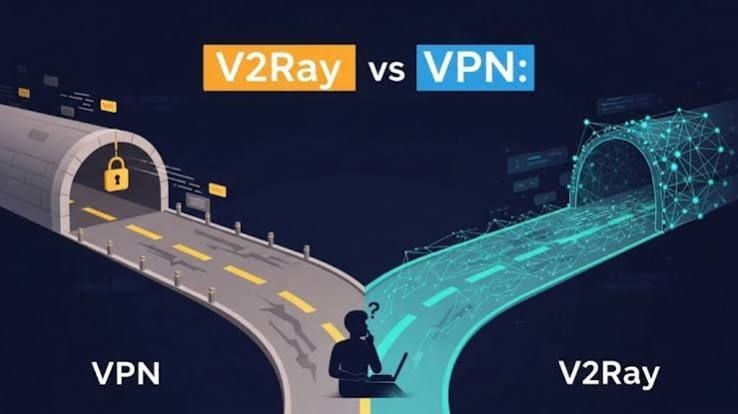
V2Ray vs. a Traditional VPN
A traditional VPN typically creates a device-level or application-level VPN tunnel, while V2Ray is primarily a proxy platform. Some V2Ray clients can integrate with a device’s VPN interface, making traffic routing behave more like a VPN. The actual privacy, security, and performance depend on the software, protocol, server, and configuration.
Key Differences
| Feature | Traditional VPN | V2Ray |
|---|---|---|
| Protocol | WireGuard, OpenVPN, IKEv2 | VMess, VLESS, Trojan |
| Detection | Easily fingerprinted | Disguised as HTTPS |
| China GFW | Often blocked | More resistant |
| Setup | Simple app | Manual config required |
| Speed | Fast | Depends on server |
| Free servers | Many | Limited but available |
V2Ray Protocol Types
VMess
Original V2Ray protocol — encrypted, obfuscated — most widely supported. VMess is a network communication protocol originally developed for V2Ray, a proxy platform used to route internet traffic through a remote server. It allows a compatible client, such as a V2Ray application on Android, Windows, macOS, or Linux, to communicate with a configured server. VMess uses a user ID for authentication and supports different transport configurations, depending on the server and client setup.
VMess is commonly used by people who need flexible proxy connections, remote network access, or custom traffic-routing options. To connect to a VMess server, users generally need a configuration containing the server address, port, user ID, encryption setting, and transport details. These settings are often shared through a VMess connection link or QR code, making it easier to import the profile into a compatible client.
One important advantage of VMess is its flexibility. Depending on the configuration, it can work with different transport methods and integrate with routing rules to control which traffic passes through the proxy. However, connection speed depends on the server’s location, available bandwidth, network congestion, and configuration quality. VMess is not automatically faster or more secure than every traditional VPN.
VLESS
Lighter version of VMess — less overhead → faster speeds — newer and increasingly popular. VLESS is a lightweight proxy protocol used by Xray and compatible networking software to route internet traffic through a remote server. It is commonly used in proxy configurations designed for flexible traffic routing, remote connectivity, and encrypted transport connections. VLESS is related to the V2Ray ecosystem, but it differs from VMess in its protocol design and does not use the same built-in encryption approach.
VLESS typically relies on a user ID for authentication, along with server details such as an IP address or domain name, port, and transport settings. To protect the connection, it can be combined with transport-layer security options such as TLS or REALITY, depending on the software and server configuration. Compatible client applications can import connection profiles through configuration links or QR codes, making setup easier for users on supported devices.
One major advantage of VLESS is its relatively lightweight protocol design, which can reduce protocol overhead. However, VLESS does not automatically guarantee faster speeds or stronger privacy than other proxy protocols. Actual performance depends on the server’s hardware, network quality, geographic distance, transport settings, and congestion. Security also depends on correct configuration and trustworthy server management.
Trojan
Mimics HTTPS traffic exactly → most difficult to detect → best for heavily censored environments. Trojan is a proxy protocol designed to route internet traffic through a remote server using TLS encryption. It is commonly used in proxy-server configurations and can work with compatible clients on devices such as Windows PCs, macOS computers, Linux systems, and Android phones. Unlike the traditional Trojan malware that steals information or damages systems, the Trojan proxy protocol is a legitimate networking technology when used with trusted software and servers.
Trojan is designed to make proxy connections use standard TLS-based transport, similar to the encryption commonly used by HTTPS websites. A typical setup requires a server address, port, password, and appropriate TLS configuration. Depending on the client software, users may be able to import connection details through a configuration link or QR code.
Reality
Latest protocol (2023+) → most advanced obfuscation → steals TLS fingerprint from real websites → nearly undetectable. REALITY is a transport-security technology used by Xray, a proxy platform associated with the V2Ray ecosystem. It is designed to help secure proxy connections and make their TLS handshake resemble connections to a legitimate TLS-enabled destination. REALITY is commonly paired with the VLESS protocol to create proxy configurations for users who need flexible networking, encrypted connections, and traffic routing.
Unlike a standalone VPN protocol, REALITY is not a complete VPN service by itself. It works as part of a compatible client-server configuration. A typical setup uses an Xray server, a compatible client, and settings such as a server address, port, user ID, public key, short ID, and server name. The exact requirements depend on the configuration and client software.
Best Free VPN Server V2Ray in 2026 :-Free V2Ray Server Sources
Source 1 — GitHub Free V2Ray Lists
Community-maintained GitHub repositories provide free V2Ray configs:
Active repositories (search GitHub):
- “free-v2ray” repositories
- “v2ray-configs” repositories
- “clash-configs” repositories
How to use:
- GitHub → search “free v2ray server 2026”
- Find a recently updated repository
- Copy VMess/VLESS config string
- Import into V2Ray client
Config string format:
vmess://eyJhZGQiOiJleGFtcGxlLmNvbSIsInBvcnQi...Base64 encoded → paste directly into client → auto-configures.
Reliability: Free GitHub configs expire frequently — check the repository’s last updated date → stale configs = non-working servers.
Source 2 — Telegram Free V2Ray Channels
Telegram channels post fresh V2Ray configs daily:
Search Telegram:
- “v2ray free”
- “vless free server”
- “vmess daily”
- “v2ray config 2026”
Config format in Telegram:
Channels post:
- Individual VMess/VLESS links
- Subscription URLs (auto-updating)
- QR codes for mobile import
Subscription URLs (best option):
Single URL → client auto-fetches latest configs → always fresh servers → no manual updating.
How to use subscription:
V2Ray client → Add subscription → paste URL → client downloads all configs → select fastest server.
Source 3 — V2Ray Subscription URLs
Community subscription services:
Free subscription URLs aggregate multiple V2Ray servers:
Import in client:
- Open V2RayNG (Android) or V2RayN (Windows)
- Subscriptions → Add
- Paste subscription URL
- Update subscription → servers downloaded
- Select fastest → connect
Update frequency:
Good subscription services update daily → always fresh, working servers.
Best Free V2Ray Clients
Android — V2RayNG
Most popular Android V2Ray client:
Installation:
Play Store → search “V2RayNG” → install
Or: GitHub → V2RayNG releases → download APK.
Import config:
- Scan QR code
- Paste VMess/VLESS link
- Add subscription URL → auto-updates
Features:
- All V2Ray protocols (VMess, VLESS, Trojan, Reality)
- Subscription management
- Speed testing
- Split routing (bypass for Chinese/Indian apps)
- Traffic statistics
Setup:
- Open V2RayNG
- button → Import Config URL
- Paste VMess/VLESS string
- Select imported config
- Connect (airplane icon)
- Verify: whatismyip.com
Free: V2RayNG is completely free.
Windows — V2RayN
Most popular Windows V2Ray client:
Installation:
GitHub → 2dust/v2rayN → Releases → download v2rayN.zip → extract → run v2rayN.exe.
Import config:
- Server → Add VMess server (manual)
- Server → Import from clipboard (paste link)
- Subscription → Add subscription URL
Features:
- System proxy mode → all traffic through V2Ray
- PAC mode → selective routing
- Speed test all servers
- Subscription auto-update
Setup:
- Extract v2rayN
- Run v2rayN.exe
- Subscriptions → Add → paste URL → Update
- Right-click server → Set as active
- System proxy → Auto mode
- Browse normally
iOS — Shadowrocket / Streisand
iOS V2Ray clients (paid but affordable):
Shadowrocket: $2.99 — most popular iOS proxy client → supports VMess, VLESS, Trojan.
Streisand: Free — newer iOS client → V2Ray support.
Import:
Share link → “Open in Shadowrocket” → auto-imports config.
macOS — V2RayU / ClashX
macOS V2Ray clients:
V2RayU: Free → GitHub download → menubar app → all V2Ray protocols.
ClashX: Free → supports V2Ray via Clash → more user-friendly.
V2Ray Manual Configuration
VMess Manual Config
json
{
  "v": "2",
  "ps": "Free Server Name",
  "add": "server.example.com",
  "port": "443",
  "id": "uuid-here",
  "aid": "0",
  "scy": "auto",
  "net": "ws",
  "type": "none",
  "host": "server.example.com",
  "path": "/v2ray",
  "tls": "tls",
  "sni": "server.example.com",
  "alpn": "",
  "fp": ""
}
Key fields:
- add: Server address
- port: Connection port (443 = HTTPS, bypasses most blocks)
- id: UUID authentication key
- net: Transport (ws = WebSocket, grpc, tcp)
- tls: Enable TLS encryption
- path: WebSocket path
VLESS + Reality Config
Most advanced — hardest to detect:
json
{
  "v": "2",
  "ps": "Reality Server",
  "add": "server.example.com",
  "port": "443",
  "id": "uuid-here",
  "scy": "none",
  "net": "tcp",
  "type": "none",
  "tls": "reality",
  "sni": "www.google.com",
  "fp": "chrome",
  "pbk": "public-key-here",
  "sid": "short-id-here"
}
Reality advantages:
- Steals TLS fingerprint from real website (Google, Cloudflare)
- Appears as normal HTTPS traffic to any website
- Most difficult to block — even China GFW struggles
V2Ray Performance Optimization
WebSocket + TLS + CDN Setup
Best-performing free V2Ray configuration:
Protocol: VLESS or VMess
Transport: WebSocket (ws)
TLS: Enabled (port 443)
CDN: Cloudflare (hides real server IP)
Why this works:
Traffic appears as Cloudflare HTTPS → ISP/firewall cannot block without blocking all Cloudflare → effectively unblockable.
Speed Testing Free Servers
V2RayNG/V2RayN both have built-in speed tests:
- Import multiple free configs
- Select all → Speed test
- Sort by latency
- Use the lowest latency server
Indian users:
Look for servers with <150ms ping → Singapore, Japan, Hong Kong servers → best performance from India.
Setting Up Your Own Free V2Ray Server
Free VPS Options
Oracle Cloud Always Free:
2 AMD instances free forever → Ubuntu 22.04 → install V2Ray server → personal free server.
Google Cloud Free Tier:
f1-micro instance → 1 year free → V2Ray server → US-based.
AWS Free Tier:
t2.micro → 1 year free → V2Ray server.
Install V2Ray on a free VPS
bash
# One-line V2Ray install script
bash <(curl -L https://raw.githubusercontent.com/v2fly/fhs-install-v2ray/master/install-release.sh)

# Or X-UI panel (easiest management)
bash <(curl -Ls https://raw.githubusercontent.com/mhsanaei/3x-ui/master/install.sh)

# Start V2Ray
systemctl start v2ray
systemctl enable v2ray

# Check status
systemctl status v2ray
X-UI panel:
Web-based V2Ray management → create VMess/VLESS/Reality configs → generate QR codes → share with devices → personal free V2Ray server.
Best free V2Ray setup: Oracle Cloud Always Free → Ubuntu → X-UI panel → VLESS + Reality → personal always-free V2Ray server.
V2Ray vs Traditional VPN — When to Use
Use V2Ray when:
- In China → GFW blocking standard VPNs
- ISP blocking VPN protocols
- Corporate/school network blocking VPNs
- Need maximum censorship bypass capability
- Standard VPNs consistently failing
Use Traditional VPN when:
- Simple privacy browsing
- Streaming geo-blocked content
- Gaming latency reduction
- Easy setup priority
- No heavy censorship environment
Free V2Ray Troubleshooting
Config Not Connecting
Fix sequence:
- Check config expiry → free configs often expire in 24- 48 hours
- Get a fresh config from the Telegram channel
- Try a different protocol (VMess → VLESS)
- Try a different port (80 → 443)
- Enable TLS if not enabled
- Change transport (tcp → ws)
Slow V2Ray Speed
Fix:
- Speed test all imported servers → use the fastest
- Switch to WebSocket + TLS + Cloudflare CDN servers
- Try VLESS instead of VMess (less overhead)
- Connect during off-peak hours
- Use Reality protocol for best speed + security
V2RayN Not Working on Windows
1. Run as administrator
2. Check Windows Firewall → allow v2rayN
3. Try different system proxy mode (Auto → Global)
4. Disable antivirus temporarily (false positive common)
5. Re-download latest v2rayN release from GitHub
Frequently Asked Questions
What is V2Ray and how is it different from VPN?
V2Ray is a proxy framework that disguises internet traffic as normal HTTPS web traffic — making it harder to detect and block than traditional VPN protocols. Standard VPNs (WireGuard, OpenVPN) have recognizable traffic patterns that censorship systems identify and block. V2Ray’s VMess, VLESS, and Reality protocols mimic legitimate web traffic — most effective for bypassing China’s Great Firewall and other sophisticated censorship systems. Setup requires more technical knowledge than standard VPN apps.
Where can I find free V2Ray servers in 2026?
Three main sources: (1) GitHub — search “free v2ray configs 2026” → community repositories updated regularly; (2) Telegram channels — search “v2ray free” → channels post fresh VMess/VLESS configs daily; (3) Subscription URLs — aggregate multiple servers, auto-update daily → most convenient. Configs expire frequently (24- 488 hours typically) → subscription URLs are most reliable, as they auto-fetch fresh servers. Best option: set up your own V2Ray server on Oracle Cloud Always Free tier.
Which V2Ray client is best for Android in 2026?
V2RayNG is the best Android V2Ray client — free, supports all protocols (VMess, VLESS, Trojan, Reality), subscription management, and built-in speed testing. Install from the Play Store or GitHub. Import configs via QR code, paste a VMess/VLESS link, or a subscription URL. V2RayNG’s subscription feature auto-updates servers daily — never manually search for fresh configs.
What is VLESS Reality and why is it best?
Reality is V2Ray’s most advanced protocol — steals TLS fingerprint from legitimate websites (Google, Cloudflare) → traffic appears identical to normal HTTPS → nearly impossible to detect or block even by sophisticated censorship systems. VLESS + Reality = fastest + most secure + hardest-to-detect V2Ray configuration. Requires a server supporting Reality (newer protocol) → not all free servers offer it → own server setup recommended for Reality.
Can I set up my own free V2Ray server?
Yes — Oracle Cloud Always Free provides 2 Ubuntu instances permanently free → install V2Ray with one command → X-UI web panel for easy management → create VMess/VLESS/Reality configs → personal free server with no expiry. Google Cloud and AWS also offer free tiers (12 months). Own server = no expired configs, no shared servers, complete control → most reliable free V2Ray solution long-term.
Conclusion
V2Ray in 2026 remains the most effective censorship bypass tool for heavily restricted internet environments — offering obfuscation capabilities that standard VPNs cannot match.
Best free V2Ray approach:
Quickest start: Telegram channels → subscribe to an active V2Ray channel → fresh daily configs → V2RayNG import → connect.
Most reliable: GitHub subscription URLs → V2RayN/V2RayNG subscription → auto-updating server list → always fresh configs.
Best long-term: Oracle Cloud Always Free → Ubuntu → X-UI panel → VLESS Reality → personal permanent free V2Ray server.
Best protocol priority:
- VLESS + Reality (most advanced, hardest to detect)
- VLESS + WebSocket + TLS + CDN (reliable, fast)
- VMess + WebSocket + TLS (widely supported)
- Trojan (good alternative)
For Indian users: V2Ray is most valuable when ISP or corporate networks block standard VPN protocols → V2Ray’s HTTPS disguise bypasses most network-level restrictions → significantly more effective than standard VPN in restricted environments.