
Picking a free VPN for your Android phone sounds simple until you actually start looking. Open the Play Store, search “VPN,” and you’ll get hit with hundreds of apps, all claiming to be the fastest, safest, and most private option out there. Most of them aren’t. Some log your data and sell it. Others throttle your speed so badly that streaming a video becomes painful. A few are outright unsafe.
The good news is that a handful of genuinely solid free VPN apps for Android do exist in 2026. This guide walks through the best ones, what makes them worth using, where they fall short, and how to pick the right one for what you actually need — whether that’s streaming, gaming, browsing safely on public Wi-Fi, or just keeping your internet provider out of your business.

free VPN for your Android device is easier than ever in 2026, but choosing the right one can still be challenging. With so many VPN apps available on the Google Play Store, it’s important to select a service that offers strong security, fast speeds, and a trustworthy privacy policy without charging a subscription fee.
A good free Android VPN can help protect your personal data on public Wi-Fi, encrypt your internet connection, improve online privacy, and access geo-restricted websites and apps. While free VPNs often come with limitations such as data caps, fewer server locations, or reduced speeds, several reputable providers offer generous free plans that are safe for everyday browsing.
In this guide, we’ll explore the best free Android VPNs in 2026, comparing their features, performance, security, data limits, and ease of use. Whether you need a VPN for secure browsing, streaming, gaming, or protecting your privacy while traveling, these free options can help you stay safe online without spending any money.
Why People Use a VPN on Android in the First Place
Before jumping into the list, it helps to understand what a VPN actually does for you day to day. A VPN routes your phone’s internet traffic through a private server, which does two main things.
First, it hides your real IP address, so websites and apps see the VPN server’s location instead of yours. This is why people use VPNs to access content that’s blocked in their country, or to avoid location-based pricing on flights and subscriptions.
Second, it encrypts your traffic, which matters a lot on public Wi-Fi. Coffee shop networks, airport Wi-Fi, and hotel internet are common targets for snooping, and a VPN makes that data unreadable to anyone trying to intercept it.
For Android users specifically, a VPN app also helps block some tracking that happens at the network level, separate from what your browser blocks. That’s especially useful if you use a lot of apps that quietly send data in the background.
What Makes a Free VPN Actually Good (or Bad)
Free VPNs have a rough reputation, and honestly, a lot of them deserve it. Here’s what separates the decent ones from the ones you should avoid.
No hidden data logging. Some free VPNs make their money by logging your browsing activity and selling it to advertisers — the exact thing you’re trying to avoid by using a VPN in the first place. Look for apps with clear, published no-logs policies.
Reasonable speed limits. Free tiers almost always come with some kind of cap, either on speed or data. The good ones are usable for daily browsing and light streaming. The bad ones make videos buffer every ten seconds.
A real free tier, not a trial trap. Some apps market themselves as free but only give you 3 days before demanding payment. A genuine free VPN should let you use it indefinitely, even with limits.
Decent server selection. Even free plans should offer a handful of server locations. One or two servers means everyone’s traffic gets bottlenecked through the same pipe.
Working kill switch. This feature cuts your internet if the VPN connection drops, so your real IP never leaks out by accident. It’s a basic safety feature that a lot of free apps skip entirely.
Keep these points in mind, because they explain why some names below made the list, and others didn’t.
1. ProtonVPN
ProtonVPN‘s free tier is widely considered one of the most trustworthy options out there, mainly because the company built its reputation on privacy tools before VPNs were even part of their lineup.
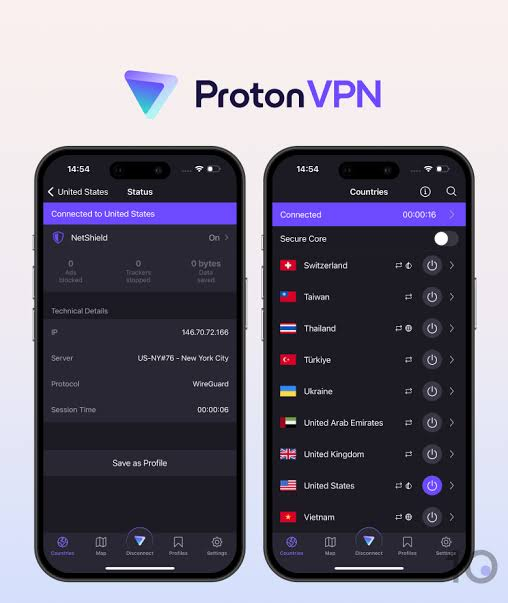
Example use case: Say you’re at an airport waiting for a flight and want to check your email over public Wi-Fi without worrying about anyone snooping on the connection. ProtonVPN’s free plan handles this easily, with unlimited data on the free tier, which is rare.
Pros:
- Unlimited data on the free plan, unlike almost every competitor
- Strong privacy policy backed by a company with a long track record
- No ads or annoying upgrade pop-ups constantly interrupting use
Cons:
- Only three free server locations (US, Netherlands, Japan), so speeds can vary
- Slower speeds compared to the paid tier, noticeable during video calls
- No option to choose specific servers within a country on the free plan
2. Windscribe
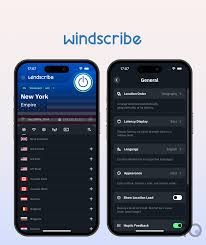
Windscribe strikes a nice balance between generosity and usability, giving free users a real data allowance instead of just a few days of trial access.
Example use case: A student wants to research and stream a few YouTube tutorials weekly without paying for a VPN subscription. Windscribe’s free 10GB monthly allowance covers moderate use like this comfortably, especially if you avoid heavy downloads.
Pros:
- 10GB monthly data on the free plan, generous compared to most alternatives
- Ad and tracker blocking built directly into the app
- Decent number of free server locations, over a dozen countries
Cons:
- 10GB runs out fast if you’re streaming video regularly
- Setup process feels slightly more technical than some competitor apps
- Customer support response times can be slow for free users
3. Hide.me
Hide.me has quietly built a solid free tier that doesn’t require handing over payment details just to start using it, which is a small thing that matters to a lot of users.
Example use case: Someone traveling abroad wants to check their home banking app safely without connecting through unfamiliar local networks directly. Hide.me’s free plan supports enough data for occasional banking and browsing sessions without constant reconnects.
Pros:
- No credit card required to sign up for the free tier
- Solid encryption standards matching paid VPN services
- Five server locations available for free, more than many competitors
Cons:
- 10GB monthly cap, similar to Windscribe, which limits heavy streaming
- Only five simultaneous devices allowed, fewer than some rivals
- App interface feels a bit dated compared to newer competitors
4. TunnelBear
TunnelBear is known for being approachable, especially for people who find VPN apps confusing. The bear-themed design isn’t just decoration — the whole app is built to feel simple.
Example use case: A parent setting up their teenager’s phone with basic privacy protection wants something simple enough that the teen won’t mess up the settings. TunnelBear’s straightforward toggle-based interface makes this easy to hand off without a tutorial.
Pros:
- Extremely beginner-friendly interface, almost no learning curve
- Strong transparency record, including regular independent security audits
- Available across nearly every device type, useful for families with mixed devices
Cons:
- Only 2GB of free data per month, one of the stingiest limits on this list
- No server selection on the free tier, connects to nearest automatically
- Not suitable for regular streaming given the low data cap
5. Atlas VPN
Atlas VPN has picked up a following for combining generous free data with genuinely usable speeds, which is a rare combination in the free VPN space.
Atlas VPN was once a popular free VPN for Android users thanks to its simple interface, fast speeds, and strong security features. It offered AES-256 encryption, the WireGuard protocol, a kill switch, and servers in multiple countries, making it a good choice for secure browsing, streaming, and protecting personal data on public Wi-Fi.
However, Atlas VPN is no longer available in 2026. The service officially shut down on April 24, 2024, due to business and operational challenges. Existing premium subscribers were migrated to NordVPN, while new users can no longer download or subscribe to Atlas VPN.
If you’re looking for a free Android VPN in 2026, it’s better to choose an actively maintained service that continues to receive security updates and new features. Popular alternatives include Proton VPN Free, Windscribe Free, and Hide.me Free, all of which offer reliable privacy protection and ongoing support.
Example use case: Someone wants to watch a match streamed from a foreign broadcaster that isn’t available in their home country. Atlas VPN’s free tier includes enough data and speed to stream a game without heavy buffering, though picture quality may dip during peak hours.
Pros:
- Unlimited data on the free plan, a standout feature at this price point
- Built-in malware and ad blocking called SafeSwap
- Servers spread across multiple continents, unusual for a free tier
Cons:
- Fewer server locations compared to the paid version
- Speeds can slow down noticeably during high-traffic hours
- Occasional connection drops reported by users on older Android versions
6. PrivadoVPN
PrivadoVPN offers one of the more balanced free packages, particularly for users who want a mix of decent data and dependable connection stability.
PrivadoVPN Free is one of the best free VPN services for Android users in 2026. It offers a strong balance of privacy, speed, and ease of use, making it an excellent choice for secure browsing, streaming, and everyday internet use. The Android app is clean and beginner-friendly, allowing users to connect to a VPN server with just a single tap.
Security is a major strength of PrivadoVPN. It uses AES-256 encryption to protect your internet traffic and supports modern VPN protocols that provide fast and secure connections. The service follows a strict no-logs policy, helping ensure that your online activities are not tracked or stored. It also includes important security features such as a kill switch and DNS leak protection, giving users extra peace of mind when connected to public Wi-Fi networks.
The free plan includes a monthly data allowance and access to a limited selection of server locations. While this is enough for browsing, checking emails, and occasional streaming, users who need unlimited data or access to more countries may want to upgrade to the premium plan.
Example use case: A remote worker occasionally connects to public library Wi-Fi to submit work and wants a dependable connection that won’t randomly drop mid-upload. PrivadoVPN’s stable connection handling makes this less stressful than some competitors with frequent disconnects.
Pros:
- 10GB free monthly data, matching some of the better options on this list
- Server locations in over a dozen countries even on the free plan
- Clean, no-clutter app design that’s easy to navigate
Cons:
- Slower upload speeds specifically, noticeable when sending large files
- Free tier support is limited mainly to email, no live chat
- App occasionally needs a manual reconnect after long idle periods
How to Choose the Right One for You
With six solid options on the table, picking one comes down to what you actually plan to use it for.
If you mainly browse and check email on public Wi-Fi, ProtonVPN or Hide.me will cover your needs comfortably, since neither requires heavy data.
If you stream video regularly, Atlas VPN’s unlimited data makes the most sense, even with occasional speed dips during busy hours.
If you’re setting up a VPN for a less tech-savvy family member, TunnelBear’s simple design is worth the trade-off of lower data limits.
If you travel often and need multiple server countries, Windscribe or PrivadoVPN offer the widest free server spread.
If your top priority is a company with a long-standing privacy reputation, ProtonVPN remains the safest bet based on its track record.
Setting Up a Free VPN on Android: Quick Steps
Getting started with any of these apps follows roughly the same process:
- Download the app from the Google Play Store directly — avoid sideloading APKs from random websites, since that’s a common way fake VPN apps spread malware.
- Create a free account using an email address, and skip any screen that asks for payment details unless you’re intentionally starting a paid trial.
- Open the app and select a server location. If you’re unsure, pick the one recommended as fastest for your region.
- Turn on the kill switch feature in settings if the app offers one. This closes a gap where your data could leak if the connection drops.
- Test your connection by checking your IP address before and after connecting, just to confirm it’s actually working.
Common Mistakes People Make With Free VPNs
A few habits trip up new users again and again:
Assuming all free VPNs are equally safe. Some free apps on the Play Store exist purely to harvest user data. Stick to the names with an established reputation, like the ones listed above, rather than picking whatever ranks highest in a random search.
Ignoring the data cap until it’s too late. Nothing’s more frustrating than a VPN cutting out mid-stream because you didn’t realize your monthly allowance ran out. Check your usage periodically if you’re on a limited plan.
Forgetting to turn the VPN back on after a phone restart. Most apps don’t auto-connect by default, so a restart can leave you unprotected without realizing it.
Using a free VPN for anything sensitive without checking the logging policy. Free tiers vary a lot in trustworthiness. If you’re doing anything involving banking or sensitive accounts, stick to a provider with a clearly published no-logs policy.
Frequently Asked Questions
Are free VPNs safe to use on Android?
Some are, and some aren’t. The apps listed in this guide have established reputations and published privacy policies, which makes them significantly safer than random unknown apps from the Play Store.
Do free VPNs slow down my internet speed?
Yes, to some degree. Free tiers usually prioritize paid users for bandwidth, so expect some slowdown, especially during peak hours. The apps on this list manage this better than most.
Can I use a free VPN to watch shows from other countries?
In many cases,s yes, though results vary depending on the streaming service and how aggressively it blocks VPN traffic. Atlas VPN and ProtonVPN tend to perform best for this use case.
Is it legal to use a VPN in India?
Yes, using a VPN is legal in India for personal use. It’s worth staying aware of any service-specific terms, since some platforms restrict VPN use in their own policies separate from any law.
How much data do I actually need from a free VPN?
For basic browsing and email, 2 to 5GB monthly is usually enough. For regular streaming, look for unlimited data plans like ProtonVPN or Atlas VPN.
Do I need a VPN if I already use antivirus software on my phone?
Yes, they serve different purposes. Antivirus software protects against malware and malicious apps, while a VPN protects your internet traffic and hides your location. Using both together gives more complete protection.
Conclsion
Free VPNs on Android have genuinely gotten better over the past few years, and in 2026, there are real options worth using instead of settling for whatever app has the flashiest ad. ProtonVPN and Atlas VPN stand out for unlimited data, while Windscribe and PrivadoVPN offer a solid middle ground of data allowance and server variety.
Whatever you pick, start with the free tier, test it during your normal daily use, and pay attention to how it handles your actual habits — streaming, browsing, or just basic security on public Wi-Fi. If a paid upgrade ever feels worth it down the line, you’ll already know exactly which features matter to you.