Content creation used to be a slow, expensive process. A single blog post could take a full day. Email sequences required a dedicated copywriter. Social media calendars got pushed back week after week because no one had the bandwidth.

In 2026, that’s changed. Writing tools powered by large language models can produce a full blog draft in under two minutes, spin up 10 variations of an ad headline before your coffee gets cold, and help you go from “blank page” to “ready to publish” faster than ever before.
AI Content Generator in 2026. But here’s the honest reality: not all of these tools are equally useful. Some are great for short-form copy. Others handle long-form blog content well. A few are purpose-built for marketing teams who need brand consistency across dozens of pieces per week. And some — despite the flashy demos — still produce generic, repetitive output that requires more editing than just writing from scratch.
This guide breaks down the best content generation tools available in 2026, what each one does well, where they fall short, and which one is right for your situation.
What Are Content Generation Tools, and How Do They Work?
At their core, these tools use large language models (LLMs) — the same underlying technology behind systems like ChatGPT — to generate text based on the prompts you give them. You describe what you want, and the tool produces a draft.
The difference between tools comes down to a few things:
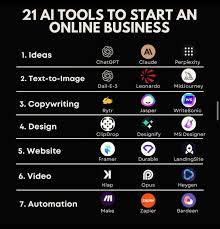
- Specialization — Some are general-purpose (ChatGPT, Gemini). Others are built specifically for marketing content (Jasper, Writesonic, Copy.ai) and come with pre-built templates for ads, emails, and blog posts.
- SEO features — Some tools have built-in keyword research and optimization. Others just write.
- Brand voice — Premium tools let you “train” them on your existing content so the output sounds like you, not like a generic marketing robot.
- Output quality — How much editing you need to do after the tool generates a draft varies significantly between platforms.
One thing worth knowing upfront: content generators work best as drafting assistants. They handle the first draft quickly, help brainstorm ideas, and generate structure, but human review, fact-checking, and editing are still essential to ensure accuracy and maintain quality.
With that said, let’s get into the tools.
AI Content Generator in 2026: The Best Content Generation Tools in 2026
1. ChatGPT — Best All-Purpose Writing Assistant

Overview: ChatGPT from OpenAI remains the most widely used writing tool in the world. It’s the Swiss Army knife of content generation — it can help with blog posts, email drafts, social media captions, product descriptions, brainstorming sessions, content outlines, and more. You interact with it in a conversational format, which makes it easy to refine and iterate on your outputs by just asking follow-up questions.
What makes ChatGPT particularly useful is its memory feature — once enabled, it remembers your preferences, writing style, and ongoing projects across sessions, so you don’t have to re-explain your brand or context every time you open a new chat.
Practical example: You run a personal finance blog and need a 1,500-word article about budgeting for beginners. You give ChatGPT a prompt with your target audience, preferred tone (conversational, non-technical), and three main points you want covered. Within 60 seconds, you have a full draft. You spend 20 minutes editing, adding personal examples, and verifying the numbers — and you’re done.
Pricing: Free plan available. ChatGPT Plus (with access to the most advanced models) costs $20/month.
Pros:
- Handles virtually any writing task
- Memory feature tailors output to your preferences over time
- A conversational interface makes iteration easy
- Also handles image generation on paid plans
- Most affordable premium plan in the category
Cons:
- No built-in SEO tools or keyword integration
- No marketing-specific templates
- Can occasionally forget your formatting preferences in long conversations
- Requires good prompting skills to get polished output
Best for: Individuals, freelancers, bloggers, and anyone who wants a flexible, affordable writing assistant for a wide range of tasks.
2. Jasper — Best for Marketing Teams and Brand Consistency
Overview: Jasper is the premium option in the content generation space, and it earns that position through one standout feature: brand voice training. You upload samples of your existing content, and Jasper learns your tone, style, and terminology. From that point on, everything it generates sounds like it came from your brand — not from a generic template.
This is a game-changer for marketing teams and agencies managing large volumes of content across multiple channels. Instead of every writer subtly drifting in different directions, Jasper keeps the output consistent.
The platform also includes 50+ templates for specific use cases (blog post intros, email subject lines, ad copy, product descriptions), a Chrome extension that lets you write with Jasper inside Google Docs or WordPress, and a Campaign mode that generates a full suite of content pieces from a single brief.
Practical example: You’re a content manager at a software company. You need a blog post, three social media posts, an email to your subscriber list, and two Google ad headlines — all covering the same product launch. In Jasper’s Campaign mode, you write one content brief describing the product and your target audience. Jasper generates all five pieces in a consistent brand voice. You review and refine them, cutting your production time from a full day to about 90 minutes.
Pricing: Creator plan starts at $49/month. Pro plan at $125/month for teams. No permanent free plan — 7-day trial available.
Pros:
- Best-in-class brand voice consistency
- Campaign mode generates entire content suites from one brief
- Strong team collaboration features
- Integrates with tools like Surfer SEO and Google Docs
- Purpose-built for marketing — not a general chatbot
Cons:
- Most expensive option on this list
- No free plan — requires a credit card for a trial
- Can produce generic output if you’re not familiar with prompting it well
- Overkill for solo creators or small teams with low content volume
Best for: Marketing departments, content agencies, and growing brands that need consistent, on-brand content at scale.
3. Writesonic — Best Value for SEO-Focused Content
Overview: Writesonic consistently gets high marks for value. It’s built specifically for marketers who need fast, SEO-optimized content — and unlike most tools, it has keyword research and SEO optimization built directly into the platform, so you don’t need to pay for a separate tool.
Its Sonic Editor works like Google Docs, so you can write, edit, and polish content in one place without switching between apps. The Chatsonic feature is a conversational assistant similar to ChatGPT but with live web access, making it useful for trend-based or news-adjacent content that needs up-to-date information.
Writesonic also has over 100 content templates — one of the largest template libraries in the space — covering everything from long-form blog posts to Google ads to product descriptions.
Practical example: You’re a freelance SEO writer who needs to produce four 1,200-word blog posts per week for a client. You use Writesonic’s Article Writer: you input the topic and target keywords, and it generates a full draft with proper heading structure and keyword placement. You review, add your own insights and examples, and deliver to the client. What used to take you a full day now takes a morning.
Pricing: A free forever plan is available with limited features. Paid plans start at $20/month.
Pros:
- Built-in SEO tools — keyword research, content gap analysis, internal linking
- 100+ content templates covering diverse use cases
- Chatsonic pulls live data from the web for current content
- Generous free plan compared to competitors
- Connects with Semrush for deeper SEO workflows
- Also includes image generation
Cons:
- The brand voice feature works less consistently than Jasper’s
- Quality varies between content types — blog posts are stronger than ad copy
- Can produce slightly generic output without detailed prompts
- Advanced features require higher-tier plans
Best for: Freelancers, bloggers, and small-to-medium businesses that need high-volume, SEO-focused content without enterprise pricing.
4. Copy.ai — Best for Short-Form Copy and Sales Teams
Overview: Copy.ai started as a short-form copywriting tool — email subject lines, ad headlines, product descriptions, social media captions — and that’s still where it excels. The output is typically punchy, creative, and ready to use with minimal editing, particularly for conversion-focused copy.
What sets Copy.ai apart in 2026 is its workflow automation builder. Instead of generating content piece by piece, you can build multi-step workflows: pull in customer data from your CRM, feed it into a content prompt, generate a personalized email, and route it through an approval process — all automated. For sales and marketing teams running outreach campaigns at scale, this is genuinely powerful.
Practical example: You run a SaaS company and need to send personalized cold outreach emails to 500 leads. Instead of manually writing each one, you connect Copy.ai to your CRM, build a workflow that pulls each lead’s company name, industry, and pain point, and generate a customized email for each. You review a sample, approve the workflow, and the whole batch is ready in minutes.
Pricing: Free plan with up to 2,000 words per month. Pro plan starts at $49/month.
Pros:
- Excellent short-form copy — among the best for ads, emails, and social captions
- Workflow automation for scaling content operations
- CRM integrations for personalized outreach at scale
- Beginner-friendly interface
- 90+ templates for common copy use cases
Cons:
- Long-form blog content is weaker compared to Jasper or Writesonic
- Quality varies — some outputs need more editing than others
- The Pro plan is relatively expensive for solo users who only need basic features
- Workflow automation has a learning curve
Best for: Sales teams, email marketers, and anyone running high-volume outreach campaigns who need personalized short-form copy at scale.
5. Google Gemini — Best for Research-Backed Content
Overview: Gemini is Google’s answer to ChatGPT, and it has one feature the others don’t: live web access. Unlike tools trained on static datasets, Gemini pulls current information from the web, which means it can cite data from this week’s news, recent studies, and live sources. For content that needs factual accuracy without a separate research step, this is a significant advantage.

Google also released Gemini 2.5 in early 2026, significantly closing the quality gap with other leading tools. One particularly useful feature is Gems — custom agents you configure with your own instructions, tone, and goals. Set up a Gem once for “blog post writer in a conversational tone,” and Gemini follows those preferences every time without needing to be re-prompted.
Practical example: You’re writing a market research article about e-commerce trends. Instead of manually searching for recent statistics and then writing around them, you ask Gemini to draft a section with up-to-date figures on mobile commerce growth. It pulls live data and integrates it into the copy — cutting your research time significantly.
Pricing: Free plan available. Gemini Advanced (most capable model) included with Google One AI Premium at $19.99/month.
Pros:
- Live web access for current, fact-checked content
- Gems feature remembers your tone and style preferences
- Integrates directly with Google Docs
- Strong at research-heavy content
- Competitive pricing
Cons:
- Email marketing copy tends toward informational rather than persuasive — needs more editing for conversion-focused content.
- Fewer marketing-specific templates than Jasper or Writesonic
- Deeply integrated into the Google ecosystem — less useful outside of it
Best for: Researchers, journalists, and content marketers who need accurate, current information woven into their writing.
6. Rytr — Best Budget Option for Quick, Simple Content
Overview: Rytr is the no-frills option on this list. It’s lightweight, fast, and designed for simple content tasks — emails, taglines, ad copy, product descriptions, and short blog sections. You pick a content type, add your inputs, and get options in seconds.
It’s not the tool for producing a 2,000-word SEO article or managing a full content team’s workflow. But for someone who needs a quick draft of a product description or a punchy email subject line, Rytr delivers without requiring a steep learning curve.
Pricing: Free plan with 10,000 characters per month. Paid plans start at around $9/month.
Pros:
- Very affordable — one of the cheapest options available
- Simple, clean interface — minimal learning curve
- Fast output for short-form tasks
- Decent for emails, taglines, and product copy
Cons:
- First drafts can sound overly promotional or repetitive
- Not built for long-form content
- Fewer customization options than competitors
- Limited SEO features
Best for: Individuals and small businesses with low content volume who need occasional short-form copy without spending much.
Pros and Cons of Using Content Generation Tools
Pros
Speed — A blog post that used to take 3–4 hours to write can be drafted in minutes. Even accounting for editing time, most users report cutting their content production time by 50–70%.
Lower cost than hiring writers — A monthly subscription to most tools costs less than a single freelance article from a professional writer. For businesses that need consistent volume, the savings are significant.
Overcoming writer’s block — Even if you end up rewriting most of what the tool generates, having something on the screen to react to is often enough to break through a blank page.
Scale — One person with the right tool can manage the content output that used to require a team of three or four.
Consistency — Tools like Jasper with brand voice training keep your content tone consistent across every piece, which is hard to achieve with multiple writers.
Cons
Still needs human editing — Raw output from any tool, even the best ones, requires review. Facts may be outdated, claims can be vague, and the writing sometimes lacks the specific insights and original perspective that make content actually worth reading.
SEO rankings aren’t automatic — Technically, content generated by these tools can rank on Google. However, most raw drafts don’t meet Google’s quality standards without serious human editing. Google won’t penalize the content’s origin, but it does penalize content lacking expertise, original insights, and value — elements that raw output often misses.
Hallucinations and inaccuracies — These tools occasionally state incorrect facts with complete confidence. Always verify statistics, dates, and specific claims before publishing.
Generic output without good prompting — The quality of output is directly tied to the quality of your prompts. If you give vague instructions, you get vague content. Learning to write effective prompts takes time.
Subscription costs add up — The best tools aren’t free. For a small business already managing multiple software subscriptions, adding $49–$125/month for a content tool is a real budget consideration.
How to Choose the Right Tool for Your Needs
Before subscribing to anything, ask yourself these questions:
What type of content do I create the most? If it’s mostly short-form — ads, emails, captions — Copy.ai or Rytr serve you well. If it’s long-form blog content with SEO, Writesonic or Jasper are stronger choices.
Do I work solo or on a team? Solo creators do fine with ChatGPT or Writesonic. Teams that need a consistent brand voice and collaborative workflows get more value from Jasper.
Is SEO central to my strategy? Writesonic has the deepest built-in SEO tools. Jasper integrates with Surfer SEO as an add-on.
What’s my budget? Start with free plans from ChatGPT, Writesonic, or Copy.ai. Test them on real projects. Only pay once you know the tool fits your workflow.
Do I need current information in my content? Gemini’s live web access makes it the best choice for research-heavy or trend-focused content.
Quick Comparison Table
| Tool | Best For | Starting Price | Free Plan | SEO Features |
|---|---|---|---|---|
| ChatGPT | General writing, flexibility | $20/month | Yes | No |
| Jasper | Teams, brand consistency | $49/month | 7-day trial only | Via Surfer SEO integration |
| Writesonic | SEO content, volume | $20/month | Yes | Yes (built-in) |
| Copy.ai | Short-form copy, sales teams | $49/month | Yes (2,000 words) | No |
| Gemini | Research-backed content | $19.99/month | Yes | No |
| Rytr | Budget, simple tasks | $9/month | Yes (10K characters) | No |
Frequently Asked Questions
Q: Can these tools replace a professional writer?
Not entirely. They’re best used as drafting assistants — they handle the structure and first draft, but the expertise, original perspective, and final polish still come from a human. For commodity content (product descriptions, FAQ pages, templated emails), they come closest to being a full replacement. For thought leadership, investigative pieces, or highly technical content, a human writer is still essential.
Q: Will search engines penalize content created with these tools?
Search engines evaluate content based on quality, relevance, and usefulness — not how it was written. Content that’s accurate, well-structured, and genuinely helpful can rank well regardless of how it was produced. The issue is that poorly edited, generic drafts — whether written by a human or a tool — don’t rank well. The tool doesn’t cause the problem; thin content does.
Q: Which tool is best for a small business with no content team?
Writesonic’s free plan or ChatGPT Plus ($20/month) are the most practical starting points. Both are flexible, affordable, and capable of producing decent drafts across multiple content types. Once you have more consistent content needs, you can evaluate whether a more specialized tool is worth the investment.
Q: Do I need technical skills to use these tools?
No. Most platforms are designed so that anyone comfortable writing an email can use them. The learning curve is mostly about writing good prompts — describing clearly what you want, what tone you need, and who you’re writing for. This improves quickly with practice.
Q: Can I use these tools in languages other than English?
Yes. Most major platforms support multiple languages. Writesonic supports 24+ languages, Jasper supports 25+, and Copy.ai can work in over 25 languages. Quality varies — English output is typically the strongest, but other major languages like Spanish, French, and German perform well on the leading tools.
Q: How do I avoid generic-sounding output?
The more specific your prompt, the better the output. Instead of “write a blog post about productivity,” try “write a 1,200-word blog post for remote software developers about managing energy levels across a 9-hour workday, using a conversational but professional tone, with three practical tips and a short intro that acknowledges the challenge of home distractions.” Specificity is everything.
Q: Is it worth paying for a premium tool or can I get by with free plans?
For low-volume use — a few pieces per month — free plans from ChatGPT or Writesonic are genuinely sufficient. For consistent high-volume content production, the paid plans pay for themselves quickly in time saved. If you’re producing more than 10 pieces of content per month, a paid plan almost certainly saves you more in time than it costs.
Conclsion
Content generation tools in 2026 are genuinely useful — but they’re tools, not magic. The ones that produce the most value are the ones used by people who understand their limitations: they speed up drafting, help with structure, and remove the blank-page problem. They don’t replace judgment, expertise, or the final human touch that makes content actually worth reading.
Here’s the short version of who should use what:
- Individuals and freelancers who want flexibility: Start with ChatGPT — it’s affordable, capable, and handles a wide range of tasks.
- SEO writers and bloggers: Writesonic gives you the most built-in SEO support at a fair price.
- Marketing teams needing brand consistency: Jasper is purpose-built for this and is worth the premium if content quality and volume are both high.
- Sales teams running outreach: Copy.ai’s workflow automation is in a category of its own for personalized copy at scale.
- Research-heavy content: Gemini’s live web access makes it the most useful for fact-checking and current data.
- Small budgets and simple tasks: Rytr is straightforward and affordable when your needs are modest.