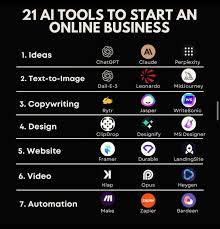
If you create content for a living — blogs, YouTube scripts, newsletters, product descriptions — you already know how exhausting the blank page can be. You have deadlines, topics to cover, and an audience that expects fresh content every week. That’s exactly where writing tools come in. The right one can cut your work time in half without making your content sound robotic or generic.
This guide covers the best writing tools available in 2026, what each one is actually good at, and which type of creator should use which tool. No fluff — just honest, practical help.
Creating high-quality content has never been more important—or more competitive. Whether you’re a blogger, YouTuber, freelancer, affiliate marketer, social media creator, or business owner, producing engaging and SEO-friendly content consistently can be challenging. Fortunately, AI writing tools in 2026 have become smarter, faster, and more accurate than ever before.

Modern AI writing assistants can help you generate blog posts, YouTube scripts, product descriptions, social media captions, email campaigns, and marketing copy in just a few minutes. Many of these tools also offer built-in grammar correction, plagiarism checking, SEO optimization, keyword suggestions, and multilingual support, making them valuable for both beginners and experienced content creators.
However, not every AI writing tool is the right fit for every user. Some excel at long-form blog writing, while others specialize in marketing copy, creative storytelling, or SEO content. Choosing the right tool depends on your content goals, budget, and workflow.
In this guide, we’ll explore the best AI writing tools for content creators in 2026, comparing their features, pricing, pros and cons, and ideal use cases. Whether you’re looking for a free AI writer or a premium solution to scale your content production, this list will help you find the perfect tool to boost productivity and create better content faster.
Why Writing Tools Matter in 2026
The content landscape is more competitive than ever. Google’s helpful content updates have raised the bar for what ranks. Audiences are sharper and quicker to leave a page that reads like it was written in five minutes. At the same time, content teams are expected to produce more — more blog posts, more social copy, more email sequences — often with fewer people.
Writing tools help bridge that gap. They’re not a replacement for your ideas, your research, or your unique voice. But they handle the heavy lifting: first drafts, rephrasing awkward sentences, generating outlines, or turning a bullet-point brief into readable prose. Used well, they make you a faster, more consistent creator.
Best AI Writing Tools for Content Creators in 2026:-
1. Jasper — Best for Long-Form Blog Content
Who it’s for: Bloggers, content marketers, SEO writers
Jasper has been around long enough to have earned a reputation. It’s one of the more polished tools for long-form writing, especially for people who need to produce full articles at scale.
What makes Jasper stand out is its structured approach. You can start with a brief — your target keyword, audience, and tone — and Jasper builds an outline, intro, body sections, and conclusion. It’s particularly useful for teams because you can create brand voice guidelines that all output follows. If you’re writing for a SaaS company and you want every piece to sound authoritative but friendly, you can set that once and apply it everywhere.
Practical example: A travel blogger covering “budget trips to Southeast Asia” can use Jasper to draft a 2,000-word post in under 30 minutes. The writer then edits for personal anecdotes, local tips, and their own voice — turning a rough draft into a polished piece quickly.
Pros:
- Excellent long-form content mode
- Brand voice customization
- Works well for SEO-focused content
- Good team collaboration features
Cons:
- Expensive compared to newer competitors
- Output quality drops on highly technical topics
- Needs a solid brief to produce good content
Pricing: Starts around $49/month for solo creators. Team plans are pricier.
2. Copy.ai — Best for Short-Form Copy and Marketing
Who it’s for: Social media managers, email marketers, and e-commerce sellers
Copy.ai is built for speed. If you need a batch of Instagram captions, five subject line variations for an email campaign, or product descriptions for an online store, Copy.ai handles it faster than almost anything else.
The interface is clean and simple — you pick a template (product description, hook, cold email, ad copy), fill in a few details, and get multiple variations in seconds. It’s less focused on long articles and more on punchy, conversion-focused copy.
Practical example: An e-commerce store selling skincare products can use Copy.ai to generate 20 product descriptions in the time it would normally take to write three. Each one is slightly different in tone and structure, giving the store owner options to pick from.
Pros:
- Very fast for short-form content
- Great template library
- Free plan available
- Easy to learn — almost no setup needed
Cons:
- Not ideal for long articles
- Can feel repetitive if you use it too much without editing
- Less suited for technical or research-heavy writing
Pricing: Free tier available. Paid plans start at around $36/month.
3. Writesonic — Best Budget-Friendly Option for Beginners
Who it’s for: Freelancers, beginners, budget-conscious creators
Writesonic is a solid pick for anyone who’s just getting started with writing tools and doesn’t want to spend too much. It offers a good mix of features — article writing, landing pages, social copy, paraphrasing — at a lower price point than Jasper or Copy.ai’s premium tiers.
The Article Writer feature is genuinely useful. You input a topic, choose a structure, and it generates a full draft with headings, paragraphs, and even a meta description. It’s not as customizable as Jasper, but for someone writing 5–10 blog posts a month, it gets the job done.
Writesonic also has a browser extension that lets you generate content directly inside Google Docs or other platforms, which saves a lot of switching back and forth.
Practical example: A freelance writer managing five client blogs at once can use Writesonic to knock out first drafts for each one, then spend the bulk of their time editing and adding original research — making the process feel less like writing from scratch and more like editing.
Pros:
- Affordable pricing
- Browser extension for in-page writing
- Good for beginners — easy interface
- Covers most content formats
Cons:
- Fewer advanced controls than premium tools
- Brand voice features are limited
- Article quality can be inconsistent without a detailed prompt
Pricing: Free trial available. Paid plans start around $16/month.
4. Surfer SEO + Writing Assistant — Best for SEO-Focused Writers
Who it’s for: Bloggers, content strategists, anyone writing for Google rankings
Surfer SEO is primarily known as an on-page optimization tool, but its built-in writing assistant makes it one of the most powerful combos for SEO content creation. You’re not just writing — you’re writing with real-time guidance on keyword usage, headings, word count, and content structure based on what’s already ranking.

When you create a new document in Surfer, it analyzes the top-ranking pages for your keyword and gives you a content score as you write. It tells you which terms to include, how many headings to use, and where your article might be thin. This removes the guesswork from SEO writing entirely.
If your goal is to rank higher on Google and drive more organic traffic, Surfer SEO + Writing Assistant is one of the best AI-powered writing solutions available in 2026. Instead of simply generating content, Surfer SEO helps writers create articles that are optimized for search engines from the very beginning.
The platform analyzes the top-ranking pages for your target keyword and provides real-time recommendations on keyword usage, headings, content length, internal linking, and readability. Combined with its AI Writing Assistant, Surfer makes it much easier to produce content that satisfies both search engines and human readers.
Whether you’re running a niche blog, an affiliate marketing website, an eCommerce store, or a business website, Surfer SEO can significantly improve your content optimization workflow.
Practical example: A content strategist writing about “best project management tools for remote teams” can open Surfer, pull in the keyword, and see exactly what the top-ranking articles cover. They write to match that structure while adding unique insights — and the content score helps them know when the article is optimized enough to publish.
Pros:
- Combines writing and SEO optimization in one place
- Real-time content score and keyword suggestions
- Excellent for ranking-focused content
- Integrates with Google Docs and WordPress
Cons:
- More expensive than standalone writing tools
- Takes time to learn properly
- Best suited for SEO work, not general writing
Pricing: Starts around $89/month. Often bundled with Surfer’s broader SEO tools.
5. Notion AI — Best for All-in-One Creators and Teams
Who it’s for: Creators who already use Notion for planning and notes
If your content workflow lives in Notion — content calendar, research notes, editorial briefs — then Notion AI is the most seamless writing tool you can add. It’s embedded directly into your existing workspace, which means you’re not switching tabs or copying content between platforms.
Notion AI can draft a section from a bullet list, summarize a research document you’ve pasted in, generate a blog post from a brief stored in your database, or rewrite a paragraph in a different tone. It’s not as powerful as dedicated writing platforms for long-form output, but the convenience factor is hard to beat.
Practical example: A solo creator who plans their editorial calendar in Notion can highlight their content brief, click “generate draft,” and have a rough article in the same document they’re already working in. Their research, keywords, and draft all stay in one place.
Pros:
- No extra tool needed if you’re already in Notion
- Excellent for summarizing, rewriting, and brainstorming
- Clean interface — feels natural to use
- Great for teams with shared Notion workspaces
Cons:
- Not as strong for SEO-focused long-form articles
- Requires a Notion subscription on top of the AI add-on
- Less control over output style compared to dedicated tools
Pricing: Notion AI is an add-on at around $10/user/month on top of the Notion plan.
6. Rytr — Best for Quick, Low-Cost Solo Use
Who it’s for: Solo bloggers, creators on tight budgets
Rytr is arguably the most affordable tool on this list that still delivers consistent quality. For creators who just need a reliable tool to help them draft content faster — without spending $50–$100 a month — Rytr is a smart pick.
It covers a wide range of use cases: blog intros, email outlines, SEO meta descriptions, product reviews, YouTube descriptions, and more. The tone selector is one of the better ones in this price range, with options like “Convincing,” “Formal,” “Humorous,” and “Inspirational.”
If you’re looking for an affordable AI writing tool that delivers fast results, Rytr is one of the best options for solo content creators in 2026. Designed with simplicity in mind, Rytr helps users generate high-quality content in minutes without requiring advanced writing or technical skills. Its budget-friendly pricing and easy-to-use interface make it especially popular among bloggers, freelancers, students, affiliate marketers, and small business owners.
Rytr uses advanced AI to create various types of content, including blog outlines, product descriptions, social media captions, email campaigns, ad copy, website content, and more. With dozens of writing templates and support for multiple languages, it allows users to create engaging content quickly while saving valuable time.
Although Rytr isn’t as feature-rich as some premium AI writing platforms, it offers excellent value for users who need reliable content generation without paying high monthly fees.
Practical example: A creator running a personal finance blog on the side can use Rytr’s free plan to write blog intros, outline sections, and draft a few short posts per month without spending anything. When they scale up, the paid plan keeps costs low.
Pros:
- Very affordable — free plan is genuinely usable
- Good range of content types
- Built-in plagiarism checker
- Easy to use from day one
Cons:
- Monthly character/credit limits even on paid plans
- Not ideal for high-volume production
- Output can feel templated on longer pieces
Pricing: Free plan available. Saver plan is around $9/month.
How to Choose the Right Writing Tool
With so many options, here’s a quick way to narrow it down:
You write long-form articles at scale → Go with Jasper. The brand voice controls and long-form output are worth the price if volume is your priority.
You’re focused on rankings and SEO → Surfer SEO’s writing assistant is the clearest choice. The optimization layer is built in from the start.
You need short, snappy copy fast → Copy.ai’s template library is hard to beat for social captions, email hooks, and ad copy.
You’re a beginner or on a budget → Start with Writesonic or Rytr. Both give you strong output at a price that doesn’t hurt.
You live in Notion → Add Notion AI. It’s the most seamless writing assist you can get within a workspace you’re already using.
Tips for Getting Better Output From Any Writing Tool
No matter which tool you pick, the quality of your prompt determines the quality of your output. A vague prompt gives you a generic draft. A specific prompt gives you something usable.
Here’s the difference:
Weak prompt: “Write a blog post about productivity.”
Strong prompt: “Write a 1,500-word blog post for remote workers who struggle with afternoon burnout. Use a conversational tone, include three practical tips, and mention tools like Notion and Toggl.”
The second prompt gives the tool context — audience, problem, tone, structure, and examples. You’ll spend less time editing and more time publishing.
Also: always edit. These tools are your first draft, not your final one. Add your personal experience, specific examples, and opinions. That’s what separates content that ranks from content that readers remember.
FAQs
Are these writing tools suitable for non-native English writers?
Yes, and this is actually one of their best use cases. If English isn’t your first language, these tools help you get ideas down in clean, fluent prose. You still need to review the output, but the grammar and sentence structure are almost always solid.
Can these tools replace a full-time content writer?
Not entirely. They’re best thought of as a writing partner, not a replacement. The research, strategy, and editing still need a human. But they significantly reduce the time it takes to go from brief to first draft.
Will content made with these tools get penalized by Google?
Google’s guidance focuses on content quality and usefulness, not on how it was written. Content that’s thin, generic, or unhelpful can struggle — regardless of how it was created. If you use these tools to speed up production but still add real value, depth, and expertise, your content will be in good shape.
How much time can these tools actually save?
Most creators report cutting their drafting time by 40–60%. For a writer who normally takes 4 hours to produce a 2,000-word article, that can mean finishing a solid draft in under 2 hours — leaving more time for editing, research, and promotion.
Which tool has the best free plan?
Rytr and Copy.ai both have free plans worth trying. Rytr’s free tier gives you 10,000 characters per month, which is enough to test the tool properly before committing to a paid plan.
Conclsion
The best writing tool is the one that fits your actual workflow — not the one with the most features or the highest price tag. Start with one, use it for two or three weeks, and see how it changes your output.
For most content creators, the combination of a writing tool for drafts and a separate SEO tool for optimization covers everything you need. You handle the strategy and editing; the tools handle the heavy lifting in between.
That’s the setup that helps you publish more, rank better, and spend less time staring at a blank document.