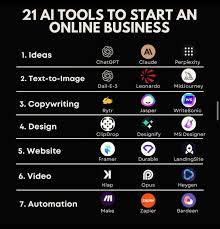
Best AI Tools for Content Creation Free 2026: The Only List You Actually Need
If you’ve spent any time trying to grow a blog, a YouTube channel, or a brand online, you already know how exhausting the content grind can be. Writing articles, making thumbnails, editing videos, posting on social — it never stops.
The good news? Some seriously powerful free tools in 2026 can speed up almost every part of this process. And no, you don’t need a big budget to use them.
This guide covers the best free content creation tools available right now — what they do well, where they fall short, and who should actually use them.
Creating high-quality content no longer requires a large budget. In 2026, many free AI tools will help bloggers, marketers, YouTubers, students, and business owners create content faster and more efficiently. Whether you need help writing articles, generating social media posts, creating videos, designing graphics, or brainstorming new ideas, free AI tools can save hours of work.
The best AI tools for content creation are free in 2026 and offer powerful features such as AI writing assistance, image generation, video editing, content optimization, and automated research. Many of these tools provide free plans that are perfect for beginners, freelancers, and small businesses looking to improve productivity without spending money.
In this guide, we’ll explore the top free AI content creation tools available in 2026, comparing their features, strengths, limitations, and ideal use cases. By the end, you’ll know which free AI tools can help you create better content, grow your audience, and streamline your workflow.
Why Free Tools Are Good Enough Now
A few years ago, the free versions of most content tools were basically useless — limited to a few exports, tiny file sizes, or watermarked outputs. That’s changed a lot.
Today, platforms compete hard for users. The free tiers are genuinely useful, not just teaser products. You can write, design, edit video, generate images, and schedule posts — all without spending a single rupee or dollar.
Let’s get into it.
1. ChatGPT (Free Tier) — Writing, Brainstorming, and Drafts
Best for: Blog drafts, social captions, email copy, brainstorming content ideas
ChatGPT‘s free plan gives you access to a capable language model that can handle a huge range of writing tasks. Whether you need a product description, a YouTube script, or a list of blog post ideas for next month, this tool can produce a solid starting draft in seconds.

Practical example: Say you’re running a travel blog and need five articles for the week. You can use ChatGPT to outline all five, draft two of them, and generate social captions for each — in under an hour. Then you spend your time editing and adding your personal experience instead of staring at a blank page.
Pros:
- Handles almost any type of written content
- Great for research summaries and outlines
- Understands context well within a conversation
- The free plan is genuinely usable for daily work
Cons:
- The free plan has usage limits during busy hours
- Sometimes gives generic, surface-level answers if you don’t prompt carefully
- Needs human editing before publishing — outputs can feel flat without it
Tips to get more out of it: Always give it context. Instead of saying “write a blog about VPNs,” try “write an intro section for a beginner’s guide to VPNs, targeting someone who has never used one before, in a casual conversational tone.” The more specific you are, the better the output.
2. Canva Free — Graphics, Thumbnails, and Social Posts
Best for: YouTube thumbnails, Instagram posts, Pinterest graphics, blog banners, presentation slides
Canva is arguably the most popular design tool for non-designers, and the free plan is stacked. You get access to thousands of templates, a drag-and-drop editor, stock photos, and basic video editing — all in the browser.
Practical example: You’re launching a new blog post and need a featured image, a Pinterest pin, and an Instagram square all at once. In Canva, you can design one and then use the “Resize” feature (limited on free) to adapt it, or just duplicate it and adjust manually. The whole thing takes 15–20 minutes, even if you have zero design experience.
Pros: An enormous library of free templates across every format
- Enormous library of free templates across every format
- No design skills needed
- Works directly in the browser — no downloads
- Exports in PNG, JPG, PDF, and MP4 (for simple animations)
- New Magic Studio features available on the free tier (limited)
Cons:
- The resize/magic feature requires a Pro upgrade for full use
- Some of the best templates are Pro-only (marked with a crown)
- Font and asset library, while large, has some gaps in niche styles
Tip: Use Canva’s brand kit feature on the free plan by manually saving your hex colour codes and font choices in a simple notes doc. It keeps your content looking consistent without paying for Pro.
3. CapCut (Free) — Video Editing and Short-Form Content
Best for: YouTube Shorts, Instagram Reels, TikTok videos, faceless content
CapCut is free, cross-platform, and genuinely one of the best video editors for short-form content. It has auto-captions, background removal, templates, transitions, and even a basic text-to-speech feature — all without paying anything.
Practical example: You record a 60-second screen recording for a tech review. Drop it into CapCut, use auto-captions to add subtitles, trim the dead air, add a background music track from their free library, and export at 1080p. Total time: 10–15 minutes. That’s a publishable Reel or Short.
Pros:
- Auto-caption feature saves hours of manual work
- Huge library of free music, effects, and transitions
- Templates make it easy to replicate trending video styles
- Works on mobile and desktop
Cons:
- CapCut watermark appears on some exports (removable if you create an account)
- More complex edits (multi-track, colour grading) are limited
- The desktop version is slightly less polished than the mobile version
Who should use this: Anyone creating short-form video content — especially faceless YouTube channels, review channels, or anyone repurposing blog content into video.
4. Google Docs + Gemini (Free) — Writing with Smart Suggestions
Best for: Long-form writing, team collaboration, content drafts
Google Docs itself is a free staple for any content creator. But with Google’s Gemini integration now available in the free tier (depending on your region), you also get basic writing assistance built directly into the document.
Beyond that, Google Docs has tools like voice typing, outline view, and commenting — all of which make the writing and editing process cleaner.
Practical example: You’re writing a 2,500-word how-to article. Open a new Doc, use the outline panel to plan your H2s and H3s before writing, then draft section by section. When you get stuck, use voice typing to ramble your thoughts aloud and clean them up afterward. It’s a surprisingly fast workflow.
Pros:
- Completely free with a Google account
- Real-time collaboration with teammates or editors
- Auto-saves everything — you’ll never lose a draft
- Integrates with Google Drive for easy file management
Cons:
- Gemini features are uneven across regions (India has limited access to the free tier)
- Not the best for complex formatting that needs to be exported to CMS directly
- Can feel slow with very long documents
5. Hemingway Editor (Free Web Version) — Readability Checker
Best for: Improving written content clarity, reducing complex sentences
The Hemingway Editor is a browser-based tool that analyses your writing for readability. It highlights long sentences, passive voice, adverbs, and words that could be simplified. It’s not a writing tool — it’s a polishing tool, and a very good one at that.
Practical example: You paste a 1,000-word article draft into Hemingway. It highlights six sentences that are too long and three places where passive voice crept in. You spend 10 minutes fixing those. The result is writing that reads much more naturally — less like a formal essay, more like a person talking.
Pros:
- Free to use directly in the browser
- Gives a readability grade score (aim for Grade 6–8 for general audiences)
- Visual and intuitive — colour-coded highlights make issues easy to spot
- Great for non-native English writers who want to simplify their writing
Cons:
- The free version doesn’t save your work (copy-paste only)
- Doesn’t help with SEO or structure — purely a writing quality tool
- Can be overly aggressive with passive voice flagging
6. Notion Free — Content Planning and Workflow
Best for: Editorial calendars, content databases, idea management, SOPs
Notion’s free plan is excellent for organising your content operation. You can build a full editorial calendar, maintain a swipe file, track the status of every article or video, and store templates — all in one workspace.
Practical example: Create a simple Notion database with columns for: Topic, Target Keyword, Status (Idea / Draft / Published), Platform, and Publish Date. Now you have a full content pipeline view. Filter by “Draft” to see what needs to be finished. This kind of visibility makes content production far less chaotic.
Pros:
- Free plan is very generous — unlimited pages and blocks for individuals
- Flexible enough to use as a wiki, planner, or database
- Templates available for content calendars, YouTube trackers, and more
- Shareable with collaborators
Cons:
- Slight learning curve — Notion is powerful but not immediately obvious to new users
- The mobile app is slower than the desktop/web version
- API and automation features require a paid plan
7. Pexels and Unsplash — Free Stock Photos and Videos
Best for: Blog featured images, video B-roll, social media backgrounds
Both Pexels and Unsplash offer high-quality, royalty-free stock images and videos that you can use commercially — completely free, no attribution required (though crediting is appreciated).
Practical example: You’re writing a blog post about remote work. Head to Pexels, search “home office,” and pick a clean, well-lit photo of a desk setup. Download it, compress it with Squoosh (another free tool), and use it as your featured image. Done in 3 minutes — no design needed.
Pros:
- Truly free with commercial use rights
- Large libraries updated regularly with fresh content
- Pexels also has free video clips — useful for YouTube intros or B-roll
Cons:
- Popular images get overused across the web — you might see the same photo on five sites
- Less useful for niche topics (specific industries, locations, or products)
- No customisation built in — you’d need to take it to Canva to add text or branding
8. Buffer Free — Social Media Scheduling
Best for: Scheduling posts across Instagram, Facebook, X (Twitter), Pinterest, and LinkedIn
Buffer’s free plan lets you connect up to three social channels and schedule up to 10 posts per channel. It’s simple, clean, and does exactly what most small content creators need — queue up your week’s content in one sitting.
Buffer Free is one of the most popular free tools for social media scheduling in 2026. It helps content creators, bloggers, small businesses, and marketers plan and publish posts across multiple social media platforms from a single dashboard. Instead of manually posting content every day, users can schedule posts in advance and maintain a consistent online presence.
The free plan allows users to connect a limited number of social media accounts and schedule posts for platforms such as Facebook, Instagram, X (Twitter), LinkedIn, and Pinterest. The simple and user-friendly interface makes it an excellent choice for beginners who want an easy way to manage their social media content.
One of Buffer’s biggest advantages is its content calendar, which provides a clear view of upcoming posts. Users can organize content, adjust publishing times, and ensure a steady posting schedule. Buffer also offers basic analytics that help creators understand engagement levels and identify which posts perform best.
For content creators working with AI-generated blogs, videos, or social media captions, Buffer can streamline the publishing process and save valuable time. While the free version has some limitations compared to premium plans, it provides enough functionality for individuals and small teams to manage their social media effectively.
Practical example: Every Sunday, spend 30 minutes scheduling the week’s social posts. Write the captions in Notion, grab the visuals from Canva, and queue them in Buffer. For the rest of the week, you don’t have to think about social media at all.
Pros:
- Clean interface — very easy to use
- Supports most major platforms
- Shows basic analytics on post performance
- Free plan covers solo creators well
Cons: A A
- 10-post limit per channel per month can be restrictive for high-volume posting
- No bulk upload or CSV scheduling on the free plan
- Analytics are basic — serious data needs require a paid plan
Comparison Table: Quick Reference
| Tool | Best For | Free Limit | Watermark? |
|---|---|---|---|
| ChatGPT | Writing, drafts | Usage cap during peak | No |
| Canva | Design, graphics | Limited Pro assets | No |
| CapCut | Video editing | Most features free | Sometimes |
| Google Docs | Writing, collaboration | Unlimited | No |
| Hemingway | Readability editing | Browser only | No |
| Notion | Content planning | Unlimited for solo | No |
| Pexels/Unsplash | Stock media | Unlimited | No |
| Buffer | Social scheduling | 3 channels, 10 posts | No |
How to Build a Free Content Workflow Using These Tools
Here’s how a solo content creator could use all of these together in a simple workflow:
- Plan content topics in Notion (editorial calendar)
- Draft the article in Google Docs or with ChatGPT as a starting point
- Polish writing clarity in Hemingway Editor
- Design featured image and social graphics in Canva
- Source stock images from Pexels or Unsplash
- Edit any video assets in CapCut
- Schedule social posts for the week in Buffer
That’s a complete content production pipeline — zero monthly cost.
FAQs
Are these tools actually free, or do they push you to upgrade constantly?
All the tools listed have genuinely usable free tiers. Some, like Canva and Buffer, do show Pro prompts, but you can ignore them. The free features are functional enough for most solo creators and small teams.
Which of these is best for someone just starting?
Start with Canva and Google Docs — those two alone cover writing and visual content. Add ChatGPT for brainstorming and Notion for planning once you have a routine going.
Can I use content made with these tools commercially?
Yes, in most cases. Pexels and Unsplash images are commercially licensed. Canva free-tier designs can be used commercially as long as you’re not using Pro-only elements. Always check the terms for any stock content you download.
Do any of these tools work well on mobile?
CapCut and Canva both have excellent mobile apps. Buffer’s mobile app works well for scheduling. ChatGPT’s mobile app is solid for quick tasks. Notion’s mobile app is functional but slower.
Is the free plan enough for a full-time content creator?
It depends on your volume. For someone publishing 3–5 pieces of content per week, the free tiers are generally sufficient. As you scale — more team members, more content, more platforms — some paid upgrades become worth it. But starting and growing on free tools is completely realistic.
Conclsion
You don’t need to spend money to start building a content operation in 2026. The tools above are genuinely powerful, and most creators who use them never feel like they’re missing something critical on the free plan.
The key is to pick two or three tools, get comfortable with them, and build a workflow that you can repeat consistently. Consistency beats fancy tools every time.
Start with what you have, publish regularly, and upgrade only when a specific free-tier limitation is actually holding you back.