Technology is changing faster than ever, and in 2026, we are seeing powerful tools reshape how businesses, professionals, and everyday users work. From healthcare to education, finance to marketing, these smart systems are not just ideas anymore—they are practical tools solving real problems.
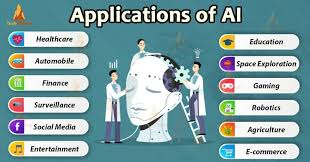
In this guide, you’ll discover how these technologies are being used in the real world, with simple examples, clear benefits, and honest drawbacks. Whether you’re a student, business owner, or someone looking to earn online, this article will help you understand what’s happening and how you can take advantage of it.
- AI Tools 2026: Best Tools for Work, Business & Creativity
- AI Tools List (2026): Best Tools for Writing, Design, Video, Coding & Business
- Best AI Tools in 2026: Top Picks for Beginners & Professionals
What Are Modern Smart Applications?
Modern smart applications are software tools that can learn from data, automate tasks, and improve over time. Instead of doing everything manually, these tools help users save time, reduce errors, and increase productivity.
In 2026, these applications will no longer be limited to tech companies. They are now used in small businesses, hospitals, schools, and even by individuals working from home.
AI Applications in 2026:-
1. Healthcare: Faster Diagnosis and Better Patient Care
Healthcare is one of the biggest areas where smart systems are making a real difference. Healthcare is one of the fields where modern technology is making the biggest impact, especially in faster diagnosis and better patient care. In the past, diagnosing diseases often took a long time and relied heavily on doctors’ experience. Today, advanced systems can analyze large amounts of medical data within seconds, helping doctors detect diseases earlier and more accurately.
For example, medical imaging tools can quickly scan X-rays, MRIs, and CT scans to identify problems like tumors, fractures, or infections. This reduces the chances of human error and ensures that patients receive timely treatment. Early detection is especially important for serious conditions like cancer or heart disease, where every second counts.
Another major benefit is personalized treatment. Instead of using a one-size-fits-all approach, modern systems can study a patient’s medical history, genetics, and lifestyle to suggest treatments that work best for that individual. This leads to better outcomes and fewer side effects.
In hospitals, automation is also improving patient care. From managing patient records to scheduling appointments and monitoring vital signs, many routine tasks are now handled more efficiently. This allows doctors and nurses to focus more on patients rather than paperwork.
Remote healthcare, also known as telemedicine, is another game-changer. Patients can now consult doctors from their homes using smartphones or computers. This is especially helpful for people living in rural or remote areas who may not have easy access to hospitals.
Overall, technology in healthcare is saving time, reducing costs, and improving the quality of care. Faster diagnosis and better patient management are not only helping doctors but also making healthcare more accessible and reliable for everyone.
How It’s Used
- Doctors use tools to analyze medical reports quickly
- Hospitals automate patient records and scheduling
- Early disease detection through pattern recognition
Real Example
A doctor can upload a patient’s scan, and within seconds, the system highlights possible health issues. This helps doctors make faster and more accurate decisions.
Benefits
- Saves time for doctors
- Reduces human error
- Improves patient outcomes
Drawbacks
- Requires high-quality data
- Expensive setup for small hospitals
- Privacy concerns
2. Education: Personalized Learning for Students
Learning is no longer one-size-fits-all. Students now get customized lessons based on their level and progress. Education is changing rapidly with the introduction of modern technology, making learning more personalized and effective for students. In traditional classrooms, teachers often follow a fixed teaching method that may not suit every student. Some students learn quickly, while others need more time and support. Personalized learning helps solve this problem by adapting lessons according to each student’s needs, pace, and learning style.
With smart learning platforms, students can receive customized study materials based on their strengths and weaknesses. For example, if a student struggles with math but performs well in language subjects, the system can provide extra practice and simpler explanations for math topics. This targeted approach helps students improve faster and build confidence in difficult subjects.

Another advantage is flexibility. Students can learn anytime and anywhere using online courses, videos, and interactive tools. This is especially helpful for those who want to revise topics at their own pace or explore subjects beyond their school syllabus. It also supports different learning styles, whether a student prefers visual content, audio explanations, or hands-on practice.
Teachers also benefit from personalized learning tools. They can track student progress in real time, identify areas where students are struggling, and adjust their teaching methods accordingly. This creates a more supportive and engaging classroom environment.
Additionally, personalized learning encourages active participation. Interactive quizzes, games, and real-life problem-solving activities make learning more interesting and less stressful. Students are more motivated to learn when the content feels relevant and easy to understand.
Overall, personalized learning is transforming education by making it more student-centered. It helps improve academic performance, boosts confidence, and ensures that every student gets the attention and support they need to succeed.
How It’s Used
- Smart tutoring systems adjust difficulty levels
- Automatic grading saves teachers’ time
- Virtual classrooms with interactive tools
Real Example
A student struggling with math gets easier questions first, then gradually harder ones as they improve.
Benefits
- Better understanding for students
- Saves teachers time
- Learning at your own pace
Drawbacks
- Requires internet access
- Less human interaction
- Can be distracting if overused
3. Business and Marketing: Smarter Decision-Making
Businesses use smart tools to understand customers and improve sales. In today’s fast-moving world, businesses need to make quick and accurate decisions to stay competitive. Modern technology is playing a major role in improving business and marketing strategies by providing deeper insights and smarter decision-making. Instead of relying only on guesswork or experience, companies can now use data-driven approaches to understand customers, predict trends, and optimize their operations.
One of the biggest advantages is the ability to analyze large amounts of data in real time. Businesses can track customer behavior, preferences, and buying patterns across websites, apps, and social media platforms. This helps companies create targeted marketing campaigns that reach the right audience at the right time. For example, personalized ads, product recommendations, and email campaigns can significantly increase customer engagement and sales.

Another important benefit is improved forecasting. Businesses can predict market trends, demand, and potential risks more accurately. This allows companies to plan better, manage inventory efficiently, and reduce unnecessary costs. For marketing teams, this means creating strategies that are based on actual data rather than assumptions.
Automation is also transforming business operations. Routine tasks like customer support, data entry, and campaign management can now be handled more efficiently, saving time and resources. This allows teams to focus on more creative and strategic work that adds value to the business.
Additionally, customer experience has improved significantly. Businesses can provide faster responses, better support, and more personalized services, which helps build trust and long-term relationships with customers.
Overall, smarter decision-making in business and marketing leads to higher efficiency, better customer satisfaction, and increased profitability. Companies that adopt these modern tools are better equipped to adapt to changing market conditions and achieve long-term success.
How It’s Used
- Customer behavior tracking
- Email and ad automation
- Content generation
Real Example
An online store recommends products based on what you previously searched for or bought.
Benefits
- Increases sales
- Saves time on marketing
- Better customer experience
Drawbacks
- Can feel intrusive
- Requires data management
- Over-automation may reduce creativity
4. Finance: Fraud Detection and Smart Investments
Financial systems are becoming more secure and efficient. Finance is one of the most important sectors where modern technology is making a huge difference, especially in fraud detection and smart investments. In the past, identifying financial fraud was a slow and reactive process, often happening after the damage was already done. Today, advanced systems can monitor transactions in real time, helping detect suspicious activities instantly and preventing fraud before it causes serious harm.
For example, banks and financial institutions use intelligent systems to analyze spending patterns. If a transaction looks unusual—such as a large purchase in a different country or multiple rapid transactions—it can trigger an alert or temporarily block the account. This helps protect users from credit card fraud, identity theft, and online scams. As a result, both customers and financial institutions benefit from increased security and trust.
Another major area of improvement is investment decision-making. Instead of relying only on human judgment, investors can now use data-driven tools to analyze market trends, historical data, and risk factors. These systems can suggest smarter investment strategies based on real-time information, helping individuals and businesses make better financial decisions.
Personal finance management has also become easier. Many apps can track expenses, suggest budgeting plans, and even provide insights on saving and investing. This allows users to manage their money more efficiently and plan for the future with confidence.
Additionally, automation is reducing errors in financial operations such as accounting, auditing, and reporting. This improves accuracy and saves time for businesses and professionals.
Overall, technology in finance is creating a safer and more efficient system. From detecting fraud instantly to guiding smart investments, it is helping people and organizations make better financial decisions while minimizing risks.
How It’s Used
- Detect suspicious transactions
- Automate trading decisions
- Manage personal budgets
Real Example
If someone tries to use your card in another country, the system instantly blocks it and alerts you.
Benefits
- Strong security
- Faster transactions
- Better financial planning
Drawbacks
- Errors can block real transactions
- Complex systems for beginners
- Dependence on automation
5. Content Creation: Faster and Easier Production
Content creation is now faster than ever. Writers, video creators, and designers use smart tools daily. Content creation has become faster and easier than ever, thanks to modern technology that simplifies every step of the process. In the past, creating high-quality content—whether it was writing articles, designing graphics, or producing videos—required a lot of time, effort, and technical skills. Today, powerful tools are helping creators produce content quickly without compromising quality.
One of the biggest advantages is speed. Writers can generate ideas, outlines, and drafts in minutes, allowing them to focus more on refining and improving their work. Similarly, designers can create professional visuals using ready-made templates, drag-and-drop features, and smart editing tools. This makes it easier even for beginners to create eye-catching content.
Video creation has also become much more accessible. Instead of needing expensive equipment or advanced editing skills, creators can now produce videos using simple tools that offer automatic editing, subtitles, voiceovers, and effects. This is especially useful for platforms like YouTube, Instagram, and TikTok, where consistent content is key to growth.
Another important benefit is consistency. Content creators can maintain a regular posting schedule by automating repetitive tasks such as social media posting, caption writing, and content planning. This helps build a strong online presence and keeps audiences engaged.
Additionally, these tools help improve creativity. By providing suggestions, ideas, and inspiration, they allow creators to experiment with new formats and styles. This leads to more engaging and diverse content that attracts a wider audience.
Overall, faster and easier content production is empowering individuals and businesses to share their ideas with the world. It saves time, reduces effort, and makes high-quality content creation accessible to everyone, regardless of their experience level.
How It’s Used
- Writing blogs and scripts
- Creating videos from text
- Designing images automatically
Real Example
A YouTuber can create a full video with voice, subtitles, and visuals in minutes.
Benefits
- Saves time
- Lowers cost
- Easy for beginners
Drawbacks
- Quality may vary
- Less originality if overused
- Requires editing
6. Customer Support: 24/7 Instant Help
Customer service has improved with instant support systems.
Customer support has improved significantly with the ability to provide 24/7 instant help. In the past, customers had to wait for business hours to get assistance, which often caused frustration. Today, businesses can offer immediate responses through chat systems, automated replies, and smart support tools. These systems can answer common questions, guide users, and resolve basic issues within seconds. This not only saves time for customers but also reduces workload for support teams. As a result, businesses can deliver faster service, improve customer satisfaction, and build stronger relationships by being available anytime, anywhere.
How It’s Used
- Chatbots answering queries
- Automated email responses
- Voice assistants
Real Example
When you visit a website, a chat box pops up and answers your questions instantly.
Benefits
- Available 24/7
- Quick responses
- Reduces workload
Drawbacks
- Limited understanding of complex cases
- Can frustrate users
- Needs regular updates
7. Manufacturing: Automation and Quality Control
Factories are becoming more efficient with automation. Manufacturing has seen major improvements with the introduction of automation and advanced quality control systems. In the past, production processes relied heavily on manual labor, which often led to slower output and higher chances of errors. Today, automated machines and smart systems can handle repetitive tasks with high precision and speed, increasing overall efficiency.
Automation helps manufacturers produce goods faster while reducing operational costs. Machines can work continuously without fatigue, ensuring consistent production levels. This is especially useful in large-scale industries where meeting demand on time is critical.
Quality control has also become more advanced. Modern systems can monitor products during the production process and quickly detect defects or inconsistencies. Sensors and real-time data analysis ensure that only high-quality products reach the market, reducing waste and improving customer satisfaction.
Additionally, automation improves workplace safety by handling dangerous tasks and minimizing the risk of accidents for workers. Overall, automation and quality control are making manufacturing more efficient, reliable, and cost-effective.
How It’s Used
- Detect product defects
- Predict machine failures
- Optimize production lines
Real Example
A factory system identifies a faulty product before it reaches customers.
Benefits
- Reduces waste
- Improves quality
- Saves cost
Drawbacks
- High initial investment
- Job displacement concerns
- Requires maintenance
8. Transportation: Smarter Travel and Logistics
Transport systems are improving safety and efficiency. Transportation is becoming more efficient and reliable with the help of modern technology, leading to smarter travel and improved logistics. In the past, managing traffic, planning routes, and tracking deliveries were often time-consuming and less accurate. Today, advanced systems can analyze real-time data to optimize routes, reduce travel time, and improve overall efficiency.
For travelers, this means better navigation, accurate traffic updates, and safer journeys. Navigation apps can suggest the fastest routes, avoid congestion, and even provide alternative paths in case of delays. This not only saves time but also reduces fuel consumption and travel costs.
In logistics, companies can track shipments in real time, ensuring timely deliveries and better supply chain management. Businesses can predict delays, manage inventory more effectively, and improve customer satisfaction by providing accurate delivery updates.
Automation is also playing a role in transportation, from smart traffic management systems to self-driving vehicle technology. These advancements help reduce human errors and improve safety on the roads.
Overall, smarter travel and logistics are transforming transportation by making it faster, safer, and more efficient for both individuals and businesses.
How It’s Used
- Route optimization for delivery
- Traffic prediction
- Self-driving features
Real Example
Delivery apps choose the fastest route to avoid traffic delays.
Benefits
- Saves time
- Reduces fuel costs
- Improves safety
Drawbacks
- Not fully reliable yet
- Requires a strong infrastructure
- Legal challenges
9. E-commerce: Better Shopping Experience
Online shopping is becoming more personalized and efficient. E-commerce has transformed the way people shop by providing a faster, more convenient, and personalized experience. In the past, customers had to visit physical stores, spend time searching for products, and often had limited choices. Today, online shopping platforms make it easy to browse thousands of products from the comfort of home.
One of the biggest advantages is personalized recommendations. Based on browsing history and preferences, platforms can suggest products that match a customer’s interests. This helps users discover relevant items quickly and improves their overall shopping experience.
Another key benefit is convenience. Customers can shop anytime, compare prices, read reviews, and make informed decisions without any pressure. Fast delivery options and easy return policies further enhance satisfaction and trust.
E-commerce platforms also improve customer support by offering instant assistance through chat and quick responses to queries. Additionally, secure payment systems ensure safe transactions, giving users peace of mind while shopping online.
Overall, e-commerce is making shopping more efficient, user-friendly, and enjoyable, benefiting both customers and businesses.
How It’s Used
- Product recommendations
- Inventory management
- Chat-based shopping
Real Example
You see products suggested based on your browsing history.
Benefits
- Easier shopping
- Faster checkout
- Personalized experience
Drawbacks
- Privacy concerns
- Over-targeting ads
- Data dependency
10. Cybersecurity: Stronger Protection
Security systems are improving to handle modern threats. Cybersecurity has become more important than ever as people and businesses rely heavily on digital platforms. With the rise of online activities, the risk of data breaches, hacking, and cyberattacks has also increased. Modern technology is helping provide stronger protection by detecting and preventing threats more effectively.
Advanced systems can monitor networks in real time and identify unusual activities that may indicate a security risk. For example, if there is an unexpected login attempt or suspicious data transfer, the system can quickly respond by blocking access or alerting the user. This helps prevent serious damage and keeps sensitive information safe.
Another key benefit is improved threat detection. Instead of relying only on traditional methods, modern tools can analyze patterns and predict potential attacks before they happen. This proactive approach reduces the chances of successful cyberattacks.
Automation also plays a big role in cybersecurity. Routine tasks such as system updates, vulnerability scanning, and threat analysis can be handled quickly and accurately, reducing human error.
Overall, stronger cybersecurity ensures better protection for personal data, financial information, and business systems. It builds trust, improves safety, and allows users to operate confidently in the digital world.
How It’s Used
- Detect hacking attempts
- Monitor unusual activity
- Protect sensitive data
Real Example
A system alerts you if someone tries to log into your account from an unknown device.
Benefits
- Better protection
- Quick threat detection
- Safer online environment
Drawbacks
- False alerts
- Complex setup
- Continuous updates needed
How You Can Use These Tools to Earn Money
If you want to earn online, these tools can help you in many ways:
1. Freelancing
- Offer writing, design, or video services
- Use tools to complete work faster
2. YouTube and Content Creation
- Create videos quickly
- Automate editing and voiceovers
3. Affiliate Marketing
- Build websites and write content
- Use automation for promotion
4. Online Business
- Run ads and manage customers
- Automate customer support
Pros and Cons Summary
Pros
- Saves time and effort
- Improves accuracy
- Boosts productivity
- Helps beginners start quickly
- Opens new earning opportunities
Cons
- Can reduce human creativity
- Privacy concerns
- Dependence on technology
- Initial learning curve
- Not always 100% accurate
Future Trends to Watch
In the coming years, these systems will become:
- More affordable for individuals
- More accurate and reliable
- Better at understanding human needs
- Widely used in small businesses
This means more opportunities for people like you to learn and earn.
FAQs
1. What are smart applications in simple words?
They are tools that help automate tasks, learn from data, and make work easier and faster.
2. Can beginners use these tools?
Yes, many tools are designed for beginners and require no technical skills.
3. Are these tools free?
Some are free, but advanced features usually require payment.
4. Is it safe to use them?
Most tools are safe, but you should always protect your data and use trusted platforms.
5. Can I earn money using these tools?
Yes, you can earn through freelancing, content creation, affiliate marketing, and online businesses.
6. Do these tools replace jobs?
They can replace repetitive tasks, but they also create new job opportunities.
7. Which industry benefits the most?
Healthcare, business, education, and finance are seeing major improvements.
8. What are AI applications in 2026?
They are advanced software tools that help automate tasks, analyze data, and improve decision-making across industries like healthcare, business, education, and finance.
9. How are these applications used in daily life?
They are used in things like online shopping recommendations, customer support chats, navigation apps, video creation, and even managing personal finances.
10. Which industries are using these tools the most?
Healthcare, education, finance, marketing, e-commerce, and manufacturing are some of the top industries using these technologies.
11. Can beginners use these tools easily?
Yes, many tools are designed with simple interfaces, so beginners can use them without technical skills.
12. Are these tools expensive?
Some tools are free or offer free plans, but advanced features usually require a subscription.
13. How do these applications help businesses grow?
They help businesses understand customers better, automate marketing, reduce costs, and improve overall efficiency.
14. Is there any risk in using these tools?
Yes, risks include data privacy issues, over-dependence on automation, and occasional errors in results.
15. Can these tools help me earn money online?
Yes, you can use them for freelancing, content creation, affiliate marketing, and running online businesses.
16. Do these technologies replace human jobs?
They can replace repetitive tasks, but they also create new job opportunities that require human creativity and decision-making.
17. What skills should I learn to use these tools?
Basic digital skills, content creation, marketing, and problem-solving are enough to get started.
18. Are these applications safe to use?
Most are safe if you use trusted platforms and follow basic security practices like protecting your data.
20. What is the future of these technologies?
They will become more powerful, more affordable, and widely used, creating even more opportunities in the future.
Conclusion
In 2026, smart applications are no longer optional—they are becoming essential. Whether you want to save time, grow a business, or earn online, these tools can give you a strong advantage.
The key is simple: start small, learn one tool at a time, and apply it in real life. As you gain experience, you’ll discover more ways to use these systems to improve your work and income.
If you use them wisely, they can completely change how you work and help you move ahead faster in today’s digital world.