Running a YouTube channel without ever appearing on camera sounds too good to be true — but thousands of creators are doing it right now, building real audiences and generating real income without recording a single second of themselves.

The reason it works is simple: viewers care about the content, not the face delivering it. Finance explainers, documentary-style history videos, meditation content, software tutorials, top-10 listicles — none of these requires a person on screen. What they do require is good scripting, solid visuals, a decent voiceover, and consistent publishing.
That last part — consistency — is where most solo creators fall apart. Writing scripts, sourcing footage, editing, adding captions, optimising for search — it’s a lot for one person. The right tools cut that workload down dramatically.
This guide covers the best tools for running a faceless YouTube channel in 2026, broken down by what each one actually does, who it’s best for, and where it falls short. Faceless
AI Tools for Faceless YouTube Channel is a popular content creation style where the creator does not show their face on camera. Instead of appearing in videos personally, creators use voiceovers, stock footage, animations, screen recordings, subtitles, images, or AI-generated visuals to make content. Faceless content has become extremely popular on platforms like YouTube, TikTok, and Instagram because it allows people to create videos privately while still building a large audience. Faceless
Many beginners choose faceless content because they may feel shy on camera or want to protect their privacy. It also saves time because creators do not need makeup, expensive cameras, or professional filming setups. A smartphone, internet connection, editing tools, and a good content idea are often enough to start.
Faceless videos can cover many topics, including business stories, motivation, technology, finance, travel, gaming, tutorials, facts, productivity, and storytelling. For example, a creator can make motivational videos using cinematic clips and background music, or explain business case studies using animations and text-based storytelling.
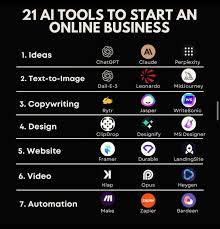
Popular tools used for faceless content include Canva for graphics and simple editing, CapCut for mobile video editing, Descript for voice editing and subtitles, and Runway for cinematic effects and video generation. Creators also use text-to-speech voices, copyright-free music, and stock video websites to make professional-looking content.
One of the biggest advantages of faceless content is scalability. A single creator can manage multiple channels or pages in different niches without needing to appear publicly. Many faceless channels earn money through ads, affiliate marketing, sponsorships, digital products, and online services. Some channels generate millions of views by focusing on useful information and consistent uploads instead of personal branding.
However, faceless content also has challenges. Since viewers cannot connect with a visible personality, creators need strong storytelling, editing, and engaging scripts to keep attention. High competition means creators must focus on unique ideas, quality visuals, and consistent posting schedules.
Overall, faceless content creation is a powerful way to build an online business, grow an audience, and earn money online without showing your identity. It is especially attractive for beginners who want flexibility, privacy, and low startup costs while creating digital content for global audiences.
What a Faceless YouTube Channel Actually Needs
Before getting into specific tools, it helps to understand the production pipeline. A typical faceless video goes through these stages:
Script writing — the foundation of everything. A weak script means a weak video, regardless of how good the visuals are.
Voiceover — either a real recorded voice or a synthetic one. Both can work depending on the niche.
Visuals — stock footage, screen recordings, animated text, charts, or generated imagery stitched together into a coherent video.
Editing — syncing audio with visuals, adding captions, transitions, background music, and pacing adjustments.
Thumbnail creation — one of the biggest factors in click-through rate, arguably more important than the title.
SEO and publishing — titles, descriptions, tags, chapters, and upload scheduling.
The tools below cover each of these stages. Some handle multiple stages at once; others specialise in one thing but do it better than anything else available.
Best AI Tools for Faceless YouTube Channels in 2026
1. InVideo AI — Best for End-to-End Video Creation
InVideo AI is one of the most practical all-in-one tools for faceless channels right now. You type in a topic or paste a script, and it generates a complete video — stock footage, voiceover, captions, background music — ready to export.
How it works in practice: Say you’re running a finance channel. You type “explain dollar-cost averaging for beginners,” and InVideo pulls relevant stock clips, lays them over a generated voiceover, adds captions, and gives you an editable timeline. You can swap out footage clips you don’t like, adjust the pacing, change the voice, and export.
For high-volume channels — the kind that publish three to five videos a week — this dramatically reduces production time. What might take a solo creator six hours can be done in under an hour with InVideo.
Pricing: Free plan available with watermark; paid plans start around $25/month.
Best for: Beginners, channels focused on information-heavy topics (finance, history, self-help), creators who want speed over full creative control.
Limitations: The stock footage library, while large, can feel repetitive across videos. Heavy customisation still requires manual editing. Not ideal for cinematic or highly produced content.
2. ElevenLabs — Best for Voiceovers
If your channel lives or dies by narration quality — think documentary-style videos, storytelling channels, or educational content — ElevenLabs is the most impressive voice synthesis tool available right now.
The voices are genuinely hard to distinguish from real recordings. You can clone your own voice (so all videos sound like you, without you having to record every script), choose from a large library of pre-built voices, adjust speaking pace and emotional tone, and export studio-quality audio files.
Practical example: A creator running a true crime channel records a single voice sample, clones it in ElevenLabs, then generates all future narration by pasting scripts — no microphone sessions required. The output sounds consistent and professional across every video.
Pricing: Free tier available (limited monthly characters); paid plans from around $5/month for casual use up to $99/month for high-volume production.
Best for: Channels where narration quality matters most — storytelling, documentary, education, meditation.
Limitations: Very long scripts can eat through character limits quickly on lower-tier plans. Emotional nuance, while good, still occasionally sounds slightly synthetic in complex dialogue.
3. Pictory — Best for Turning Scripts Into Videos
Pictory sits in a similar space to InVideo but approaches it differently. Where InVideo generates content from a topic prompt, Pictory works best when you already have a script or a long-form piece of text (like a blog post) that you want to convert into a video.
You paste your script, and Pictory breaks it into scenes, matches each sentence with relevant stock footage, and adds captions automatically. The editing interface lets you swap clips, adjust scene timing, and customise the look.
Practical example: A creator who already writes blog posts about personal finance pastes existing articles into Pictory and converts them into YouTube videos with minimal extra work. Same content, two formats, double the reach.
Pricing: Plans start around $19/month.
Best for: Creators who write first and want to repurpose written content into video, channels that prioritise captioning and accessibility.
Limitations: Less flexible than dedicated video editors. Not the best choice if you want fine-grained control over pacing or custom animations.
4. Descript — Best for Editing by Text
Descript takes a completely different approach to video editing. Instead of a traditional timeline, you edit the video by editing the transcript. Delete a sentence from the text, and that section disappears from the video. Fix a word, and it re-records just that word using your voice clone.

For faceless channels that rely on voiceover narration, this is transformative. Editing “um” false starts and awkward pauses out of a 15-minute video normally takes significant time in a traditional editor. In Descript, you just highlight the text and delete it.
Practical example: A creator records a 20-minute voiceover for a history video, uploads it to Descript, and edits the entire thing by reading through the transcript — no scrubbing through audio waveforms. Total editing time: under 30 minutes.
Pricing: Free plan available; paid plans from around $12/month.
Best for: Creators who record their own voice and want faster editing, channels producing longer-form content.
Limitations: The text-based editing is excellent for audio-heavy content, but less intuitive for highly visual, effects-driven videos. Learning curve for new users.
5. Canva — Best for Thumbnails
Thumbnails are not an afterthought. A video with a compelling thumbnail gets clicked; the same video with a generic one doesn’t, regardless of how good the content is. Canva is the most practical tool for creating thumbnails quickly without design experience.
The YouTube thumbnail templates in Canva are well-designed and cover most niches. You can customise text, swap background images, adjust colours, and export at the correct resolution in minutes.
Practical example: A creator running a productivity channel keeps a consistent thumbnail style — same font, same colour scheme, same layout — by saving a master template in Canva and duplicating it for each new video. Branding stays consistent with minimal effort.
Pricing: Free plan is substantial and covers most thumbnail needs; Canva Pro (around $13/month) adds more templates and features.
Best for: All faceless channel creators — thumbnail quality affects every video regardless of niche.
Limitations: Not a video editing tool. For animated thumbnails or motion graphics, you’d need something else.
6. VidIQ or TubeBuddy — Best for YouTube SEO
Creating good videos is only half the job. If nobody finds them, the channel doesn’t grow. VidIQ and TubeBuddy are browser extensions that plug directly into YouTube Studio and give you keyword data, competitor analysis, upload optimisation checklists, and performance tracking.
VidIQ tends to be more data-forward, with detailed keyword scores and channel analytics. TubeBuddy has a slightly friendlier interface and more bulk management tools (like changing end screens across multiple videos at once).
Practical example: Before writing a script, a creator searches “how to save money on groceries” in VidIQ. The tool shows monthly search volume, competition level, and related keywords. The creator uses that data to write a script targeting “how to save money on groceries every week” — a long-tail phrase with lower competition.
Pricing: Both have free tiers; paid plans start around $7–10/month.
Best for: Any creator serious about organic growth — the data these tools provide is genuinely useful from the first video.
Limitations: Neither creates content; they only help you optimise it. The keyword data is estimates, not exact figures.
7. Murf — Best for Multiple Voice Styles
Murf is a voice synthesis tool that sits between ElevenLabs and a basic text-to-speech generator. It has a large library of voices across multiple languages and accents, with a clean interface that makes it easy to preview different options and adjust pitch, speed, and emphasis.
For creators running channels in multiple niches or needing different voices for different series within one channel, Murf’s library of options is one of the most versatile available.
Pricing: Free plan (limited exports); paid plans from around $19/month.
Best for: Multi-niche channels, international content creators, users who want voice variety without cloning their own voice.
Limitations: Voice quality, while good, is a step behind ElevenLabs on the most demanding narration use cases.
8. ChatGPT or Claude — Best for Scripting
No tool covers scripting more flexibly than a large language model accessed through a chat interface. For faceless YouTube channels, scripting is where the most time gets saved.
You can prompt for a complete script, get an outline first and expand section by section, request multiple hook options for the first 30 seconds, rewrite sections that feel flat, and generate description copy and tags all in the same session.
Practical example: A creator running a self-improvement channel types: “Write a YouTube script on why most people fail to build habits, targeting beginners, conversational tone, around 1,200 words, with a strong hook in the first 30 seconds.” The output is a working first draft that takes 10 minutes to review and polish, rather than an hour to write from scratch.
Pricing: Free tiers are available on both; paid subscriptions are around $20/month for more advanced capabilities.
Best for: All faceless channel creators — scripting is the highest-leverage task to speed up.
Limitations: Output quality depends on the quality of your prompts. You’ll still need to review, personalise, and fact-check everything.
Pros and Cons of Using These Tools for a Faceless Channel
Pros:
The production speed improvement is significant. A realistic workflow using InVideo, ElevenLabs, and Canva can take a creator from idea to published video in two to three hours — compared to a full day of work with traditional tools.
Low barrier to entry. You don’t need a camera, microphone, lighting setup, or video editing experience to produce decent content. Most of these tools are designed for non-technical users.
Consistency becomes easier. When your workflow is template-driven, maintaining a regular publishing schedule is more achievable — and consistency is one of the biggest factors in channel growth.
Cost is manageable. A solid toolkit — VidIQ, InVideo, ElevenLabs, and Canva — runs around $50–70/month. For a monetised channel, that’s covered by relatively modest revenue.
Cons:
Overuse of stock footage makes channels look generic. If you’re using the same clips that thousands of other InVideo users are pulling, your videos will blend in rather than stand out. Finding ways to differentiate visually takes extra effort.
Synthetic voices still have a ceiling. ElevenLabs is impressive, but experienced viewers can often tell. For channels where trust and personality are central to the brand, a real recorded voice usually performs better long-term.
Tool dependency is a real risk. If a pricing change, feature removal, or service shutdown affects one of your core tools, your entire workflow is disrupted. Diversifying where possible helps.
The learning curve across multiple tools adds up. Even user-friendly tools take time to learn properly. Getting the most out of Descript, VidIQ, and InVideo simultaneously requires investment.
A Simple Starting Workflow for New Creators
If you’re just starting out and want a no-overwhelm setup, here’s a practical starting stack:
Script: Use ChatGPT or Claude with a clear prompt template you refine over time.
Voiceover: Start with ElevenLabs free tier to test voice options, upgrade when you’re publishing consistently.
Video creation: InVideo for assembling footage quickly or Pictory if you prefer working from written scripts.
Thumbnail: Canva — set up one master template and reuse it.
SEO: VidIQ free extension installed from day one, even if you don’t go deep on data immediately.
That’s five tools, most available for free to start. Once you’re publishing regularly and understand where your time is going, you can upgrade or swap based on your specific bottlenecks.
FAQs
Can you really build a successful YouTube channel without showing your face?
Yes — plenty of channels with hundreds of thousands of subscribers publish entirely faceless content. Finance, history, meditation, software tutorials, and news commentary are among the most successful niches for this format.
Is it okay to use synthetic voices on YouTube?
Yes. YouTube has no policy against synthetic voices, and many monetised channels use them. Disclosure is not currently required, though being transparent with your audience is generally good practice for trust-building.
How long does it take to make a faceless video with these tools?
With an established workflow, most creators report getting a 10–15 minute video from idea to export in two to four hours. Early on, expect it to take longer as you learn the tools.
Do faceless channels get monetised by YouTube?
Yes — faceless channels can join the YouTube Partner Program and run ads just like any other channel. The requirements are the same: 1,000 subscribers and 4,000 watch hours (or 10 million Shorts views).
What niche works best for a faceless channel?
The most successful faceless niches tend to be information-driven: personal finance, history, true crime, self-improvement, technology explainers, and meditation. Visual-heavy niches like travel or cooking are harder to pull off without original footage.
Are free plans on these tools enough to get started?
For testing and early-stage publishing, yes. Proton VPN’s model applies here too — start free, upgrade when the limitations actually slow you down. Most creators find they need to upgrade one or two key tools once they’re publishing weekly.
Conclsion
A faceless YouTube channel is genuinely achievable for anyone willing to be consistent and use the right tools. The technology available in 2026 means production quality that would have required a team five years ago is now within reach of a solo creator working part-time.
The key is not to overcomplicate your setup early on. Pick one tool for each stage of your workflow, learn it properly, and build from there. The creators who grow aren’t necessarily using the most tools — they’re using the right ones consistently.
Start with a solid script, a decent voice, and a clean thumbnail. The rest follows from there.